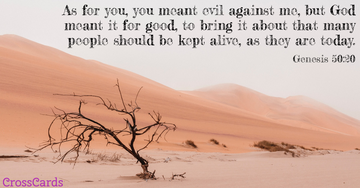
Genesis 50:20
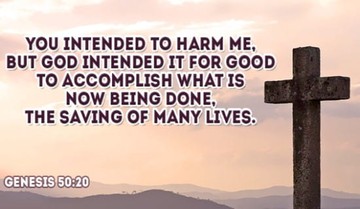
But as for you, ye thought evil against me
That must be said and owned, that their intentions were bad; they thought to have contradicted his dreams, and made them of none effect, to have token away his life, or however to have made him a slave all his days:
[but] God meant it unto good;
he designed good should come by it, and he brought good out of it: this shows that this action, which was sinful in itself, fell under the decree of God, or was the object of it, and that there was a concourse of providence in it; not that God was the author of sin, which neither his decree about it, nor the concourse of providence with the action as such supposes; he leaving the sinner wholly to his own will in it, and having no concern in the ataxy or disorder of it, but in the issue, through his infinite wisdom, causes it to work for good, as follows:
to bring to pass, as it is this day, to save much people alive;
the nation of the Egyptians and the neighbouring nations, as the Canaanites and others, and particularly his father's family: thus the sin of the Jews in crucifying Christ, which, notwithstanding the determinate counsel of God, they most freely performed, was what wrought about the greatest good, the salvation of men.

Change is a part of life. But sometimes, there are seasons when change feels so rapid and relentless that we feel stuck—overwhelmed, exhausted, and not knowing what to do. In this message, Pastor Rick reminds you that God has a purpose for the changes you face—and it’s to make you more like Jesus.There will always be people in your life who have bad intentions, or who will resent, criticize, and hurt you. There’s no way around it. Thankfully, as Pastor Rick teaches in this message, you can trust that God sees, he cares, and he will deliver justice.
Today Pastor Jack Morris takes us to one of Scripture's great promises, Romans 8:28, and reminds us that God is still at work even when we cannot see what He is doing.

In this episode, Dr. Robyn Kassas and Dr. Nathan Kassas reflect on their three guest episodes with Dr. Tony Kassas and move the Old Gate into emotion and neuroscience. Where the fish gate was about remembering His voice, the old gate is about remembering His ways. They offer an acronym for pain and stresses that God does not erase the past but redeems it through remembrance. They contrast Joshua and Caleb with the ten spies, who remembered wounds rather than God's word, will, and way. Explaining memory reconsolidation, they teach that the facts remain but God can change the meaning, as with the disciples' twelve baskets, Joseph in Genesis 50:20, and Peter's original call to follow Jesus.
In today’s message, Pastor Jack Morris takes us through one of the Bible’s most powerful faith-building accounts - the story of Joseph. Betrayed by his brothers, sold into slavery, falsely accused, and forgotten in prison, Joseph endured years of hardship and unfair treatment. Yet through it all, he remained faithful to God, trusting that the Lord was working even when he could not see the outcome.
Last week, we uncovered the difference between heritage and legacy—what is merely passed down versus what is birthed within you by the Spirit of God. This week, we step into a deeper layer: how unaddressed trauma can silently shape our heritage—and how the Holy Spirit transforms it into legacy through trust.In this powerful and prophetic conversation, Dr. Robyn and Dr. Nathan reveal why you cannot fully trust God with your future until you’ve trusted Him with your past. Trauma, whether deliberate or misinterpreted, becomes a “package without an address” in the soul—fragmented, unnamed, and quietly influencing how we see God. Like Israel leaving Egypt yet still seeing God as Pharaoh, unprocessed pain distorts our perception of His heart.Through biblical insight—from Joseph’s integration to David’s repentance and Jacob’s wrestling—this episode exposes spiritual bypassing and performative faith, calling listeners into true healing. You’ll discover the difference between asking God to own the moment after it happens and allowing Him to create the moment before it does. One keeps you surviving. The other births transformation.Trauma may be a heritage, but trust becomes legacy when the Holy Spirit integrates what was fragmented and gives it purpose.This is the journey back—not just to first love, but to mature love. A love that no longer performs, no longer hides, no longer misinterprets—but rests, trusts, and is transformed from the inside out.
This feature is for PLUS subscribers only. Join PLUS today to access these tools and more.
JOIN PLUSThis feature is for PLUS subscribers only. Join PLUS today to access these tools and more.
JOIN PLUSThis feature is for PLUS subscribers only. Join PLUS today to access these tools and more.
JOIN PLUSCreate a free account to start a reading plan, or join PLUS to unlock our full suite of premium study tools.