
Latest writing

Articles by Dennis Prager

When I Want to Know if They Believe in the Same God

When I Want to Know if They Believe in the Same God

March 10, 2019

This affirmation of God as the only God—the central theological tenet of the Torah—raises a vitally important question: Do all people who believe in one god believe in the same god? More specifically, do they all believe in this God the Torah introduced to the world?

The answer—and to many this may come as a surprise—is, no. The reason this is so important is the God of the Torah (and the rest of the Bible) is often blamed by anti-religious people for any terrible actions committed by anyone who claims to believe in God.

When Jews, Christians, and Muslims—let alone people who identify with no specific religion—say, “I believe in God,” they are not necessarily talking about the same God, and certainly not necessarily talking about the God of the Torah. In fact, the statement, “I believe in God,” tells us nothing about a person’s beliefs or about the god in whom he or she believes.

Photo Courtesy: Thinkstock
Read article
Ever Wonder Why God Had Such a Specific Design for His Tabernacle?

Ever Wonder Why God Had Such a Specific Design for His Tabernacle?

April 5, 2018

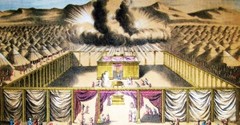
Exodus 25.9 "Exactly as I show you—the pattern of the Tabernacle and the pattern of all its furnishings—so shall you make it."

This is one of those verses in the Torah that does not seem particularly significant, but is actually one of the most significant. To understand why, let’s pose a question: Why doesn’t God stop speaking after verse 8? Why doesn’t He simply give an instruction, “Let them make Me a sanctuary that I may dwell among them,” and stop there? Wouldn’t there be great Israelite artists, designers, and architects who could have designed and built something beautiful?

Perhaps they could have. But there would have been two possible problems. First, leaving it completely up to the subjective tastes of some Israelites might well have led to the building of a Tabernacle that would be uninspiring— or, worse, looked just like a pagan house of worship. Or, it could have led to building something simply ugly —as much guideline-free, and God-free, architecture and art produced in the twentieth and twenty-first centuries do (see the discussion concerning art in the commandment against worshipping false gods—Exodus 20:3).

Second, as noted above, the Israelite elite could have kept some of the precious jewels they requisitioned for the Tabernacle for themselves.

Photo Courtesy: Thinkstock

Read article
"Fear of God": A Liberating Emotion?

"Fear of God": A Liberating Emotion?

April 5, 2018

The Torah does not say the midwives saved the babies because they could not bear to harm them, nor does it say the midwives saved the Hebrew babies because they loved God. They saved the babies because “they feared God.”

Fear of God—when that God is the moral God of the Torah, the God of the Ten Commandments, the God Who commanded, “Love your neighbor as yourself” —is necessary to make a society of moral individuals. Of course, there are moral atheists, just as there were moral pagans, and moral individuals in even the worst cultures. But you cannot build a good world with a handful of individuals who happen to be good people. You need a universal moral code from a universal God Who is the source of that moral code, and this God must judge all people accordingly. Consequently, “fear of God” is as inevitable as it is necessary. If God judges how moral we are, of course there will be fear of Him—just as there is of a human judge. Conversely, if God does not judge people, there is no reason to fear Him.

Read article
4 Things You Never Knew "Thou Shalt Not Steal" Applied To

4 Things You Never Knew "Thou Shalt Not Steal" Applied To

April 4, 2018

The Eighth Commandment, “Do not Steal,” is unique in that it encompasses all the other commandments on the second tablet: Murder is the stealing of another person’s life.

Adultery is the stealing of another person’s spouse. Giving false testimony is stealing justice. And coveting is the desire to steal what belongs to another person. This commandment is unique in another way: It is the only completely open-ended commandment. All the other commandments are specific. The Fifth Commandment, for example, states whom one must honor—one’s parents. The Sixth Commandment, prohibiting murder, is only about taking the life of an innocent human being. The Seventh Commandment, prohibiting adultery, is also specific to a married person; two unmarried people cannot commit adultery.

But the commandment against stealing doesn’t even hint at what it is we are forbidden to steal. It means we cannot take anything that belongs to another person.

Photo Courtesy: ©GettyImages/pcess609

Read article