5 Important Things to Know before Reading Genesis
Share
But think for a second about me reading The Lord of the Rings for the first time. I have to admit that I’ve actually watched all of the movies, but I haven’t actually read the book. That means that I’m going to be coming into those books with a ton of baggage and pre-conceived notions about what is there. When I read “Gandalf,” I picture Ian McKellen.
The same is true when we come into Genesis. We carry a ton of baggage into it and several preconceived ideas of what it’s all about. For that reason, it’s helpful to pause and consider a few things before you jump in. I’ll give you five.
Photo credit: ©Getty Images/Richo-Fan
1. Genesis Is History, but It Is Theological History
Think about the difference between watching a security camera and watching a documentary. Yes, both can be incredibly boring. But they also both show real events. However, the documentary has selected scenes that are arranged in a certain way to tell a story. It draws your attention to specific details because it’s trying to help you understand what those events mean.
Genesis is less like a security camera and more like a documentary. It’s history, yes. But it’s a theological history. It’s history that is intentionally compiled to tell a very specific story with a very specific point.
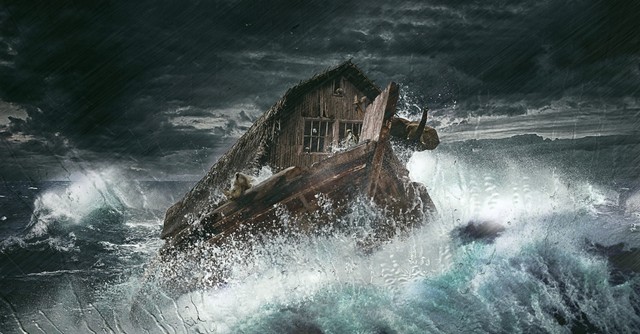
The Book of Genesis presents itself as a story about things that actually happened. God created. Adam and Eve sinned. There was a massive flood that wiped out humanity. There was a guy named Abraham that God spoke to and gave a homeland. Jacob had sons. Joseph went to Egypt. The book is rooted in real people and real places.
But that doesn’t mean that you should read it like a historical textbook. It’s not just a compilation of facts. It is a grouping of facts that are put together in a certain way. It is theological history.
That’s why you can see many years swept through in just a few verses and then a laser-like focus on one family. It can tell you almost nothing about centuries of human history and then give multiple paragraphs about a guy who slept with a lady but intentionally prevented conception because he didn’t want the child to carry his brother’s name. God judged him because of his selfishness and exploitation.
If you’re reading this like a world history book, you’re going to be pretty disappointed that you learn about that dude (Onan is his name) and absolutely nothing about the Minoan civilization on Crete.
This is important for reading Genesis because it shapes the question you need to ask of each section. You should ask, “Why is this event being told this way, and why is it included in the story?”
That matters because it keeps you from making two opposite mistakes. It keeps you from wrongly concluding that Genesis is unreliable because it doesn’t give the detail, chronology, or comprehensiveness you’d expect of a modern history. And it keeps you from treating every detail in Genesis like it’s trying to give you a scientific and chronological account of everything that happened.
Photo credit: ©Getty Images/Pink_frog
2. Don’t Make Genesis Answer Questions It Isn’t Trying to Answer
This is really just a further implication of that last section but it’s important to draw out a little. Let me try to illustrate this.
A friend tells you, “We sold our house for $40,000 less than we could have gotten.”
Now there are several questions that likely pop into your mind. Why would you do that? Did you have a bad realtor? Is the market that bad these days? Was there something wrong with the house? Did you have to do a quick-sell?
Those are all sensible questions. But what if it’s not the story that your friend was getting ready to tell you? You later learn that this was the opening sentence to what they were really trying to tell, “We sold it to a young family that had been renting it from us and we wanted to bless them and help them afford it.”
Now let’s think about all the questions that Genesis raises. How old is the earth? How long were the days of creation? Where did Cain get his wife? How did all those animals fit on the ark? What colors exactly did Joseph have on his coat?
Those aren’t necessarily bad questions. Just like the questions that came to your mind when your friend said that about the house. It’s fine to think about these questions. But Genesis wasn’t written to answer them.
Genesis 1 tells us that God created everything that exists. It shows that creation has order and purpose. It tells us that humanity is uniquely made in God’s image. And that he world God made was good.
But there are many questions that it doesn’t seem too concerned with answering. And to actually respect the Bible, we need to listen intently to the story God is actually telling and not the one we wish He was.
That doesn’t mean you avoid difficult questions. There are plenty. But let the text set the agenda for you. Don’t focus as much on trying to unwrap the questions that come up for you, but center on the questions the book seems to be deeply concerned with answering.
Photo credit: ©Getty Images/Roter Panther

3. Not Everything Genesis Describes Is Something God Approves
This is a point that it’s really important for you to get. It’s one of the easiest mistakes to make. You assume that because the Bible tells us that someone did something or said something, God must have approved of it.
But Genesis is fully of deeply flawed people making deeply flawed decisions.
Abraham is a really important dude in the story. And if you’re familiar with at least some of the New Testament, you might learn that he holds a really important place. He’s considered the father of faith. Big deal. But he did some really ridiculous things.
He told a king that Sarah was his sister and not his wife. That’s not a little white lie when that very king could have taken Sarah as something like a concubine. He also ends up sleeping with Hagar, his wife’s servant. Then he mistreats her. Not great stuff. And we haven’t even gotten to all the squirrely things Jacob ended up doing.
The point is that often Genesis tells these stories and it doesn’t stop and tell us, “What Abraham did here was really boneheaded and wrong.” It just keeps moving.
So if we aren’t careful, we can think because it’s a “good guy” who did this thing, and it’s someone that God considers righteous, this must mean that God was totally cool with it. But that’s not the case. The story itself usually unfolds to tell us what God thinks about it.
The consequences usually tell that part of the story. Abraham’s deception creates danger. His decision with Hagar creates an absolute mess for many people. The Bible doesn’t interrupt every scene with moral commentary. The main characters are usually not the heroes. God always is. What we see again and again throughout Genesis is that God keeps His promises through people who lie, manipulate, and sin a bunch.
The whole story is what matters. And not because they finally get it right, but rather because their failure is pointing to a much bigger story.
Photo credit: ©Getty Images/kieferpix

4. Genesis 1-11 Shows Us the Problem; Genesis 12-50 Begins God’s Answer
One of the things that can help us be good readers is to know the overall plot and structure of the story. If we can know beforehand where this thing is going, it can help us considerably.
Genesis is almost like two different stories. The first eleven chapters cover a ton of ground. We go from creation to the fall and then we see several hundred years of sin spiraling downward. It ends with this incident at the tower of Babel where people are full of themselves and try to become like God again. We’ve learned nothing.
Then Genesis 12 slows down and starts talking about one old guy and his family — Abraham. But that’s doing something. Genesis 1-11 tells us what has gone wrong with the world. And Genesis 12 being to tell us how God is going to fix it all. (Yes, there are little clues even in Genesis 1-11).
What God says to Abraham in Genesis 12:1-3 is huge. It’s really the core of all of Scripture. It’s what Jesus is ultimately fulfilling. It’s the fix to everything:
“The Lord had said to Abram, ‘Go from your country, your people and your father’s household to the land I will show you. ‘I will make you into a great nation, and I will bless you; I will make your name great, and you will be a blessing. I will bless those who bless you, and whoever curses you I will curse; and all peoples on earth will be blessed through you.”
The way I like to put this is that in the Garden (Genesis 1-3) we see that God created humanity for rest, rule, and relationship. Or if you like the letter P instead of R, we could say that God created us for a purpose, a people, and a place. But we see in Genesis 3 and onward that we’ve made shipwreck of those things.
And then we see in Genesis 12 that God, through Abraham, is going to restore all of those. Rest, rule, and relationship will come through the seed of Abraham.
And that brings us to our final point about Genesis…
Photo credit: ©GettyImages/beerphotographer

5. Genesis Is Pointing Us toward Jesus
There is an early promise in Genesis 3 when God is talking to the fallen couple and the serpent. He speaks of the “seed of the woman” (which is a strange phrase) and says that He will crush the head of the serpent. And then we see what we do in Abraham.
As the story progresses, you can imagine that with every single character, we might think that one of them will be the “seed of the woman” or the promised one who will fix it all. But we see time and again that each of them blows it. None of them are ultimately the “seed.”
None of these promises are ultimately fulfilled at the end of Genesis. The book leaves us on a bit of a cliff-hanger. And that continues really throughout the whole Old Testament.
Abraham dies. Isaac dies. Jacob dies. Joseph dies. Sin is still present. The curse has not been removed. The nations have not yet received the fullness of the blessing God promised. Even at the end of the book, God’s people are outside the land He promised to give them.
Genesis ends with us waiting for fulfillment.
And that ultimately comes through Jesus. All of Genesis is pointing there.
Want to read more? Click here to see how to find the Gospel in Genesis.
Photo credit: ©Getty Images/kevron2001