
What Does the Bible Mean When it Talks about a "Reprobate Mind"?
December 12, 2024
What is the Apostle Paul trying to tell us when he talks about a reprobate mind?
Latest writing
December 12, 2024
What is the Apostle Paul trying to tell us when he talks about a reprobate mind?

December 3, 2024
Walking through a gift shop, I saw a great apron. Red and black, it had written upon it, “Let’s bake and watch Christmas movies!”
For many of us, watching Christmas films remains part of our tradition. We might watch more on streaming services than TV. Some might even still use DVDs. For our family, we choose a combination of newer movies and the classics.
Unfortunately, many of the classic or popular Christmas movies don’t talk about Jesus, the whole reason for the holiday. These secularized stories mention “Christmas spirit” and focus on general family traditions or Santa Claus.
At the same time, any great story impacts us because it reflects God’s epic redemptive story, the one he’s telling and invites us into. Here we’ll explore how we can see the Gospel in the following eight Christmas movies. Important note: this doesn’t mean you have to watch these movies. But given their popularity, you might be able to introduce a spiritual conversation when others bring them up.
Photo credit: ©Getty Images/FTiare

November 27, 2024
Western Christianity has achieved much. From academic theology to apologetics, mission movements, and revivals, the European and American churches boast a rich history and heritage of faith. However, every culture has strengths and weaknesses. From a Hellenist foundation, the West has developed amazing theology and biblical intellectualism. At the same time, Western Christianity can view faith according to intellectual adherence to certain doctrines separate from how a person lives their life.
In the Bible, most of the writers came from a more Southeast Asian or Eastern mindset. The Bible doesn’t separate what we believe with our hearts from how we act in life. They are one and the same. It takes a more Western philosophy to have a problem with “faith without works is dead” (James 2:26). James doesn’t mean salvation comes from works, only that true belief leads to changed action. God doesn’t only believe in the good, he does it. His followers should be on the transformative process to live like our Father through the Son by the Spirit.
When we live this active faith, we better experience the miraculous, have hope and peace, and know God better.
Here are six ways we can grow a more active faith.
Photo credit: ©Getty Images/fcscafeine

November 26, 2024
We were created to experience worship and wonder.
At the beginning, God created all things, ordered the earth and designed a Garden for a special being. He made humanity in his image, and their abundant life centered around walking in constant relationship with and worship of God. Placed within a perfect paradise, humanity also wondered at God’s work. Then came the Fall, their disobedience, and now we struggle to dig in the dirt and survive. The life meant to cause joy brings pain.
Jesus came to bring us back to that design. But unless we become like a child, we can’t enter the Kingdom of God (Matthew 18:3). Jesus doesn’t call us to be immature or childish but child-like. Babies and toddlers laugh at silly things, and the young express great wonder at nature, animals, and simple objects like trucks. They experience this world in new ways.
We get older, and life beats us down a bit. We lose that wonder. Thankfully, God calls us back to a relationship where we have heavenly revelation and constant wonder through Christ and our Father by the Spirit. Despite the hardship of life, we have access to a transcendent person and reality untouched by the corruption of this world. God restores us back to our design: worship and wonder. The book of Psalms regularly expresses this.
Here are six powerful psalms of worship and wonder.
Photo credit: ©Getty Images/oatawa

November 26, 2024
God doesn’t just provide peace. Just as “God is love,” he embodies peace. As the Lord of Peace, he alone holds authority over it and shares it according to his will and desire. No one can take his peace from him. As all powerful God, only he can share peace because it’s rooted within him.

November 22, 2024
Advent marks a season for Christians to prepare for Christmas, celebrating the birth of Jesus. During the four weeks leading up to the holiday, believers meditate on themes like hope, peace, joy, and love. The word “Advent” means “coming” or “arrival” in Latin and reminds Christians of the anticipation we should feel with Jesus’ second coming.
Roman Catholics, Lutherans, Anglicans, and many main Protestant churches like Presbyterians and Methodists observe Advent. A few Baptist and non-denominational churches also include some Advent elements. They practice lighting candles on an Advent wreath, reading Scripture, and giving messages along the four main themes.
Before I got married, I didn’t celebrate Advent and I knew little about it. My wife had some experience with German culture and more liturgical traditions, so we started doing the calendars together. Over time, our church participated in Advent, complete with sermons and lighting candles, and my wife and I do the calendars and activities with our kids every year.
Perhaps you’re like me. Your family doesn’t celebrate Advent. Maybe you’d like to, but don’t know where to get started. Below are six ways your family can start practicing Advent this Christmas season.
Photo credit: ©Getty Images/Muenz

November 18, 2024
Sometimes it’s difficult to be patient. God promises good things for us in the future, but in the meantime, we deal with struggles, pains, and griefs, in the waiting. To see God’s promises, we require patience and endurance.
Yet, how do we develop this patience? First, we can pray for it when we need it. Second, we can remind ourselves of God’s faithfulness in our lives. And then be thankful for his work in the past and present. In light of his love, we can extend our thankfulness even into the future. This hope gives us strength and patience.
Here are 7 ways Thanksgiving can help you practice patience.
Photo Credit: Getty/SARINYAPINNGAM
November 16, 2024
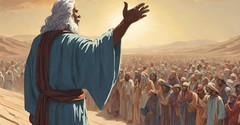
Certain characters might not be well known, but their impact spans hundreds of years. In Jethro’s case, his wisdom and leadership at a crucial moment gave Israel and the Western world important principles.

November 16, 2024
Looking through the Scripture, we can piece together what it means to have the Seal of God and what it teaches us about our heavenly Father.

November 15, 2024
While the Thanksgiving holiday isn’t prescribed in the Bible, Scripture consistently speaks about thanksgiving as a crucial part of faith and worship.
In 1 Thessalonians 5:18, Paul instructs us to “give thanks in all circumstances; for this is God’s will for you in Christ Jesus.” God’s plan for us includes being thankful in every situation, praising him for his sovereignty, provision, and grace. Paul connects thanksgiving with prayer and finding peace in Philippians 4:6-7. “Do not be anxious about anything, but in every situation, by prayer and petition, with thanksgiving, present your requests to God. And the peace of God, which transcends all understanding, will guard your hearts and minds in Christ Jesus.”
Gratitude ushers us into God’s presence. Psalm 100:4 calls us to enter the Lord’s presence with thanksgiving, central to our right relationship with the Father.
As Jesus followers, we can take the biblical theme of thankfulness and apply it to this American holiday, lifting our vision higher and finding even greater blessing in Christ.
Photo credit: ©GettyImages/Zulfiska

November 14, 2024
While the Bible doesn’t specify a date for the birth of Christ, Scripture and history give us clues to explore when God's Son came to earth as a baby.

November 4, 2024
Perea in the Bible may be unfamiliar to most of us today, but as we explore its importance, we will see more of God’s plan in action.

November 1, 2024
Thankfulness opens the door to deep communion with God, inviting us into his presence for his endless grace. When we express gratitude, we shift our focus from ourselves to God and others, acknowledging his goodness and constant provision, even if unseen. As Psalm 100:4 declares, we “enter his gates with thanksgiving.”
However, our sinful nature makes thankfulness difficult. We easily see what we lack instead of the abundance we’ve been given. We tend to focus on our problems, desires, and disappointments rather than recognizing God’s blessings. Being ungrateful has spiritual consequences, and we see examples of this through different people in the Bible. Yet even through their actions and the consequences, God can teach us how to live in gratitude and stay in close fellowship with him.
Here are six examples of ungrateful people in the Bible, and what they teach us.
Photo credit: ©Getty Images/CarlosDavid.org

October 29, 2024
Jesus, the Son of God, addressed the Mosaic Law during his ministry on earth. “I have come to fulfill the Law” (Matthew 5:17).
The New Testament records several reasons Jesus came. To list only a few: To seek and save what was lost (Luke 19:10). To bear witness to the truth (John 18:37). To bring abundant, eternal life (John 10:10). To destroy the works of the devil (1 John 3:8), and many more.
As one of these purposes, Jesus teaches during the Sermon on the Mount: “Do not think that I have come to abolish the Law or the Prophets; I have not come to abolish them but to fulfill them” (Matthew 5:17).
Yet the New Testament also contrasts the Law with the Spirit. The Law brings death and the Spirit life (2 Corinthians 3:6). So when Jesus says he doesn’t abolish the Law, but fulfills it, what does he mean?
To begin to understand, we should start at the beginning.
Photo credit: ©Getty Images/Boonyachoat