Questions about Hell: Is It a Literal Fire? Or Worse?
Share
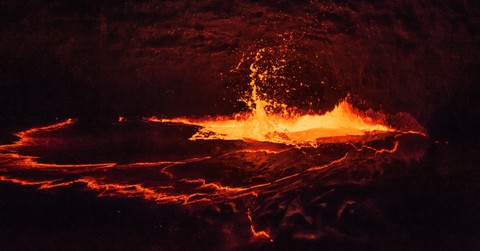
Gehenna is metaphorical reference to the actual place of punishment by using a term from the world of the living, the Hinnom Valley, where Israelites sacrificed their children in the detestable worship of Molech (just outside the city of Jerusalem). The reference of Gehenna is to shame, contempt, and pain in the netherworld, not merely to the Jerusalem garbage dump. Gehenna is used 13 times in the New Testament, usually translated as “hell.”
Finally, hell is identified as “the second death” in Revelation 20. By comparison with other ways death is used in the Bible, we can put this together as the loss and separation from all goods in this life irreversibly. Biological death is a separation of the spirit (or soul) from the body, and loss of ability to live on earth without the body. Spiritual death is clear in Ephesians 2:1-3 (”you were dead in the trespasses and sins”) as the loss of access to God and separation from the goods and freedoms that he alone provides. God warned of this consequence for sin in Genesis 2. Adam and Eve hid from God, blamed each other, and then were thrust out of the place of blessing, separated from the tree of life. Accordingly, hell as the second death is best understood as a permanent loss of opportunities and goods to be had from God because the evildoer is cast out and excluded from the kingdom of the new creation.
Metaphorical Descriptions of Hell
The descriptions of hell, if taken to be actual realities, seem to be incompatible with each other (fire, with its light, is together with darkness) and are obviously unreal (fire that does not stop, a worm that does not die). These point beyond themselves to worse things than being immersed in a lake of fire. Sulfur is mentioned to tell the high intensity of heat (as compared to low-heat from the flame of candle wax). The repeated ideas throughout the varied descriptions are pain, punishment, suffering, torment, and anguish. While I expect there is a significant physical aspect to the pain of hell, I expect that the internal burn is the worst part. (See my next post for this question.)
The fiery description of God’s punishments of evildoers in hell fits with the way that God is frequently described metaphorically in the Bible as “a consuming fire” and his anger is likened to heat and fire. Several times God does mete out punishment to people on earth by actually burning them (as with Sodom), but this is not the final punishment of hell to pay later. That people were burned to death by God was a sign to Israel that worse is to come for evildoers who do not repent, much like Jesus’ greater-than statements in Luke 13:1-6. He points to the death that some experienced by the hand of Pilate’s soldiers and by a falling tower as a sharp warning of worse peril to come.
Hell for Jesus and the Devil
We have the problem of being able to say that Jesus suffered hell at the cross, without flames, and that the devil, a spiritual being, will also suffer the punishment of hell’s flames. Neither can be true if we hold to descriptions as actual instead of metaphorical revelation of a horrible internal burn. The crucifixion certainly gives an external, physical pain. The three hours of unnatural darkness indicates something worse that brought his early death (hell was brought to him there, while on the cross). It seems best to think that the descriptions in all their horror point beyond the actual flame and sulfur to something worse that we can barely imagine: absolute banishment from God’s goods, unending suffering and anguish, and the certainty of no relief.
Related to these metaphorical descriptions of hell is the hyperbole Jesus uses to urge people to do everything necessary to avoid hell—even to the point of cutting off one’s hand or foot, or gouging out an eye. All these things are told so that we may flee hell while an opportunity of surrender to God remains open. We are urged to take hell as seriously as possible so that we may warn others of their impending peril should they not repent. This is not an acceptable message today, but that doesn’t make hell any less real or important for us to consider.
Photo credit: ©Getty Images/Brina Bunt