5 Questions You Have about the Bible But Are Too Afraid to Ask

Share
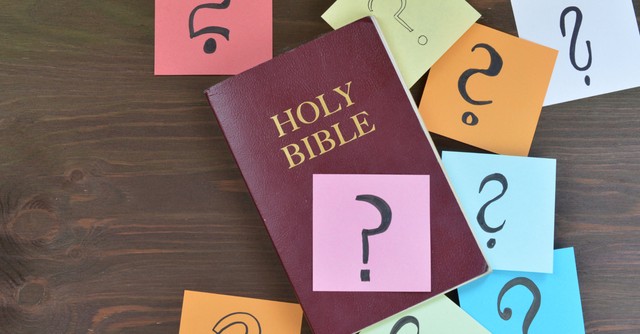
The Bible addresses humanity's most complex mysteries. Its stories, adages, accounts, and parables offer us glimpses into the meaning of life, the reality of eternity, and the nature of supernatural beings. The Bible's content is often hard to fully wrap our minds around. It’s only natural that Scripture sparks questions.
Often, we find ourselves wondering:
How do we know the Bible is truly the Word of God?
Why does God appear to be different in the Old Testament?
Why is there so much of the Bible I just don’t understand?
Are there contradictions in the Bible? How do I handle them?
Questions like these are all a part of our faith journey. We can’t learn or grow as believers without investigating God’s word. We must lean into our questions, allowing them to draw us closer to God.
Even the men and women featured in the Bible wrestled with difficult questions; they had doubts, reacted with fear, and often suffered. God is not threatened by sincere questions, and Christians can approach the Bible with humility and honesty, asking God to reveal his truth to us over time.
Photo credit: ©Getty Images/Roter Panther

1. How Do We Know the Bible Is Really God’s Word?
2 Timothy 3:16 states, “All Scripture is inspired by God and is useful to teach us what is true and to make us realize what is wrong in our lives. It corrects us when we are wrong and teaches us to do what is right.”
God used human authors, personalities, historical events, and different writing styles to share with us glimpses into the nature of our existence and, most importantly, so we might believe! John 20:31 declares, “But these are written that you may believe that Jesus is the Messiah, the Son of God, and that by believing you may have life in his name.”
The Bible is not a book that appeared in its current form without human involvement, but its words were inspired by God. The inspiration of Scripture refers to God’s direction given to the human authors to document God’s message to humanity. God does this sometimes by speaking directly to the authors of the text.
We see this in Revelation, where John is given a vision and told by God to record what he sees. Other times, God’s Spirit inspired writers. They spoke with authority as the Spirit led, creating the very Word of God. Christians trust Scripture because they believe God worked through human authors to communicate truth to humanity.
Photo credit: ©Getty Images/boonchai wedmakawand

2. Why Are There So Many Different Translations?
William Tyndale (1494-1536) was the first to translate the Bible into English from Hebrew and Greek. His goal was for everyone in England to be able to read Scripture on their own. The English translations were forbidden in England, so Tyndale left so he could continue his translation. Ultimately, he gave his life for his work and was strangled and burned at the stake as a heretic.
Soon after his death, the King James Version of the Bible was created, featuring about 83% of Tyndale's translation. Since then, countless others have determined to create translations of the Bible.
Some of these translations offer a word-for-word approach in which they attempt to match the original Aramaic, Hebrew, and Greek as closely as possible. Others offer a thought-for-thought approach. We even have versions that paraphrase sections of the Bible or have rewritten the text to make it more approachable to different groups of people.
The translations don’t indicate disagreement on the meaning of the text but rather offer us a variety of ways to take in God’s Word. It’s often helpful to compare translations in order to gain a better understanding of a difficult portion of Scripture. We can also reference the original Greek, Hebrew, or Aramaic words to try to gain a richer understanding of the Bible.
Photo credit: Unsplash/timwildsmith

3. Does the Bible Contradict Itself?
When we do a quick reading of the Bible, we can come across passages that may seem to be contradictory. There are a few things we can keep in mind when this happens.
One, at times we may be reading a different perspective on the same event. When more than one person bore witness to an event or was involved in a story, different versions are bound to occur. We each experience things differently, and reading multiple accounts can offer us a new way of understanding.
Translations can also offer us different wording that we may need to investigate further to fully comprehend what a passage is trying to teach us. Digging deeper can help us learn more about what is really being communicated by the biblical authors.
Context matters so much as we read the Bible, especially when reading the Old Testament. Jesus fulfilled the Old Testament law with his life and death. Understanding how the practices of the Old Testament taught us about covenant, holiness, obedience, and faith is so important. Many of the rules the Jewish people lived under in ancient times no longer apply to modern Christianity in the same way.
We shouldn’t assume a difficult passage automatically disproves Scripture. When you are unsure, dig deeper, investigate, and ask God to reveal what he wants you to learn from the text. Remember, not understanding is not the same as having no possible explanation for why the text appears contradictory.
Photo credit: Unsplash/Brendan Church

4. Why Does God Seem Different in the Old Testament?
While the culture of the Old Testament was more outwardly harsh than what we experience now, we read of God’s holiness, justice, mercy, patience, longsuffering, and love in both Testaments. We see God’s mercy and compassion throughout the Old Testament, but the following verses highlight God’s unchanging character:
Exodus 34:6 – “And he passed in front of Moses, proclaiming, ‘The Lord, the Lord, the compassionate and gracious God, slow to anger, abounding in love and faithfulness.’”
Psalm 103:8 – “The Lord is compassionate and gracious, slow to anger, abounding in love.”
Jonah 4:2 – “He prayed to the Lord, ‘Isn’t this what I said, Lord, when I was still at home? That is what I tried to forestall by fleeing to Tarshish. I knew that you are a gracious and compassionate God, slow to anger and abounding in love, a God who relents from sending calamity.’”
In the New Testament, we also read of God’s judgment in Matthew 25, Acts 5, and in the book of Revelation. Ultimately, the story of God and his people is one of a patient God who promises a path to salvation that begins with Abraham and culminates with Jesus.
Jesus fulfills the prophetic words and promises of the Old Testament rather than contradicting the Old Testament story. Scripture tells us one beautiful unfolding story of God’s character and redemption over the ages.
Photo credit: ©Getty Images/Rawf8

5. What If I Don’t Understand Everything I Read?
Scholars have been studying the Bible for hundreds of years, and they often still agree to disagree. God is a vast and complicated being. He is not fully knowable. When we read his word, we are presented with a complex text that is full of different types of writing.
The Bible includes history, poetry, wisdom literature, prophecy, gospels, epistles, and apocalyptic literature! It’s extremely difficult to fully understand the intent, culture, setting, translations, and more of so many parts of the Bible. That’s why we keep studying it!
If you are struggling to find meaning in the stories of the Bible, seek out resources that can help unpack some of the context for you! The great thing is, now we can read it, we can find commentaries on the text, watch videos of scholars unpacking the text, attend church and listen to our pastor teach the text, and so much more. James 1:5 encourages, “If any of you lacks wisdom, you should ask God, who gives generously to all without finding fault, and it will be given to you.” God’s Spirit is there, along with resources and careful study to help you understand the message of God’s Word.
Remember, questions are part of our faith journey, and they often don’t have easy answers. Part of being human is living with mystery and also continuing to pursue truth through every age and stage of life.
Questions are not the enemy of our faith. Seek answers through Scripture, prayer, wise Christian community, and careful study. Our goal is to know God and make him known. As we seek his truth, we are doing just that! We don’t need all the answers to open the Bible. Just start and see what God reveals through his living and active Word.
Photo credit: ©Getty Images/Metamorworks