What Are the Names of Demons in the Bible?
Share
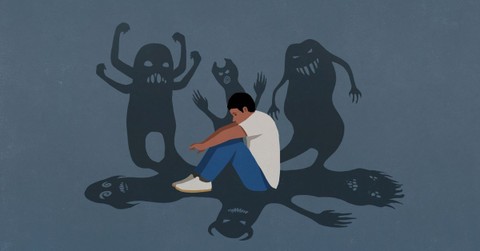
Few biblical topics attract more controversy than demons, from questions like “do demons exist?” to “how many demons are there?” and even “does the Bible name any demons?”
Answering the third question may seem simple. But before we answer what names the Bible gives to demons, we need to address what demons are and what kind of names we are thinking of.
Let’s explore what advice the Bible gives us about the demonic realm.
What Are Demons According to the Bible?
One reason that demons are a complicated topic is that the Bible does not offer a detailed explanation of demons. There are 66 books in the Bible, but not one of them focuses on explaining demons and angels. Instead, there are various references to evil spirits or beings, from the serpent that tempted Eve in the Garden of Eden to the spirit that tormented King Saul, to the army of demons mentioned in Revelation. Biblical scholars bring together these references to build explanations of what demons and angels are. Christian tradition builds on those references to produce theological visions we can study.
The overall picture we get from the Bible is that angels are beings God created to serve him in the heavenly realms. Demons, chiefly one demon called the Adversary (or “the Satan” in ancient Hebrew), rebelled against God at some point before Adam and Eve were tempted. The rebellion is depicted in Revelation 12, and the aftermath, Satan’s conflict with God, plays out through the rest of Scripture. A conflict that will continue until the end of days when God will triumph over evil.
As Bethany Verrett observes, Satan has many names in the Bible, ranging from the tempter (Matthew 4:3) to the Morningstar, or Lucifer (Isaiah 14:12), to Beelzebub (Mark 3:22). The names vary for several reasons. At least a few are names that seem to have developed over time. Easton’s Bible Dictionary reports that Beelzebub is probably a name ancient Hebrew people took from Baal-Zebub, the god of Ekron.
Many of these names for Satan are not proper names as much as descriptive titles—the dragon, the morning star, and so on. The range of these names demonstrates that different books of the Bible have different purposes. For example, Revelation and sections of Daniel are apocalyptic texts. Apocalyptic literature uses vivid images to talk about complicated spiritual ideas that are hard to explain any other way. As Eugene Peterson puts it in the title of his bestselling book, sometimes the Bible tells things slant to get a point across. Calling Satan the Great Dragon may not be straightforward, but it depicts his immense evil in a way that no other description can capture.
But what about other demons in the Bible? Do they have any names?
Names of Demons Besides Satan in the Bible
The Bible primarily speaks about Satan when it describes evil spirits. It never gives a clear sense of how many other demons exist, other than a reference to a third of the angels falling in a rebellion against God led by Satan (Revelation 12:4).
There are a handful of biblical references to lesser beings that could be demonic.
The “sons of God” mentioned in Genesis 6:1-4 may be a name for a kind of demon who mated with humans and produced the Nephilim, but could just as easily be a reference to local princes or chieftains fathering mighty warrior sons.
The Antichrist who challenges Christians in Revelation is often understood to be a figure working under demonic control, if not a demon himself.
For the most part, proper names for demons besides Satan only appear in folklore based on the Bible or in post-biblical books that claimed to be divinely inspired. For example, the Book of Enoch mentions a demon named Azazel. There are also names for places in the spiritual realm or the ancient world turned into names for fictional demons in later folklore, like the name Abaddon.
Some Christians from charismatic traditions will describe demons as specializing in particular methods to tempt or harm people. For example, the “Jezebel Spirit” may be mentioned as a demon who causes lust, or a “spirit of infirmity” may be said to be causing a physical illness. The Bible sometimes mentions demons causing a particular effect, such as the demon mentioned in Matthew 17, which caused a boy to have seizures until Jesus cast it out. However, the Bible never indicates that demons have a specialized program for how they harm people. This view has more in common with pagan religions that attribute special traits to nature spirits that must be appeased. The Bible never gives us a detailed vision of demons’ activities or what spiritual realms they inhabit, which is probably a good thing. We would be all too easily tempted to give them too much attention if we had that information.
Talking about the difference between demons and pagan spirits brings up an important related question: are demons different from foreign gods?
Are Names of Idols Names of Demons?
Plenty of Bible verses warn readers not to worship false gods, deities from other religions like Zeus or Baal. These ancient religions did not necessarily think of their gods as the only true ones: they were mostly polytheists, which means they believed in a variety of gods, each having some power and guarding whichever people group worshipped them. Therefore, it was important to worship the local god to maintain a good life. Judaism presented a challenge to the ancient world by arguing that there was only one God who truly existed, and only he was to be worshipped. Christianity continued that view, claiming that the one God had sent Jesus to offer salvation to the world.
Throughout the Old and New Testaments, false gods are treated as dangerous because only one god deserves worship and respect. The question is whether they are treated as demonic.
Christopher J.H. Wright offers a detailed summary of how the Bible depicts false gods in Here Are Your Gods. He explains that the Bible does not give a single, compact explanation for how demons connect to false gods. Some passages, such as Isaiah 44:13-19, describe false gods as powerless objects that humans foolishly make and then worship, wasting their time. Some passages, such as Moses’ condemnation of idolaters in Deuteronomy 32 or Paul’s warnings in 1 Corinthians 10 not to participate in any pagan ceremonies, describe false gods as demons posing as deities.
The complex answer the Bible gives about demons and idolatry creates a tension. If the Bible consistently said that false gods are always demons, we could perhaps say that the Phoenician god Baal is a demon in disguise. Instead, the Bible offers a complex answer: demons may use false gods as fronts, but not always. Christians have a responsibility to be cautious around idols, aware of the dangers, but to think carefully before assuming something demonic is involved.
Since the Bible does not offer a single, compact answer to whether idols have something sinister behind them, it would be incorrect to say that false god names are demonic names. But the tension that Christians have to practice around idols brings up an important principle for this entire discussion: we should always be on the lookout for evil but never too preoccupied with it.
Which brings up the reason why demon names matter in the first place.
Why Should We Be Careful about Demons and Names?
It would be easy to treat discussions about demon names as a silly topic. After all, the Bible does not say that much about demons. The ultimate answer to whether demons have names is, “not that we know of, except a few names for their boss.” So why bring this topic up in the first place?
One reason we should discuss the fact that few demons have names in the Bible is that the discussion reminds us not to invent names for our own comfort. Christians have often invented names for particular demons through misunderstanding biblical teaching. Names for places get turned into names for spirits, and those names develop a legendary reputation.
Christians have also often invented names because giving something a name makes it seem controllable. Having a detailed name or formula gives a sense that a topic is small enough for us to understand and manipulate.
When we recognize how little we know about demons, we have to live with knowing the spiritual realm is mysterious, and we are not its masters. God is the master of all things. We trust in him to tell us what we need to know about demons and to handle all the things we do not know.
We may not know many names for demons, or if they have names at all. But we know who is more powerful than any demon.
Photo Credit: ©Getty Images/Malte Mueller