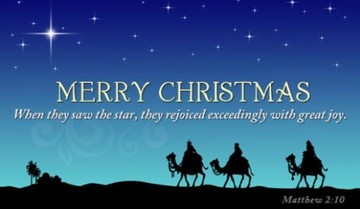
Matthew 2:10
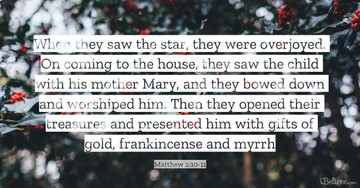
Hello again and welcome to Hope from the Word. We're glad to have you with us today. Christmas was yesterday but we are going to continue with more teaching from Pastor Bill Luebkemann, centered around the Christmas message. Many of the movies we see have a villain and, in the case of the Christmas story, our villain is King Herod, a man so obsessed with his position as king that he ordered his own son murdered. Last time, we talked about the wise men and their trip to visit young Jesus. As we review the journey of the wise men today, we begin with their visit to Herod's palace as recorded in Matthew, chapter two.
How do you know if you are truly saved? The biggest sign of salvation is life change. True salvation always produces a wonderful life transformation. In this message called, THE MIRACLE OF TRANSFORMATION, Pastor Jeff Schreve shares three steps the wise men took that produced in them, and will produce in us, real transformation by the power of the Holy Spirit. This message is from the series, THE MIRACLES OF CHRISTMAS.

Charles Price opens the book of Matthew to the story of the men from the East who followed the star to Bethlehem in search of a newborn king that turned out to be Jesus Christ. These men in the story were on a search. And many of us today are also on a search—for meaning and purpose. We are assured in Matthew 11:10, “For everyone who asks receives; the one who seeks finds; and to the one who knocks, the door will be opened."

We learn how to find the true meaning of Christmas in the example of the wise men.

Two thousand years ago, strangers from the East traveled to a foreign land, determined to find the child who was written about in the ancient prophecies. They left behind everything familiar to seek the one who was king of the Jews, bow before Him and offer generous gifts. On this edition of Focal Point, Mike Fabarez continues a special Christmas study on the wise men. Explore the historical background and powerful lessons we can learn from these great men.
Well can you believe it; it is Christmas Day! You may have heard someone say this recently, “What do you get the person who has everything?” Well, this definitely applied to the wise men that traveled to meet Jesus not long after His birth. But their question was more along the lines of, “What do you get the person who is God?” This is Hope from the Word with Pastor Bill Luebkemann of Calvary Chapel of Marlton. Join us, if you would, in Matthew, chapter two, as we take a closer look at these men called by God to bring presents to young Jesus.
This feature is for PLUS subscribers only. Join PLUS today to access these tools and more.
JOIN PLUSThis feature is for PLUS subscribers only. Join PLUS today to access these tools and more.
JOIN PLUSThis feature is for PLUS subscribers only. Join PLUS today to access these tools and more.
JOIN PLUSCreate a free account to start a reading plan, or join PLUS to unlock our full suite of premium study tools.