
Change Translation
- Recent Translations
- All Translations
Animais Puros e Impuros
1 “Vocês são os filhos do SENHOR, o seu Deus. Não façam cortes no corpo nem rapem a frente da cabeça por causa dos mortos,
2
pois vocês são povo consagrado ao SENHOR, o seu Deus. Dentre todos os povos da face da terra, o SENHOR os escolheu para serem o seu tesouro pessoal.
3
“Não comam nada que seja proibido.
4
São estes os animais que vocês podem comer: o boi, a ovelha, o bode,
6
Vocês poderão comer qualquer animal que tenha o casco fendido e dividido em duas unhas e que rumine.
7
Contudo, dos que ruminam ou têm o casco fendido, vocês não poderão comer o camelo, o coelho e o rato silvestre. Embora ruminem, não têm casco fendido; são impuros para vocês.
8
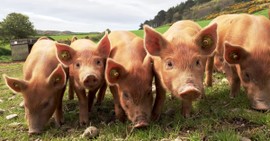
O porco também é impuro; embora tenha casco fendido, não rumina. Vocês não poderão comer a carne desses animais nem tocar em seus cadáveres.
9
“De todas as criaturas que vivem nas águas vocês poderão comer as que possuem barbatanas e escamas.
10
Mas não poderão comer nenhuma criatura que não tiver barbatanas nem escamas; é impura para vocês.
11
“Vocês poderão comer qualquer ave pura.
12
Mas estas vocês não poderão comer: a águia, o urubu, a águia-marinha,
13
o milhafre, qualquer espécie de falcão,
14
qualquer espécie de corvo,
15
a coruja-de-chifre,[b] a coruja-de-orelha-pequena, a coruja-orelhuda,[c] qualquer espécie de gavião,
17
a coruja-do-deserto, o abutre, a coruja-pescadora,
18
a cegonha, qualquer tipo de garça, a poupa e o morcego.
19
“Todas as pequenas criaturas que enxameiam e têm asas são impuras para vocês; não as comam.
20
Mas qualquer criatura que tem asas, sendo pura, vocês poderão comer.
21
“Não comam nada que encontrarem morto. Vocês poderão dá-lo a um estrangeiro residente de qualquer cidade de vocês, e ele poderá comê-lo, ou vocês poderão vendê-lo a outros estrangeiros. Mas vocês são povo consagrado ao SENHOR, o seu Deus.“Não cozinhem o cabrito no leite da própria mãe.
A Entrega dos Dízimos
22 “Separem o dízimo de tudo o que a terra produzir anualmente.
23
Comam o dízimo do cereal, do vinho novo e do azeite, e a primeira cria de todos os seus rebanhos na presença do SENHOR, o seu Deus, no local que ele escolher como habitação do seu Nome, para que aprendam a temer sempre o SENHOR, o seu Deus.
24
Mas, se o local for longe demais e vocês tiverem sido abençoados pelo SENHOR, o seu Deus, e não puderem carregar o dízimo, pois o local escolhido pelo SENHOR para ali pôr o seu Nome é longe demais,
25
troquem o dízimo por prata, e levem a prata ao local que o SENHOR, o seu Deus, tiver escolhido.
26
Com prata comprem o que quiserem: bois, ovelhas, vinho ou outra bebida fermentada, ou qualquer outra coisa que desejarem. Então juntamente com suas famílias comam e alegrem-se ali, na presença do SENHOR, o seu Deus.
27
E nunca se esqueçam dos levitas que vivem em suas cidades, pois eles não possuem propriedade nem herança próprias.
28
“Ao final de cada três anos, tragam todos os dízimos da colheita do terceiro ano, armazenando-os em sua própria cidade,
29
para que os levitas, que não possuem propriedade nem herança, e os estrangeiros, os órfãos e as viúvas que vivem na sua cidade venham comer e saciar-se, e para que o SENHOR, o seu Deus, os abençoe em todo o trabalho das suas mãos.
Deuteronômio 14 Commentary
Chapter 14
The Israelites to distinguish themselves from other nations. (1-21) Respecting the application of tithes. (22-29)
Verses 1-21 Moses tells the people of Israel how God had given them three distinguishing privileges, which were their honour, and figures of those spiritual blessings in heavenly things, with which God has in Christ blessed us. Here is election; "The Lord hath chosen thee." He did not choose them because they were by their own acts a peculiar people to him above other nations, but he chose them that they might be so by his grace; and thus were believers chosen, ( Ephesians 1:4 ) . Here is adoption; "Ye are the children of the Lord your God;" not because God needed children, but because they were orphans, and needed a father. Every spiritual Israelite is indeed a child of God, a partaker of his nature and favour. Here is sanctification; "Thou art a holy people." God's people are required to be holy, and if they are holy, they are indebted to the grace God which makes them so. Those whom God chooses to be his children, he will form to be a holy people, and zealous of good works. They must be careful to avoid every thing which might disgrace their profession, in the sight of those who watch for their halting. Our heavenly Father forbids nothing but for our welfare. Do thyself no harm; do not ruin thy health, thy reputation, thy domestic comforts, thy peace of mind. Especially do not murder thy soul. Do not be the vile slave of thy appetites and passions. Do not render all around thee miserable, and thyself wretched; but aim at that which is most excellent and useful. The laws which regarded many sorts of flesh as unclean, were to keep them from mingling with their idolatrous neighbours. It is plain in the gospel, that these laws are now done away. But let us ask our own hearts, Are we of the children of the Lord our God? Are we separate from the ungodly world, in being set apart to God's glory, the purchase of Christ's blood? Are we subjects of the work of the Holy Ghost? Lord, teach us from these precepts how pure and holy all thy people ought to live!
Verses 22-29 A second portion from the produce of their land was required. The whole appointment evidently was against the covetousness, distrust, and selfishness of the human heart. It promoted friendliness, liberality, and cheerfulness, and raised a fund for the relief of the poor. They were taught that their worldly portion was most comfortably enjoyed, when shared with their brethren who were in want. If we thus serve God, and do good with what we have, it is promised that the Lord our God will bless us in all the works of our land. The blessing of God is all to our outward prosperity; and without that blessing, the work of our hands will bring nothing to pass. The blessing descends upon the working hand. Expect not that God should bless thee in thy idleness and love of ease. And it descends upon the giving hand. He who thus scatters, certainly increases; and to be free and generous in the support of religion, and any good work, is the surest and safest way of thriving.
Unlock Deeper Insights: Get Over 20 Commentaries with Plus! Subscribe Now
Deuteronômio 14 Commentaries
Chapter Summary
INTRODUCTION TO DEUTERONOMY 14
In this chapter some cautions are given against the use of some rites and ceremonies in mourning for the dead, with the reason thereof, De 14:1,2 and instructions about what are lawful to be eaten, and what not, whether of beasts, fishes, or fowl, De 14:3-21, and concerning eating one sort of tithes both at the place God should choose, and within their own gates, De 14:22-29.
Taken from John Gill's Exposition of the Bible
Unlock Deeper Insights: Get Over 20 Commentaries with Plus! Subscribe Now



Biblia Sagrada, Nova Versão Internacional®, NVI® Copyright © 1993, 2000 by Biblica, Inc.™ Used by permission. All rights reserved worldwide.
Study Tools
PLUSUnlock Notes
This feature is for PLUS subscribers only. Join PLUS today to access these tools and more.
JOIN PLUSUnlock Highlights
This feature is for PLUS subscribers only. Join PLUS today to access these tools and more.
JOIN PLUSUnlock Bookmarks
This feature is for PLUS subscribers only. Join PLUS today to access these tools and more.
JOIN PLUSTrack Your Reading
Create a free account to start a reading plan, or join PLUS to unlock our full suite of premium study tools.
Already have an account? Sign in