Greg Grandchamp | Bible Study Tools

Latest writing

Articles by Greg Grandchamp

8 Times the Bible Mentions Natural Disasters, and What That Means for Us Today

8 Times the Bible Mentions Natural Disasters, and What That Means for Us Today

October 22, 2024

“God is our refuge and strength, an ever-present help in trouble. Therefore, we will not fear, though the earth give way and the mountains fall into the heart of the sea, though its waters roar and foam and the mountains quake with their surging” (Psalm 46:1-3).

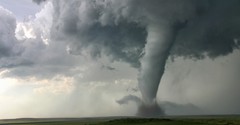
“Acts of God” is a significant concept in legal and business contexts. The term influences insurance policies, contracts and risk management strategies. Legally, an act of God is a term used to denote events occurring outside of human control. Perhaps like severe, unanticipated natural events for which no human could possibly be responsible. These events can include natural disasters like floods, earthquakes, tornadoes, and hurricanes. 

But the important question for us as believers is – are these really “acts of God,” or are they something else? Of course, God created the entire universe, and the laws of nature are a part of that. Most natural disasters are a direct result of those laws. Hurricanes and tornadoes are a result of the collision of divergent weather patterns. Shifts of the earth’s tectonic plates cause earthquakes and tsunamis by underwater earthquakes. 

As I write, the states of Florida, North Carolina and others are coming out from under intense and catastrophic damage from hurricanes; Florida suffered three in a very short period. It boggles our minds how God can allow such terrible things and, to be quite honest, I’m not sure there are good answers to that question, when death and destruction are the expected outcomes. 

When we are faced with the destruction of natural disasters, it is also quite natural for us to seek solace in Scripture. We seek understanding. While we don’t find many answers to “why,” we do find comfort and hope, and perhaps a bit of perspective in the aftermath of the calamity and chaos such disasters cause.

Does God cause natural disasters to happen? Well, we know he can – and has in the past.

Does God allow natural disasters to occur? He could stop them, but chooses not to, obviously.

Does God promise no harm will come to Christians? No, quite the opposite, actually.

But what does the Bible have to say about natural disasters? Quite a lot actually. From Genesis to Revelation, we see God’s hand using natural disasters – and rescuing us from them. We see a great many individual verses, as well as more broad themes. 

Here are eight of those broad themes.

Photo credit: ©Getty Images/Jason Persoff Stormdoctor

Read article
What Are the Real Dangers of Divisions within the Church?

What Are the Real Dangers of Divisions within the Church?

September 23, 2024

“My prayer is not for them alone. I pray also for those who will believe in me through their message, that all of them may be one, Father, just as you are in me and I am in you. May they also be in us so that the world may believe that you have sent me” (John 17:20-21).

Maybe you’ve heard this one. 

Once I saw this guy on a bridge about to jump. I said, ‘Don’t do it!’ He said, ‘Nobody loves me.’

I said, ‘God loves you. Do you believe in God?’ He said, ‘Yes.’

I said, ‘Are you a Christian or a Jew?’ He said, ‘A Christian.’

I said, ‘Me, too! Protestant or Catholic?’ He said, ‘Protestant.’

I said, ‘Me, too! What franchise?’ He said, ‘Baptist.’

I said, ‘Me, too! Northern Baptist or Southern Baptist?’ He said, ‘Northern Baptist.’

I said, ‘Me, too! Northern Conservative Baptist or Northern Liberal Baptist?’ He said, ‘Northern Conservative Baptist.’

I said, ‘Me, too! Northern Conservative Baptist Great Lakes Region, or Northern Conservative Baptist Eastern Region?’ He said, ‘Northern Conservative Baptist Great Lakes Region.’

I said, ‘Me, too! Northern Conservative Baptist Great Lakes Region Council of 1879, or Northern Conservative Baptist Great Lakes Region Council of 1912?’ He said, ‘Northern Conservative Baptist Great Lakes Region Council of 1912.’

I said, ‘Die, heretic!’ And I pushed him over.

While this story might elicit a slight smile – maybe even a chuckle if you’re Baptist - the problem is that the funniest jokes seem to be those that are closest to the truth. With the slight smile might also come a glimmer of pain, as well.

But the division that we see within the Church (capital C) is also observed by the non-believers outside the church, who often then weaponize it. They use it as a tool to throw shade and doubt about Christianity – claiming that not even Christians can agree on what the Bible teaches. I know this because I have had those very conversations with those who call themselves atheists. 

Given his prayer in John 17, just before his crucifixion and death, obviously Christian unity is of utmost importance to Jesus. He went so far as to explain why – “Then the world will know that you sent me…” Dis-unity – division – in the Church has the polar-opposite impact, in more ways than one.

Jesus prayed for His church – HIS church, not ours – to be united (John 17:20-21). In fact, the biblical calls to unity are far too numerous to even list here. Yet we, in our absolute humanness, arrogance, pride and ego, have chosen a different path. Because we believe we know what is right better than “that other church over there.”

“I have given them the glory that you gave me, that they may be one as we are one — I in them and you in me — so that they may be brought to complete unity. Then the world will know that you sent me and have loved them even as you have loved me” (John 17:22-23).

Photo credit: ©Getty Images/Radachynskyi

Read article
6 Essential Reasons Christians Must Be Prepared to Defend the Faith

6 Essential Reasons Christians Must Be Prepared to Defend the Faith

June 17, 2024

“But in your hearts revere Christ as Lord. Always be prepared to give an answer to everyone who asks you to give the reason for the hope that you have. But do this with gentleness and respect…” (1 Peter 3:15).

Apologetics. It’s a word that I personally never felt comfortable using when talking about defending our faith. It reminded me too much of “apology” – as if we are making one for what we believe. But the definition of the word is entirely accurate. According to the Oxford Languages dictionary, apologetics means “reasoned arguments or writings in justification of something, typically a theory or religious doctrine.” 

Now that one makes sense. It means that logic and reason don’t have to take an absolute swan dive to believe what we believe.

Of course, some may ask why that is important. After all, they may say, the Word of God should not need to be defended – and yet, what about someone who doesn’t believe the Bible is the word of God, and doesn’t understand why we believe it? Others may believe that human reason can’t answer anything about God, but isn’t that, in itself, a statement of reason about God?

The great author and Christian apologist Norman Geisler (“I Don’t Have Enough Faith to be an Atheist”) put it this way: “This does not mean there is no room for faith. But God wants us to take a step of faith in the light of evidence, rather than to leap in the dark.”

Generally speaking, people seem to refuse to believe something – rather, believe in something – without evidence. Oh sure, they’ll often believe what is said on the news they listen to, or even to a degree on social media, without evidence. But to give up control of their lives, to submit to a moral authority greater than themselves, they need evidence. After a lifetime of being taught that evolution is a fact – and hearing about how Christianity is “evil” – they need truth. They need to hear of the love of Christ.

“We demolish arguments and every pretension that sets itself up against the knowledge of God, and we take captive every thought to make it obedient to Christ” (2 Corinthians 10:5).

Photo credit: ©Getty Images/krisanapongdetraphiphat

Read article