What Can We Learn from the Story of Jesus Sending the Seventy Disciples?
Share
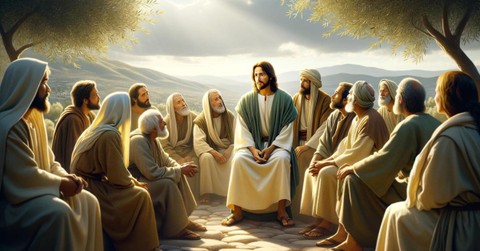
Any place they were not accepted, they were to leave and say, “The very dust of your city, we do wipe off against you” (Matthew 10:14; Mark 6:11; Acts 13:51). When Jews were leaving a Samaritan or Gentile territory, they would follow this custom. Jesus said that those who do not believe, accept, or reject the Gospel will be rejected. As a result, communion and communication are broken.
Jesus took the stance that being unclean does not involve ethnicity, race, or custom but the inability or refusal to submit to the Kingdom of God. Mankind’s response has no bearing on the sovereign rule of the Kingdom of God. God is King regardless of what humanity does. It was intended to warn those who did not receive Christ’s messengers that, despite their unbelief, the Kingdom of God was getting closer.
Sodom, Tyre, and Sidon were cities known for their longstanding wickedness and immorality (Genesis 18, 19; Ezekiel 27, 28). Each of these cities was destroyed for their wickedness by God. But what do we notice here? In these verses, the message is stated that “it shall be more tolerable…at the judgment…than for you.” The Lord states that although these cities will face judgment again, any city that has seen the Messiah but rejected Him will suffer much more. Even in Capernaum, where Jesus based His ministry, those who had seen Jesus’ miracles and did not believe in His teachings would also be judged for their rejection of Jesus.
Judgment falls heavier upon those of honor (those who claim to be religious yet have no true faith). The more prominent the open door, the more noteworthy the commitment to reaction and the punishment for its absence.
Now, the seventy disciples are returning from their travels. We can only imagine the miracles that had been performed based upon the authority Jesus gave them. Can you picture the joy and delight upon their faces and in their hearts for what they had witnessed? But Jesus must bring them back down to earth. He tells them that although what has been performed deserves joy, it is much better to rejoice because their names are written down in heaven (Isaiah 4:3; Philippians 4:3; Revelation 20:12). What we must not forget is that what is more important than any miracles that have been accomplished is our citizenship in heaven.
Jesus now gives thanks to God the Father for the spiritual truth that has been revealed. Many of life’s rewards seem to only go to those of prominence, those that are worldly, rich, and powerful. But praise God that the Kingdom of God is available to all people. It takes a childlike faith to come to Jesus, not strength, power, or intellect. I do not think that Christ is opposed to pursuing knowledge, but spiritual pride (“wise in their own eyes,” Isaiah 5:21), that is not acceptable.
Unlike the disciples, who had firsthand experience with Jesus, we have been privileged to have 2,000 years of Biblical and spiritual history from the Bible. Unfortunately, many take this for granted. We must remember that with that privilege comes a great responsibility to follow Christ and to share the Good News with the world.
Peter wrote in 1 Peter 1:10-13, the Old Testament prophets prophesied of Jesus, some suffered persecution and died for God. Jesus stated that they “desired to see those things…and to hear those things.” These disciples had been blessed to witness Christ firsthand.
For you Christians out there, have you ever thought about how the Holy Spirit touched your heart? How did God call you? Maybe it was through a “thunder and lightning” event or just a still small voice. Let me tell you that it does not matter how you came to know Christ, but it does matter what we do with the gift that has been given to us.
Satan may have already or has been arguing with you, condemning you for your past. Maybe he is repeatedly telling you how unworthy you are. He has done this to me and many other Christians through the years.
Yes, there is no doubt that some of us may have been a Magdalene, a Zacchaeus, a thief, a prodigal son or daughter, a murderer, or any other immoral or evil beings. But God, in His infinite grace, gave us His Son to die on the cross for our sins (John 3:16). By God’s grace and my faith in Him, He has accepted me as one of His own (Luke 12:8; John 1:12).
Photo Credit: AI technology and subsequently edited and reviewed by our editorial team.