VBS Safety Guide: How to Protect Kids during Vacation Bible School
Share

Why Safety Is Important during VBS
Many of us have fond memories of Vacation Bible School (VBS) events from our childhood, and want to make sure our church’s children enjoy their time as well. Any time churches hold events involving children, it is key to ensure the event protects children from emergencies and threats. Let’s take a look at some key principles for VBS safety.
How Do You Create an Effective Safety Plan for VBS?
The first thing you can do to promote better VBS safety is to cultivate good relationships with people who do administrative work (secretaries, office administrators) for your church. In particular, seek out people who are discerning and will give tactful but honest answers about things they wish their church had known before problems arose. The more time you spend with wise people who have local ministry experience, the more guidance you will hear about how to:
- Handle emergencies
- Identify warning signs of unsafe people
- Practice policies that keep your VBS program safe
The second thing to do is to produce a checklist that every VBS volunteer carries. The checklist should cover how to handle common emergencies, such as:
- Fire on church property
- Tornadoes, earthquakes, or hurricanes (depending on your region)
- Flooding
- Suspected shooters
- Police warnings about crimes-in-progress nearby
- Suspicious characters on church property
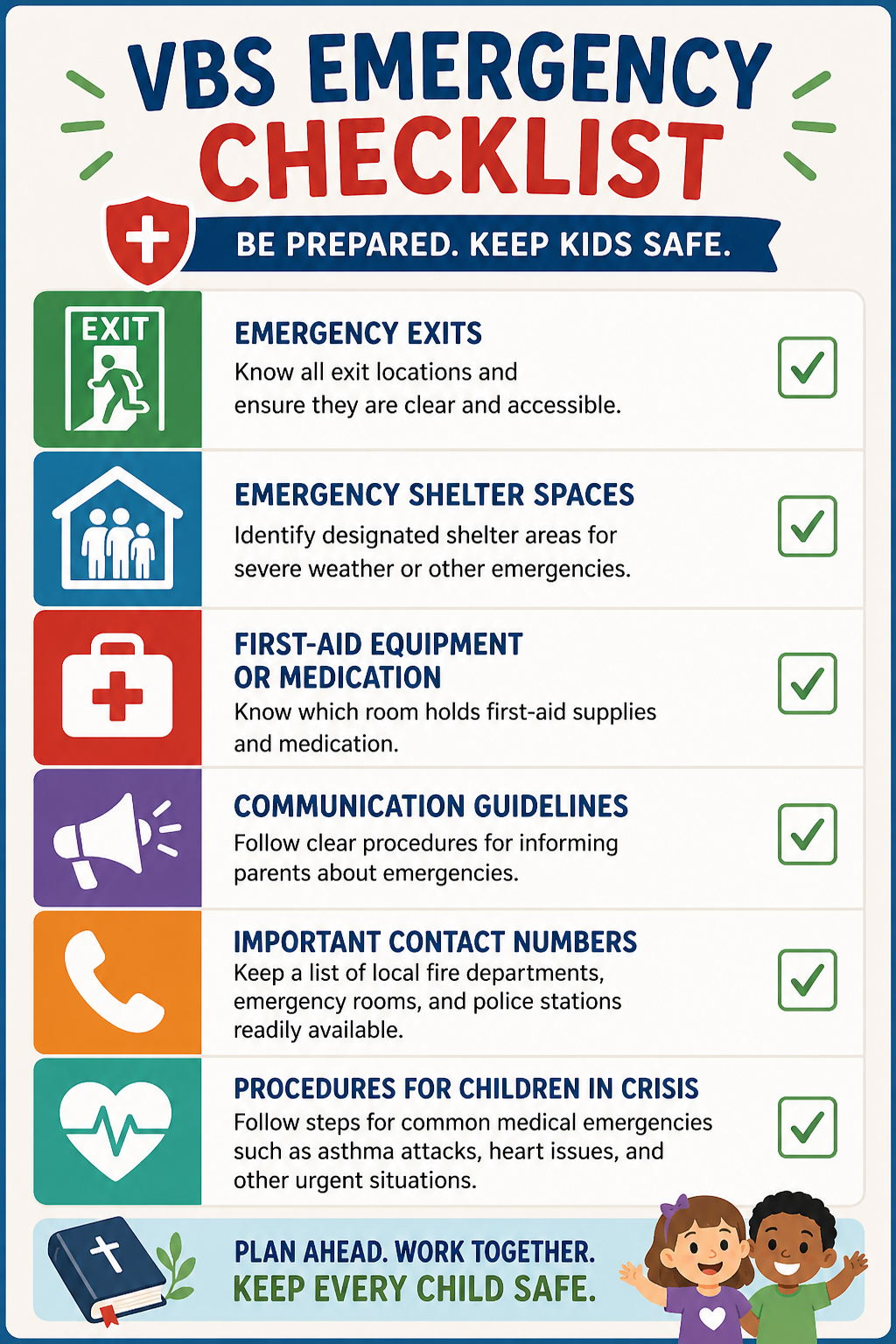
If your church does not have an existing checklist, contact a larger church or ask your local library, fire station, or police station for their procedures. The procedures should cover things like:
- Emergency exits
- Emergency shelter spaces
- Which room holds first-aid equipment or medication
- Communication guidelines for informing parents about emergencies
- Contact numbers for local fire departments, emergency rooms, and police stations
- Procedures for children in crisis (such as asthma attacks, heart issues, etc.)
Do not forget to ask about how many families have children with disabilities. These may range from children who are diagnosed with Autism Spectrum Disorder (or on the spectrum) to children with physical limitations (wheelchairs, etc.). Research safety procedures and advice for hosting children with disabilities at VBS events. National organizations like Joni and Friends, or local groups listed as disability ministries or disability discipleship groups can help. You may even find someone in your area who can consult on making your VBS event safe.
Screening and Background Checks for VBS Volunteers
It is crucial that every VBS person is a safe person to be around children. Ask every volunteer for background information, including:
- Criminal convictions
- Substance issues
It also never hurts to check people’s social media pages for anything objectionable (posts sexualizing women or children, for example).
Do not forget to ask new volunteers for character references. If the volunteer has attended the church for a while, ask a church administrator how the person has handled volunteer work in the past.
If possible, and especially if something comes up in the volunteer interview that concerns you, perform a background check. There are several services which offer background checks for ministries, including Lifeway and Protect My Ministry. If their price does not fit your church’s budget, look into discounted rates for summer activities.
If your church cannot afford to pay for background checks, check with your local school or law enforcement agency for listings of registered sex offenders in your area. Public records should cover most of the information you need.
Depending on your church’s location and congregation culture, people with complicated pasts may want to volunteer. For example, if your church is located in an economically depressed region or an inner-city location with lots of local crime, it would not be unusual to meet members who have some history of substance abuse or childhood trauma. You may have pastors or elders on staff who have undergone rehabilitation. Ask people to be honest about their past legal and medical histories, even things that happened decades ago in other cities or states. Ask for all this information kindly, including asking how they are doing on their recovery journey to get a sense of the full story. If the volunteer is undergoing some form of rehabilitation, consult with leadership about how to handle this situation.
In almost all cases, if the potential volunteer has a recent history with substance abuse, have them stick to volunteering with adults for the time being. No one is beyond healing in Christ, but the Bible is clear that keeping the church community safe matters.
How Should Churches Handle Child Check-In and Check-Out at VBS?
The size of your church will determine a lot about your safety procedures during VBS check-in and check-out times. In a small church (under 200 members), your team likely knows all parents with kids old enough for VBS by sight, making it easy to tell if a stranger has arrived at check-in or check-out time. In a megachurch, extra procedures, like showing an ID before picking up children at check-out time, will probably be necessary.
In general, follow the following procedures.
First, announce registration for VBS at least a month before the program starts. Have each parent fill out a registration document that clearly lists:
- Name of the child
- Names of the parents
- Dates the VBS program will happen
- Check-in and check-out times for each day
- Numbers to contact the church if check-out plans change
- Details about children’s medical or dietary needs
- Name and contact information for a backup person who can check out the child
- Instructions to call ahead if the backup person is coming
- Instructions about how to verbally confirm they are a safe person at check out
Second, have each child sign in with their parent when they arrive, and give children a name tag, alongside a bracelet or necklace with the VBS event’s themed name.
Third, have all children wait near the church entrance, but still inside the building, at check-out time. Make sure the security person stands nearby, clearly visible to everyone.
Fourth, if the volunteers do not know the parents or designated guardian by sight, ask children the name of who is picking them up. Instruct the parents beforehand to give some form of verbal confirmation (such as asking children for a high five) when they pick up the child. In a very large church, consider having parents show an ID to volunteers when they arrive.
Preparing for Emergencies and Medical Needs at VBS
Medical needs can vary a lot at VBS events, depending on the children who register.
If your church does not have a nurse on staff, make sure at least one volunteer who has committed to appearing at the entire event has completed a first aid class through a certified organization such as the American Red Cross. If no one is available, advertise for a volunteer who has worked as a school nurse or had some other professional experience offering medical care. If no one is available, talk to the church leadership board about sponsoring someone to complete a first aid class. For extra safety, ask for a backup person who has some first-aid training through a scouting program or something similar, if not certified training.
Check the registration list for any children who have medical needs, such as asthma inhalers or over-the-counter medications (allergy pills, special sunscreen, etc.).
If any child has specific medical needs, such as juvenile diabetes, consult local laws about how much a nurse is permitted to do if the child has an emergency. Sit down with the parents to get details about their child’s needs, and then inform the nurse accordingly.
Store all medication or medical equipment with the first aid kit in one easily remembered place, preferably a nurse’s office or front desk. A couple of days before the event, talk to volunteers and the security team about proper procedures for handling medical situations.
Keeping Church Buildings Secure During VBS
To ensure safety during the VBS program, check that your church’s emergency exits and equipment are up to code weeks before the event, giving you time to work with contractors to update any outdated equipment. This includes checking the:
- Fire extinguishers
- Exit signs and doors
- Service elevators
- Security cameras
- Fire extinguishers
- Burglar alarms
Do not forget to look for at least one security guard to help with the event. If you cannot afford to hire a security guard and there are no security volunteers on staff, find out about church members in good standing who have worked in law enforcement or have served in the armed forces. They may be willing to donate a few weeks of their summer time to keep children safe.
Communicating VBS Safety Policies to Parents
Making sure parents know the VBS program will be safe is vital, especially if you are starting a new program.
Make sure announcements during the month leading up to the VBS program mention that there is a safety checklist parents can ask about, and explain where they can get a copy of the checklist. Mention the security person’s name to the congregation and thank them for helping out.
Arrange for a parents’ night where they can hear the safety procedures and ask questions about them. Make it clear that the night is for asking questions. Parents may have legitimate concerns about additional guidelines or exceptions to be made to the safety checklist, but if the checklist is well-written and follows tested practices for handling security issues, not much of it can be changed. Make it clear that parents with particular concerns (for example, if they have children with Down’s Syndrome or another condition that may require extra care if an emergency occurs) can ask questions or suggest changes after the meeting to the VBS organizer or the security person.
Creating a safe VBS environment requires thoughtful planning, clear communication, and a commitment to protecting every child in your care. When churches prioritize safety, they build trust with families and create a space where kids can learn, grow, and experience God’s love without fear.
Photo credit: ©GettyImages/doble-d