
Change Translation
- Recent Translations
- All Translations
1
Así que, entonces tomó Pilato a Jesús, y le azotó
2
Y los soldados entretejieron de espinas una corona, y la pusieron sobre su cabeza, y le vistieron de una ropa de grana
3
y (venían a él y) decían: ¡Hayas gozo, rey de los Judíos! Y le daban de bofetadas
4
Entonces Pilato salió otra vez fuera, y les dijo: He aquí, os lo traigo fuera, para que entendáis que ningún crimen hallo en él
5
Así salió Jesús fuera, llevando la corona de espinas y la ropa de grana. Y les dice Pilato: He aquí el hombre
6
Y como le vieron los príncipes de los sacerdotes, y los servidores, dieron voces diciendo: Cuélguenle de un madero, cuélguenle de un madero. Les dice Pilato: Tomadle vosotros, y colgadle del madero; porque yo no hallo en él crimen
7
Le respondieron los judíos: Nosotros tenemos ley, y según nuestra ley debe morir, porque se hizo Hijo de Dios
8
Cuando Pilato oyó esta palabra, tuvo más miedo
9
Y entró otra vez en el pretorio, y dijo a Jesús: ¿De dónde eres tú? Mas Jesús no le dio respuesta
10
Entonces le dice Pilato: ¿A mí no me hablas? ¿No sabes que tengo potestad para colgarte de un madero, y que tengo potestad para soltarte
11
Respondió Jesús: Ninguna potestad tendrías contra mí, si no te fuera dada de arriba; por tanto, el que a ti me ha entregado, mayor pecado tiene
12
Desde entonces procuraba Pilato soltarle; mas los Judíos daban voces, diciendo: Si a éste sueltas, no eres amigo de César; cualquiera que se hace rey, a César contradice
13
Entonces Pilato, oyendo este dicho, llevó fuera a Jesús, y se sentó en el tribunal en el lugar que se dice el Enlosado, y en hebreo Gábata
14
Y era la víspera de la Pascua, y como la hora sexta. Entonces dijo a los Judíos: He aquí vuestro Rey
15
Pero ellos dieron voces: Quita, quita, cuélguenle de un madero. Les dice Pilato: ¿A vuestro Rey he de colgar de un madero? Respondieron los sumos sacerdotes: No tenemos rey sino a César
16
Así que entonces lo entregó a ellos para que fuera colgado de un madero. Y tomaron a Jesús, y le llevaron
17
Y llevando el madero para sí, vino al lugar que se dice de la Calavera, y en hebreo, Gólgota
18
donde le colgaron del madero, y con él otros dos, uno en un madero a cada lado, y Jesús en medio
19
Y escribió también Pilato un título, que puso encima del madero. Y el escrito era: JESÚS NAZARENO, REY DE LOS JUDÍOS
20
Y muchos de los Judíos leyeron este título, porque el lugar donde estaba Jesús colgado del madero era cerca de la ciudad; y estaba escrito en hebreo, en griego, y en latín
21
Y decían a Pilato los sumos sacerdotes de los judíos: No escribas, Rey de los Judíos; sino, que él dijo: YO SOY Rey de los Judíos
22
Respondió Pilato: Lo que he escrito, he escrito
23
Cuando los soldados hubieron colgado a Jesús del madero, tomaron sus vestidos, e hicieron cuatro partes (a cada soldado una parte); y la túnica; mas la túnica era sin costura, toda tejida desde arriba
24
Y dijeron entre ellos: No la partamos, sino echemos suertes sobre ella, de quién será; para que se cumpliera la Escritura, que dice: Partieron para sí mis vestidos, Y sobre mi vestidura echaron suertes. Y los soldados ciertamente hicieron esto
25
Y estaban junto al madero de Jesús su madre, y la hermana de su madre, María mujer de Cleofas, y María Magdalena
26
Y como vio Jesús a la madre, y al discípulo que él amaba, que estaba presente, dice a su madre: Mujer, he ahí tu hijo
27
Después dice al discípulo: He ahí tu madre. Y desde aquella hora el discípulo la recibió consigo
28
Después de esto, sabiendo Jesús que todas las cosas eran ya cumplidas, para que la Escritura se cumpliera, dijo: Sed tengo
29
Y estaba allí un vaso lleno de vinagre; entonces ellos mojaron una esponja de vinagre, y rodeada a un hisopo, se la llegaron a la boca
30
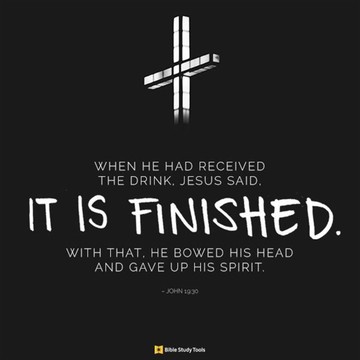
Cuando Jesús tomó el vinagre, dijo: Consumado es. Y habiendo inclinado la cabeza, dio el Espíritu
31
Entonces los Judíos, para que los cuerpos no quedaran en el madero en el sábado, porque era la víspera de la Pascua, pues era el gran día del sábado, rogaron a Pilato que se les quebraran las piernas, y fueran quitados
32
Y vinieron los soldados, y a la verdad quebraron las piernas al primero, y al otro que había sido colgado de un madero con él
33
Mas cuando vinieron a Jesús, como le vieron ya muerto, no le quebraron las piernas
34
pero uno de los soldados le abrió el costado con una lanza, y luego salió sangre y agua
35
Y el que lo vio, da testimonio, y su testimonio es verdadero; y él sabe que dice verdad, para que vosotros también creáis
36
Porque estas cosas fueron hechas para que se cumpliera la Escritura: Hueso no quebrantaréis de él
37
Y también otra Escritura dice: Verán a aquel al cual traspasaron
38
Pasadas estas cosas, José de Arimatea, el cual era discípulo de Jesús, mas en secreto por miedo de los judíos, rogó a Pilato que pudiera quitar el cuerpo de Jesús; lo cual permitió Pilato. Entonces vino, y quitó el cuerpo de Jesús
39
Entonces vino también Nicodemo, el que antes había venido a Jesús de noche, trayendo un compuesto de mirra y de áloes, como cien libras
40
Y tomaron el cuerpo de Jesús, y lo envolvieron en lienzos con especias, como es costumbre de los judíos sepultar
41
Y en aquel lugar donde había sido colgado del madero, había un huerto; y en el huerto un sepulcro nuevo, en el cual aún no había sido puesto ninguno
42
Allí, pues, por causa de la víspera de la Pascua de los judíos, porque aquel sepulcro estaba cerca, pusieron a Jesús
Juan 19 Commentary
Chapter 19
Christ condemned and crucified. (1-18) Christ on the cross. (19-30) His side pierced. (31-37) The burial of Jesus. (38-42)
Verses 1-18 Little did Pilate think with what holy regard these sufferings of Christ would, in after-ages, be thought upon and spoken of by the best and greatest of men. Our Lord Jesus came forth, willing to be exposed to their scorn. It is good for every one with faith, to behold Christ Jesus in his sufferings. Behold him, and love him; be still looking unto Jesus. Did their hatred sharpen their endeavours against him? and shall not our love for him quicken our endeavours for him and his kingdom? Pilate seems to have thought that Jesus might be some person above the common order. Even natural conscience makes men afraid of being found fighting against God. As our Lord suffered for the sins both of Jews and Gentiles, it was a special part of the counsel of Divine Wisdom, that the Jews should first purpose his death, and the Gentiles carry that purpose into effect. Had not Christ been thus rejected of men, we had been for ever rejected of God. Now was the Son of man delivered into the hands of wicked and unreasonable men. He was led forth for us, that we might escape. He was nailed to the cross, as a Sacrifice bound to the altar. The Scripture was fulfilled; he did not die at the altar among the sacrifices, but among criminals sacrificed to public justice. And now let us pause, and with faith look upon Jesus. Was ever sorrow like unto his sorrow? See him bleeding, see him dying, see him and love him! love him, and live to him!
Verses 19-30 Here are some remarkable circumstances of Jesus' death, more fully related than before. Pilate would not gratify the chief priests by allowing the writing to be altered; which was doubtless owing to a secret power of God upon his heart, that this statement of our Lord's character and authority might continue. Many things done by the Roman soldiers were fulfilments of the prophecies of the Old Testament. All things therein written shall be fulfilled. Christ tenderly provided for his mother at his death. Sometimes, when God removes one comfort from us, he raises up another for us, where we looked not for it. Christ's example teaches all men to honour their parents in life and death; to provide for their wants, and to promote their comfort by every means in their power. Especially observe the dying word wherewith Jesus breathed out his soul. It is finished; that is, the counsels of the Father concerning his sufferings were now fulfilled. It is finished; all the types and prophecies of the Old Testament, which pointed at the sufferings of the Messiah, were accomplished. It is finished; the ceremonial law is abolished; the substance is now come, and all the shadows are done away. It is finished; an end is made of transgression by bringing in an everlasting righteousness. His sufferings were now finished, both those of his soul, and those of his body. It is finished; the work of man's redemption and salvation is now completed. His life was not taken from him by force, but freely given up.
Verses 31-37 A trial was made whether Jesus was dead. He died in less time than persons crucified commonly did. It showed that he had laid down his life of himself. The spear broke up the very fountains of life; no human body could survive such a wound. But its being so solemnly attested, shows there was something peculiar in it. The blood and water that flowed out, signified those two great benefits which all believers partake of through Christ, justification and sanctification; blood for atonement, water for purification. They both flow from the pierced side of our Redeemer. To Christ crucified we owe merit for our justification, and Spirit and grace for our sanctification. Let this silence the fears of weak Christians, and encourage their hopes; there came both water and blood out of Jesus' pierced side, both to justify and sanctify them. The Scripture was fulfilled, in Pilate's not allowing his legs to be broken, Ps. 34:20 . There was a type of this in the paschal lamb, Ex. 12:46 . May we ever look to Him, whom, by our sins, we have ignorantly and heedlessly pierced, nay, sometimes against convictions and mercies; and who shed from his wounded side both water and blood, that we might be justified and sanctified in his name.
Verses 38-42 Joseph of Arimathea was a disciple of Christ in secret. Disciples should openly own themselves; yet some, who in lesser trials have been fearful, in greater have been courageous. When God has work to do, he can find out such as are proper to do it. The embalming was done by Nicodemus, a secret friend to Christ, though not his constant follower. That grace which at first is like a bruised reed, may afterward resemble a strong cedar. Hereby these two rich men showed the value they had for Christ's person and doctrine, and that it was not lessened by the reproach of the cross. We must do our duty as the present day and opportunity are, and leave it to God to fulfil his promises in his own way and his own time. The grave of Jesus was appointed with the wicked, as was the case of those who suffered as criminals; but he was with the rich in his death, as prophesied, ( Isaiah 53:9 ) ; these two circumstances it was very unlikely should ever be united in the same person. He was buried in a new sepulchre; therefore it could not be said that it was not he, but some other that rose. We also are here taught not to be particular as to the place of our burial. He was buried in the sepulchre next at hand. Here is the Sun of Righteousness set for a while, to rise again in greater glory, and then to set no more.
Unlock Deeper Insights: Get Over 20 Commentaries with Plus! Subscribe Now
Juan 19 Commentaries




Images for Juan 19
Título en Inglés – The Jubilee Bible
(De las Escrituras de La Reforma)
Editado por: Russell M. Stendal
Jubilee Bible 2000 – Russell Martin Stendal
© 2000, 2001, 2010
Study Tools
PLUSUnlock Notes
This feature is for PLUS subscribers only. Join PLUS today to access these tools and more.
JOIN PLUSUnlock Highlights
This feature is for PLUS subscribers only. Join PLUS today to access these tools and more.
JOIN PLUSUnlock Bookmarks
This feature is for PLUS subscribers only. Join PLUS today to access these tools and more.
JOIN PLUSTrack Your Reading
Create a free account to start a reading plan, or join PLUS to unlock our full suite of premium study tools.
Already have an account? Sign in