Change Translation
- Recent Translations
- All Translations
1
Und es begab sich, da Jesus alle diese Reden vollendet hatte, sprach er zu seinen Jüngern:
2
Ihr wisset, daß nach zwei Tagen Ostern wird; und des Menschen Sohn wird überantwortet werden, daß er gekreuzigt werde.
3
Da versammelten sich die Hohenpriester und Schriftgelehrten und die Ältesten im Volk in den Palast des Hohenpriesters, der da hieß Kaiphas,
4
und hielten Rat, wie sie Jesus mit List griffen und töteten.
5
Sie sprachen aber: Ja nicht auf das Fest, auf daß nicht ein Aufruhr werde im Volk!
6
Da nun Jesus war zu Bethanien im Hause Simons, des Aussätzigen,
7
da trat zu ihm ein Weib, das hatte ein Glas mit köstlichem Wasser und goß es auf sein Haupt, da er zu Tische saß.
8
Da das seine Jünger sahen, wurden sie unwillig und sprachen: Wozu diese Vergeudung?
9
Dieses Wasser hätte mögen teuer verkauft und den Armen gegeben werden.
10
Da das Jesus merkte, sprach er zu ihnen: Was bekümmert ihr das Weib? Sie hat ein gutes Werk an mir getan.
11
Ihr habt allezeit Arme bei euch; mich aber habt ihr nicht allezeit.
12
Daß sie dies Wasser hat auf meinen Leib gegossen, hat sie getan, daß sie mich zum Grabe bereite.
13
Wahrlich ich sage euch: Wo dies Evangelium gepredigt wird in der ganzen Welt, da wird man auch sagen zu ihrem Gedächtnis, was sie getan hat.
14
Da ging hin der Zwölf einer, mit Namen Judas Ischariot, zu den Hohenpriestern
15
und sprach: Was wollt ihr mir geben? Ich will ihn euch verraten. Und sie boten ihm dreißig Silberlinge.
16
Und von dem an suchte er Gelegenheit, daß er ihn verriete.
17
Aber am ersten Tag der süßen Brote traten die Jünger zu Jesus und sprachen zu ihm: Wo willst du, daß wir dir bereiten das Osterlamm zu essen?
18
Er sprach: Gehet hin in die Stadt zu einem und sprecht der Meister läßt dir sagen: Meine Zeit ist nahe; ich will bei dir Ostern halten mit meinen Jüngern.
19
Und die Jünger taten wie ihnen Jesus befohlen hatte, und bereiteten das Osterlamm.
20
Und am Abend setzte er sich zu Tische mit den Zwölfen.
21
Und da sie aßen, sprach er: Wahrlich ich sage euch: Einer unter euch wird mich verraten.
22
Und sie wurden sehr betrübt und hoben an, ein jeglicher unter ihnen, und sagten zu ihm: HERR, bin ich's?
23
Er antwortete und sprach: Der mit der Hand mit mir in die Schüssel tauchte, der wird mich verraten.
24
Des Menschen Sohn geht zwar dahin, wie von ihm geschrieben steht; doch weh dem Menschen, durch welchen des Menschen Sohn verraten wird! Es wäre ihm besser, daß er nie geboren wäre.
25
Da antwortete Judas, der ihn verriet, und sprach: Bin ich's Rabbi? Er sprach zu ihm: Du sagst es.
26
Da sie aber aßen, nahm Jesus das Brot, dankte und brach's und gab's den Jüngern und sprach: Nehmet, esset; das ist mein Leib.
27
Und er nahm den Kelch und dankte, gab ihnen den und sprach: Trinket alle daraus;
28
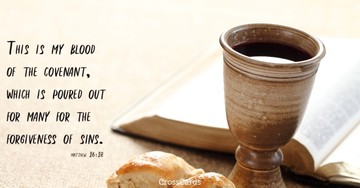
das ist mein Blut des neuen Testaments, welches vergossen wird für viele zur Vergebung der Sünden.
29
Ich sage euch: Ich werde von nun an nicht mehr von diesen Gewächs des Weinstocks trinken bis an den Tag, da ich's neu trinken werde mit euch in meines Vaters Reich.
30
Und da sie den Lobgesang gesprochen hatte, gingen sie hinaus an den Ölberg.
31
Da sprach Jesus zu ihnen: In dieser Nacht werdet ihr euch alle ärgern an mir. Denn es steht geschrieben: "Ich werde den Hirten schlagen, und die Schafe der Herde werden sich zerstreuen."
32
Wenn ich aber auferstehe, will ich vor euch hingehen nach Galiläa.
33
Petrus aber antwortete und sprach zu ihm: Wenn sich auch alle an dir ärgerten, so will ich doch mich nimmermehr ärgern.
34
Jesus sprach zu ihm: Wahrlich ich sage dir: In dieser Nacht, ehe der Hahn kräht, wirst du mich dreimal verleugnen.
35
Petrus sprach zu ihm: Und wenn ich mit dir sterben müßte, so will ich dich nicht verleugnen. Desgleichen sagten auch alle Jünger.
36
Da kam Jesus mit ihnen zu einem Hofe, der hieß Gethsemane, und sprach zu seinen Jüngern: Setzet euch hier, bis daß ich dorthin gehe und bete.
37
Und nahm zu sich Petrus und die zwei Söhne des Zebedäus und fing an zu trauern und zu zagen.
38
Da sprach Jesus zu ihnen: Meine Seele ist betrübt bis an den Tod; bleibet hier und wachet mit mir!
39
Und ging hin ein wenig, fiel nieder auf sein Angesicht und betete und sprach: Mein Vater, ist's möglich, so gehe dieser Kelch von mir; doch nicht, wie ich will, sondern wie du willst!
40
Und er kam zu seinen Jüngern und fand sie schlafend und sprach zu Petrus: Könnet ihr denn nicht eine Stunde mit mir wachen?
41
Wachet und betet, daß ihr nicht in Anfechtung fallet! Der Geist ist willig; aber das Fleisch ist schwach.
42
Zum andernmal ging er wieder hin, betete und sprach: Mein Vater, ist's nicht möglich, daß dieser Kelch von mir gehe, ich trinke ihn denn, so geschehe dein Wille!
43
Und er kam und fand sie abermals schlafend, und ihre Augen waren voll Schlafs.
44
Und er ließ sie und ging abermals hin und betete zum drittenmal und redete dieselben Worte.
45
Da kam er zu seinen Jüngern und sprach zu ihnen: Ach wollt ihr nur schlafen und ruhen? Siehe, die Stunde ist hier, daß des Menschen Sohn in der Sünder Hände überantwortet wird.
46
Stehet auf, laßt uns gehen! Siehe, er ist da, der mich verrät!
47
Und als er noch redete, siehe, da kam Judas, der Zwölf einer, und mit ihm eine große Schar, mit Schwertern und mit Stangen, von den Hohenpriestern und Ältesten des Volks.
48
Und der Verräter hatte ihnen ein Zeichen gegeben und gesagt: Welchen ich küssen werde, der ist's; den greifet.
49
Und alsbald trat er zu Jesus und sprach: Gegrüßet seist du, Rabbi! und küßte ihn.
50
Jesus aber sprach zu ihm: Mein Freund, warum bist du gekommen? Da traten sie hinzu und legten die Hände an Jesus und griffen ihn.
51
Und siehe, einer aus denen, die mit Jesus waren, reckte die Hand aus und zog sein Schwert aus und schlug des Hohenpriesters Knecht und hieb ihm ein Ohr ab.
52
Da sprach Jesus zu ihm; Stecke dein Schwert an seinen Ort! denn wer das Schwert nimmt, der soll durchs Schwert umkommen.
53
Oder meinst du, daß ich nicht könnte meinen Vater bitten, daß er mir zuschickte mehr denn zwölf Legionen Engel?
54
Wie würde aber die Schrift erfüllet? Es muß also gehen.
55
Zu der Stunde sprach Jesus zu den Scharen: Ihr seid ausgegangen wie zu einem Mörder, mit Schwertern und Stangen, mich zu fangen. Bin ich doch täglich gesessen bei euch und habe gelehrt im Tempel, und ihr habt mich nicht gegriffen.
56
Aber das ist alles geschehen, daß erfüllet würden die Schriften der Propheten. Da verließen ihn die Jünger und flohen.
57
Die aber Jesus gegriffen hatten, führten ihn zu dem Hohenpriester Kaiphas, dahin die Schriftgelehrten und Ältesten sich versammelt hatten.
58
Petrus aber folgte ihm nach von ferne bis in den Palast des Hohenpriesters und ging hinein und setzte sich zu den Knechten, auf daß er sähe, wo es hinaus wollte.
59
Die Hohenpriester aber und die Ältesten und der ganze Rat suchten falsch Zeugnis gegen Jesus, auf daß sie ihn töteten,
60
und fanden keins. Und wiewohl viel falsche Zeugen herzutraten, fanden sie doch keins. Zuletzt traten herzu zwei falsche Zeugen
61
und sprachen: Er hat gesagt: Ich kann den Tempel Gottes abbrechen und in drei Tagen ihn bauen.
62
Und der Hohepriester stand auf und sprach zu ihm: Antwortest du nichts zu dem, was diese wider dich zeugen?
63
Aber Jesus schwieg still. Und der Hohepriester antwortete und sprach zu ihm: Ich beschwöre dich bei dem lebendigen Gott, daß du uns sagest, ob du seist Christus, der Sohn Gottes.
64
Jesus sprach zu ihm: Du sagst es. Doch ich sage euch: Von nun an wird's geschehen, daß ihr werdet sehen des Menschen Sohn sitzen zur Rechten der Kraft und kommen in den Wolken des Himmels.
65
Da zerriß der Hohepriester seine Kleider und sprach: Er hat Gott gelästert! Was bedürfen wir weiteres Zeugnis? Siehe, jetzt habt ihr seine Gotteslästerung gehört.
66
Was dünkt euch? Sie antworteten und sprachen: Er ist des Todes schuldig!
67
Da spieen sie aus in sein Angesicht und schlugen ihn mit Fäusten. Etliche aber schlugen ihn ins Angesicht
68
und sprachen: Weissage uns, Christe, wer ist's, der dich schlug?
69
Petrus aber saß draußen im Hof; und es trat zu ihm eine Magd und sprach: Und du warst auch mit dem Jesus aus Galiläa.
70
Er leugnete aber vor ihnen allen und sprach: Ich weiß nicht, was du sagst.
71
Als er aber zur Tür hinausging, sah ihn eine andere und sprach zu denen, die da waren: Dieser war auch mit dem Jesus von Nazareth.
72
Und er leugnete abermals und schwur dazu: Ich kenne den Menschen nicht.
73
Und über eine kleine Weile traten die hinzu, die dastanden, und sprachen zu Petrus: Wahrlich du bist auch einer von denen; denn deine Sprache verrät dich.
74
Da hob er an sich zu verfluchen und zu schwören: Ich kenne diesen Menschen nicht. Uns alsbald krähte der Hahn.
75
Da dachte Petrus an die Worte Jesu, da er zu ihm sagte: "Ehe der Hahn krähen wird, wirst du mich dreimal verleugnen", und ging hinaus und weinte bitterlich.
Matthäus 26 Commentary
Chapter 26
The rulers conspire against Christ. (1-5) Christ anointed at Bethany. (6-13) Judas bargains to betray Christ. (14-16) The Passover. (17-25) Christ institutes his holy supper. (26-30) He warns his disciples. (31-35) His agony in the garden. (36-46) He is betrayed. (47-56) Christ before Caiaphas. (57-68) Peter denies him. (69-75)
Verses 1-5 Our Lord had often told of his sufferings as at a distance, now he speaks of them as at hand. At the same time the Jewish council consulted how they might put him to death secretly. But it pleased God to defeat their intention. Jesus, the true paschal Lamb, was to be sacrificed for us at that very time, and his death and resurrection rendered public.
Verses 6-13 The pouring ointment upon the head of Christ was a token of the highest respect. Where there is true love in the heart to Jesus Christ, nothing will be thought too good to bestow upon him. The more Christ's servants and their services are cavilled at, the more he manifests his acceptance. This act of faith and love was so remarkable, that it would be reported, as a memorial of Mary's faith and love, to all future ages, and in all places where the gospel should be preached. This prophecy is fulfilled.
Verses 14-16 There were but twelve called apostles, and one of them was like a devil; surely we must never expect any society to be quite pure on this side heaven. The greater profession men make of religion, the greater opportunity they have of doing mischief, if their hearts be not right with God. Observe, that Christ's own disciple, who knew so well his doctrine and manner of his life, and was false to him, could not charge him with any thing criminal, though it would have served to justify his treachery. What did Judas want? Was not he welcome wherever his Master was? Did he not fare as Christ fared? It is not the lack, but the love of money, that is the root of all evil. After he had made that wicked bargain, Judas had time to repent, and to revoke it; but when lesser acts of dishonesty have hardened the conscience men do without hesitation that which is more shameful.
Verses 17-25 Observe, the place for their eating the passover was pointed out by Christ to the disciples. He knows those hidden ones who favour his cause, and will graciously visit all who are willing to receive him. The disciples did as Jesus had appointed. Those who would have Christ's presence in the gospel passover, must do what he says. It well becomes the disciples of Christ always to be jealous over themselves, especially in trying times. We know not how strongly we may be tempted, nor how far God may leave us to ourselves, therefore we have reason not to be high-minded, but to fear. Heart-searching examination and fervent prayer are especially proper before the Lord's supper, that, as Christ our Passover is now sacrificed for us, we may keep this feast, renewing our repentance, our faith in his blood, and surrendering ourselves to his service.
Verses 26-30 This ordinance of the Lord's supper is to us the passover supper, by which we commemorate a much greater deliverance than that of Israel out of Egypt. Take, eat; accept of Christ as he is offered to you; receive the atonement, approve of it, submit to his grace and his government. Meat looked upon, be the dish ever so well garnished, will not nourish; it must be fed upon: so must the doctrine of Christ. This is my body; that is, spiritually, it signifies and represents his body. We partake of the sun, not by having the sun put into our hands, but the beams of it darted down upon us; so we partake of Christ by partaking of his grace, and the blessed fruits of the breaking of his body. The blood of Christ is signified and represented by the wine. He gave thanks, to teach us to look to God in every part of the ordinance. This cup he gave to the disciples with a command, Drink ye all of it. The pardon of sin is that great blessing which is, in the Lord's supper, conferred on all true believers; it is the foundation of all other blessings. He takes leave of such communion; and assures them of a happy meeting again at last; "Until that day when I drink it new with you", may be understood of the joys and glories of the future state, which the saints shall partake with the Lord Jesus. That will be the kingdom of his Father; the wine of consolation will there be always new. While we look at the outward signs of Christ's body broken and his blood shed for the remission of our sins, let us recollect that the feast cost him as much as though he had literally given his flesh to be eaten and his blood for us to drink.
Verses 31-35 Improper self-confidence, like that of Peter, is the first step to a fall. There is a proneness in all of us to be over-confident. But those fall soonest and foulest, who are the most confident in themselves. Those are least safe, who think themselves most secure. Satan is active to lead such astray; they are most off their guard: God leaves them to themselves, to humble them.
Verses 36-46 He who made atonement for the sins of mankind, submitted himself in a garden of suffering, to the will of God, from which man had revolted in a garden of pleasure. Christ took with him into that part of the garden where he suffered his agony, only those who had witnessed his glory in his transfiguration. Those are best prepared to suffer with Christ, who have by faith beheld his glory. The words used denote the most entire dejection, amazement, anguish, and horror of mind; the state of one surrounded with sorrows, overwhelmed with miseries, and almost swallowed up with terror and dismay. He now began to be sorrowful, and never ceased to be so till he said, It is finished. He prayed that, if possible, the cup might pass from him. But he also showed his perfect readiness to bear the load of his sufferings; he was willing to submit to all for our redemption and salvation. According to this example of Christ, we must drink of the bitterest cup which God puts into our hands; though nature struggle, it must submit. It should be more our care to get troubles sanctified, and our hearts satisfied under them, than to get them taken away. It is well for us that our salvation is in the hand of One who neither slumbers nor sleeps. All are tempted, but we should be much afraid of entering into temptation. To be secured from this, we should watch and pray, and continually look unto the Lord to hold us up that we may be safe. Doubtless our Lord had a clear and full view of the sufferings he was to endure, yet he spoke with the greatest calmness till this time. Christ was a Surety, who undertook to be answerable for our sins. Accordingly he was made sin for us, and suffered for our sins, the Just for the unjust; and Scripture ascribes his heaviest sufferings to the hand of God. He had full knowledge of the infinite evil of sin, and of the immense extent of that guilt for which he was to atone; with awful views of the Divine justice and holiness, and the punishment deserved by the sins of men, such as no tongue can express, or mind conceive. At the same time, Christ suffered being tempted; probably horrible thoughts were suggested by Satan that tended to gloom and every dreadful conclusion: these would be the more hard to bear from his perfect holiness. And did the load of imputed guilt so weigh down the soul of Him of whom it is said, He upholdeth all things by the word of his power? into what misery then must those sink whose sins are left upon their own heads! How will those escape who neglect so great salvation?
Verses 47-56 No enemies are so much to be abhorred as those professed disciples that betray Christ with a kiss. God has no need of our services, much less of our sins, to bring about his purposes. Though Christ was crucified through weakness, it was voluntary weakness; he submitted to death. If he had not been willing to suffer, they could not conquer him. It was a great sin for those who had left all to follow Jesus; now to leave him for they knew not what. What folly, for fear of death to flee from Him, whom they knew and acknowledged to be the Fountain of life!
Verses 57-68 Jesus was hurried into Jerusalem. It looks ill, and bodes worse, when those who are willing to be Christ's disciples, are not willing to be known to be so. Here began Peter's denying him: for to follow Christ afar off, is to begin to go back from him. It is more our concern to prepare for the end, whatever it may be, than curiously to ask what the end will be. The event is God's, but the duty is ours. Now the Scriptures were fulfilled, which said, False witnesses are risen up against me. Christ was accused, that we might not be condemned; and if at any time we suffer thus, let us remember we cannot expect to fare better than our Master. When Christ was made sin for us, he was silent, and left it to his blood to speak. Hitherto Jesus had seldom professed expressly to be the Christ, the Son of God; the tenor of his doctrine spoke it, and his miracles proved it; but now he would not omit to make an open confession of it. It would have looked like declining his sufferings. He thus confessed, as an example and encouragement to his followers, to confess him before men, whatever hazard they ran. Disdain, cruel mocking, and abhorrence, are the sure portion of the disciple as they were of the Master, from such as would buffet and deride the Lord of glory. These things were exactly foretold in the fiftieth chapter of Isaiah. Let us confess Christ's name, and bear the reproach, and he will confess us before his Father's throne.
Verses 69-75 Peter's sin is truly related, for the Scriptures deal faithfully. Bad company leads to sin: those who needlessly thrust themselves into it, may expect to be tempted and insnared, as Peter. They scarcely can come out of such company without guilt or grief, or both. It is a great fault to be shy of Christ; and to dissemble our knowledge of him, when we are called to own him, is, in effect, to deny him. Peter's sin was aggravated; but he fell into the sin by surprise, not as Judas, with design. But conscience should be to us as the crowing of the cock, to put us in mind of the sins we had forgotten. Peter was thus left to fall, to abate his self-confidence, and render him more modest, humble, compassionate, and useful to others. The event has taught believers many things ever since, and if infidels, Pharisees, and hypocrites stumble at it or abuse it, it is at their peril. Little do we know how we should act in very difficult situations, if we were left to ourselves. Let him, therefore, that thinketh he standeth, take heed lest he fall; let us all distrust our own hearts, and rely wholly on the Lord. Peter wept bitterly. Sorrow for sin must not be slight, but great and deep. Peter, who wept so bitterly for denying Christ, never denied him again, but confessed him often in the face of danger. True repentance for any sin will be shown by the contrary grace and duty; that is a sign of our sorrowing not only bitterly, but sincerely.
Unlock Deeper Insights: Get Over 20 Commentaries with Plus! Subscribe Now
Matthäus 26 Commentaries




Images for Matthäus 26
Matthew 26:28
Share
The Luther Bible is in the public domain.
Study Tools
PLUSUnlock Notes
This feature is for PLUS subscribers only. Join PLUS today to access these tools and more.
JOIN PLUSUnlock Highlights
This feature is for PLUS subscribers only. Join PLUS today to access these tools and more.
JOIN PLUSUnlock Bookmarks
This feature is for PLUS subscribers only. Join PLUS today to access these tools and more.
JOIN PLUSTrack Your Reading
Create a free account to start a reading plan, or join PLUS to unlock our full suite of premium study tools.
Already have an account? Sign in