
Change Translation
- Recent Translations
- All Translations
1
Praise ye the Lord: for psalmody is a good thing; let praise be sweetly sung to our God.
2
The Lord builds up Jerusalem; and he will gather together the dispersed of Israel.
3
He heals the broken in heart, and binds up their wounds.
4
He numbers the multitudes of stars; and calls them all by names.
5
Great is our Lord, and great is his strength; and his understanding is infinite.
6
The Lord lifts up the meek; but brings sinners down to the ground.
7
Begin the song with thanksgiving to the Lord; sing praises on the harp to our God:
8
who covers the heaven with clouds, who prepares rain for the earth, who causes grass to spring up on the mountains, [and green herb for the service of men;]
9
and gives cattle their food, and to the young ravens that call upon him.
10
He will not take pleasure in the strength of a horse; neither is he well-pleased with the legs of a man.
11
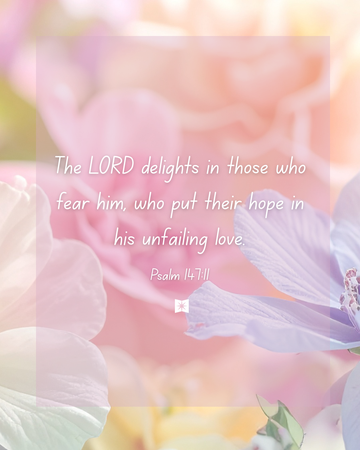
The Lord takes pleasure in them that fear him, and in all that hope in his mercy.
12
Praise the Lord, O Jerusalem; praise thy God, O Sion.
13
For he has strengthened the bars of thy gates; he has blessed thy children within thee.
14
He makes thy borders peaceful, and fills thee with the flour of wheat.
15
He sends his oracle to the earth: his word will run swiftly.
16
He gives snow like wool: he scatters the mist like ashes.
17
Casting forth his ice like morsels: who shall stand before his cold?
18
He shall send out his word, and melt them: he shall blow with his wind, and the waters shall flow.
19
He sends his word to Jacob, his ordinances and judgments to Israel.
20
He has not done so to any other nation; and he has not shewn them his judgments.
Psalm 147 Commentary
Chapter 147
The people of God are exhorted to praise him for his mercies and care. (1-11) For the salvation and prosperity of the church. (12-20)
Verses 1-11 Praising God is work that is its own wages. It is comely; it becomes us as reasonable creatures, much more as people in covenant with God. He gathers outcast sinners by his grace, and will bring them into his holy habitation. To those whom God heals with the consolations of his Spirit, he speaks peace, assures them their sins are pardoned. And for this, let others praise him also. Man's knowledge is soon ended; but God's knowledge is a dept that can never be fathomed. And while he telleth the number of the stars, he condescends to hear the broken-hearted sinner. While he feeds the young ravens, he will not leave his praying people destitute. Clouds look dull and melancholy, yet without them we could have no rain, therefore no fruit. Thus afflictions look black and unpleasant; but from clouds of affliction come showers that make the soul to yield the peaceable fruits of righteousness. The psalmist delights not in things wherein sinners trust and glory; but a serious and suitable regard to God is, in his sight, of very great price. We are not to be in doubt between hope and fear, but to act under the gracious influences of hope and fear united.
Verses 12-20 The church, like Jerusalem of old, built up and preserved by the wisdom, power, and goodness of God, is exhorted to praise him for all the benefits and blessings vouchsafed to her; and these are represented by his favours in the course of nature. The thawing word may represent the gospel of Christ, and the thawing wind the Spirit of Christ; for the Spirit is compared to the wind, ( John 3:8 ) . Converting grace softens the heart that was hard frozen, and melts it into tears of repentance, and makes good reflections to flow, which before were chilled and stopped up. The change which the thaw makes is very evident, yet how it is done no one can say. Such is the change wrought in the conversion of a soul, when God's word and Spirit are sent to melt it and restore it to itself.
Unlock Deeper Insights: Get Over 20 Commentaries with Plus! Subscribe Now
Psalm 147 Commentaries
Chapter Summary
INTRODUCTION TO PSALM 147
This psalm is thought to be written by David, and according to Theodoret predicts the return of the Jews from Babylon, and the rebuilding of Jerusalem by Zerubbabel, which seems to be grounded on Ps 147:2; though the words there agree well enough with the times of David; hence the title in the Septuagint, Ethiopic, Arabic, and Syriac versions, and Apollinarius, is as the preceding; the Syriac adds,
``concerning Zerubbabel and Joshua the priest, and Ezra, who were solicitous and diligent in building Jerusalem.''
Aben Ezra and other Jewish writers think it foretells the future rebuilding of Jerusalem, and the restoration of the Jews from their present captivity, and refer it to the times of the Messiah; and so far it may be right, that it respects Christ and the praise of him, on account of his nature and works; and may take in the conversion of the Jews. It seems to be written by the same person, and on the same account, as the preceding psalm.
Taken from John Gill's Exposition of the Bible
Unlock Deeper Insights: Get Over 20 Commentaries with Plus! Subscribe Now




Images for Psalm 147
Psalm 147:11
Share

Mother's Day - Psalm 147:11
Share
Hope in Him
Share

Brokenhearted
Share

Psalm 147:3
Share
The Brenton translation of the Septuagint is in the public domain.
Study Tools
PLUSUnlock Notes
This feature is for PLUS subscribers only. Join PLUS today to access these tools and more.
JOIN PLUSUnlock Highlights
This feature is for PLUS subscribers only. Join PLUS today to access these tools and more.
JOIN PLUSUnlock Bookmarks
This feature is for PLUS subscribers only. Join PLUS today to access these tools and more.
JOIN PLUSTrack Your Reading
Create a free account to start a reading plan, or join PLUS to unlock our full suite of premium study tools.
Already have an account? Sign in