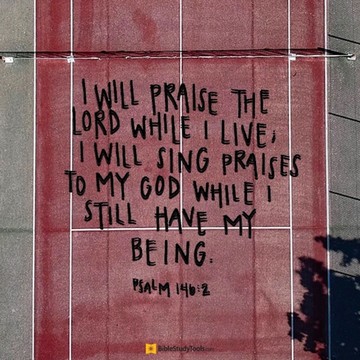
Your Daily Verse - Psalm 146:2
This psalm is entitled by the Septuagint, Vulgate Latin, Ethiopic, and Arabic versions, "hallelujah", of Haggai and Zechariah; and by Apollinarius, the common hymn of them: and the Syriac inscription is still more expressive,
``it was said by Haggai and Zechariah, prophets, who came up with the captivity out of Babylon.''
Theodoret says this title was in some Greek copies in his time; but was not in the Septuagint, in the Hexapla: nor is it in any other Greek interpreters, nor in the Hebrew text, nor in the Targum; though some Jewish commentators, as R. Obadiah, take it to be an exhortation to the captives in Babylon to praise the Lord: and Kimchi interprets it of their present captivity and deliverance from it; and observes, that the psalmist seeing, by the Holy Spirit, the gathering of the captives, said this with respect to Israel; and so refers it to the times of the Messiah, as does also Jarchi, especially the Ps 146:10; and which, though they make it to serve an hypothesis of their own, concerning their vainly expected Messiah; yet it is most true, that the psalm is concerning the Messiah and his kingdom, to whom all the characters and descriptions given agree.
This feature is for PLUS subscribers only. Join PLUS today to access these tools and more.
JOIN PLUSThis feature is for PLUS subscribers only. Join PLUS today to access these tools and more.
JOIN PLUSThis feature is for PLUS subscribers only. Join PLUS today to access these tools and more.
JOIN PLUSCreate a free account to start a reading plan, or join PLUS to unlock our full suite of premium study tools.