10 Best Places to Start Reading the Bible
Share

For a new Christian, or anyone starting to read Scripture for the first time, the Bible can feel overwhelming at first. You open the pages of this thick book and see a bunch of books written across centuries by different authors. There are several genres, including history, poetry, and teaching. Where should you begin?
There’s good news when looking at where to begin. The Bible offers many strong entry points to introduce you to who God is and help you step into the larger library we call the Bible. Some books give you a direct look at Jesus’ life and teaching, while others explore why he came at all. Others help you grow in wisdom and daily living.
Each starting place is unique, but all will lead you to the same truth, the story of God who sent his Son to save the world.
1. Gospel of John
The Gospel of John is one of the most popular starting points suggested by pastors and leaders. John clearly introduces Jesus with purpose and depth. John doesn’t start with a genealogy; he opens up with a masterful declaration that Jesus is the eternal Word who was with God and is God. This lays a foundation of awe and wonder for the whole book, providing eternal context for the narratives within. Jesus wasn’t just a good man, a teacher, or a prophet. He was God in human form.
The rest of John supports this introduction. We encounter Jesus in amazing signs and wonders and heartfelt personal moments. He turns water into wine, heals the sick, and raises the dead. Christ does these things while teaching deep spiritual truths. John intentionally chooses these moments to bring evidence of Jesus’ love, divine nature, and mission.
We also read how Jesus spoke in powerful and memorable statements like “I am the bread of life” and “I am the good shepherd,” both with complex connections to the Old Testament. The words of Jesus help us understand his role as the one who leads and saves us. One of John’s main themes includes right belief, inviting us to trust Jesus and receive eternal life.
Finally, John’s gospel expresses the greatness of God’s love. Jesus came to dwell with us to reveal the Father and give his life for our restoration.
Photo credit: Unsplash/rachelstrong10
2. Genesis
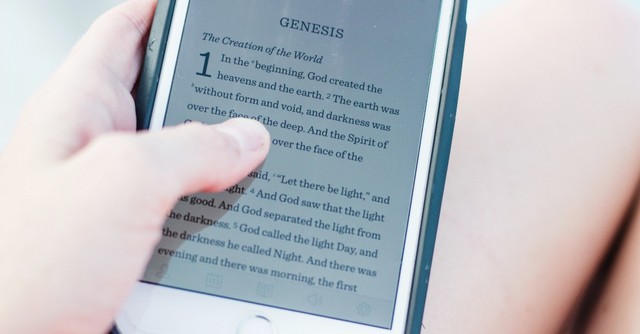
You could always start at the beginning.
Genesis provides a perfect and powerful starting point for Bible readers since it lays the foundation for everything that follows. God creates the world, order from chaos, bringing purpose and goodness. We start to see God’s authority, creativity, and purpose for humanity. The Lord creates humanity in his image, giving us dignity and responsibility through relationship with himself.
Then we read how everything went wrong, explaining the corruption of the world we exist within. The fall of humanity brings sin, death, brokenness, and separation. It makes more sense why the world feels evil and why we need redemption.
Yet we also read how God doesn’t leave the story in hopelessness. God initiates a plan to restore what was lost. He makes covenant promises to Abraham and his lineage. These promises point to a greater redemption later down the line, and the rest of the Old Testament unpacks and reveals that redemption.
God hints at a coming Savior, a child who will crush evil and bring victory. The Genesis themes of sacrifice, covenant, and blessing all help us understand God’s heart, who Jesus is, and what he came to do.
3. Gospel of Mark
As another gospel, Mark gives us a shorter, tighter narrative. This makes it a great point to start reading the Bible since it presents Jesus clearly and succinctly. Mark focuses less on long teachings and more on what Jesus did. This helps new readers see his authority and mission without the other details, which will make more sense after seeing the wider narrative.
From the beginning, Mark declares Jesus as the Son of God and shows his power. Jesus casts out demons, heals the sick, calms storms, and declares the Kingdom. These works show Christ’s authority over nature, disease, and unseen evil forces. In Mark, Jesus doesn’t only talk about the Kingdom of God, he brings it to the earth.
At the same time, we see Jesus’ humanity. Christ shows compassion on the hurting, the outcast, and those with real needs. While Jesus ministers, Mark reveals how the disciples remain confused, and we see the opposition of the religious leaders. This gospel helps us comprehend that following Jesus requires faith in action, not just observation.
Mark also details the purpose of Jesus’ sacrificial mission. He repeatedly records Jesus pointing to his coming suffering, death, and resurrection. Christ didn’t come to be served but to serve and give his life as a ransom for all who would believe.
The Gospel of Mark provides these central themes in a short, wide arc to give context to the rest of our Bible reading, making it a great place to start.
Photo credit: Unsplash/chasingafterdear
4. Gospel of Luke

On the opposite end of the spectrum, Luke’s gospel is the longest, and it can be a great starting point because it gives a more orderly and detailed account. Luke was a Gentile and an educated doctor, so he approaches the narrative focusing more on evidence and details. He doesn’t only help us understand what happened, but also why it matters to us. He connects the events and teachings in a powerful way, especially for a Gentile audience.
Luke points us to Jesus’ humanity. He gives the ultimate story on Jesus’ birth and even includes a childhood story, reminding us that the fully divine Jesus really entered human history as a human man. Along with Jesus’ humanity, Luke reveals how Jesus acted with compassion to others. We see Christ reach out to the poor, the oppressed, the marginalized, the sinners, and more. Jesus seeks and welcomes all people.
Luke further spends time on many of Jesus’ parables, like the Good Samaritan and the Prodigal Son. These stories teach us different aspects of God’s character and the kingdom in both deep and simple, relatable ways. God’s grace works in real life.
Like Mark, Luke delves into Jesus’ mission. Christ came to seek and save the lost, ultimately leading him to the cross and resurrection. Through this, we learn how salvation is central to God’s plan.
As a bonus, Luke wrote a type of sequel, the Acts of the Apostles, so we can move straight into that book if we’d like.
5. Acts of the Apostles
Most people don’t start with a sequel. But maybe that’s more your style.
As a starting point, Acts shows us how Jesus’ work continues after his resurrection. Written by Luke as a continuation of his gospel, Acts begins with Christ’s commission to his apostles and leads into the birth and growth of the early church, helping us see the bigger story of God’s mission in the world, a story we’re a part of today.
In Acts, we see that Jesus didn’t stop working when he ascended into heaven. Christ sends the Holy Spirit to empower his followers to continue his mission, the rescue of souls with the gospel. Jesus stays active through the Spirit, guiding and strengthening his disciples to live as he did — preaching and showing compassion to all people. Ordinary people are transformed into bold, loving witnesses to Jesus across regions and cultures.
Leaders like Peter, Barnabas, and Paul are sent by the Spirit to all people to proclaim the risen Christ and declare the opportunity for repentance to life. Their messages clearly explain salvation through grace and new life in Jesus.
The story in Acts continues through us, as well. We’ve been given the same Spirit and mission to go to others and invite them to new life through the Gospel of Jesus and the Kingdom.
Photo credit: ©Getty Images/jodie777
6. Psalms

While the Bible contains a broad and amazing narrative from creation to the end times, we don’t have to start with the history. The book of Psalms can offer a great starting point for reading the Bible because it invites us into a personal relationship with God, to praise him and show why we should worship him. Psalms poetically expresses human experience and feeling, as well: joy, sorrow, fear, hope, and love. As we read, we learn how to speak honestly with God while continuing to find him worthy of worship, even in our hardships.
The biblical vision of Heaven includes constant praise and worship going on around God’s throne. Praise is the way to enter God’s heavenly courts. Therefore, Psalms teaches us who God is through praise and prayer. We see him as Creator, Shepherd, and protector. These songs help us use praise and prayer to trust him more, and to bring our every worry to him.
Further, Psalms introduces us to the Messiah in amazing ways. Many of the songs point forward to a coming King and Savior, understandable since David wrote and initiated much of the Psalms. Psalms show us the Messiah as a perfect ruler and conquering king. Jesus quoted much from Psalms for this reason.
Beginning with Psalms helps to shape our hearts, connecting us to God in meaningful ways while pointing us forward to Christ.
7. Proverbs
In a similar way to Psalms, Proverbs gives us a practical and inspiring place to start reading the Bible because it provides wisdom for all of life. Proverbs speaks directly to how the people of God should think, speak, and act, leading us to a foundation for living and purpose and integrity. The short and memorable sayings make it easy to understand and apply.
True wisdom begins with the fear of the Lord. This fear isn’t being afraid of him but recognizing his authority, his power, his magnificence, and then aligning our life with his truth for thriving and blessing, to us and others. Proverbs contrasts wisdom and foolishness, showing us the outcomes of each path. The sayings teach us how to handle relationships, how to make decisions, and how to speak correctly.
Proverbs isn’t without deep spiritual meaning. The book also introduces us to Jesus. Wisdom appears as a person, a woman, calling out and inviting people to follow her for good. This prepares us to understand Jesus as the ultimate fulfillment of wisdom, the ways of God. In the New Testament, Jesus lives out the truth of Proverbs.
In Proverbs, we start to see our weakness and the need for divine guidance and transformation. We realize human intellect alone falls way short, and we need God’s wisdom to live correctly. Again, this leads us to Jesus, who teaches and empowers us to live the divine path.
Photo credit: Unsplash/alabaster_co
8. Romans

The letter to the Roman church gives us a powerful starting point for reading the Bible because Paul spends several chapters – indeed most of the letter – defending and explaining the Gospel of Jesus. People had been accusing and critiquing the Apostle Paul’s ministry and the gospel. Paul had been educated in Greek philosophy, so he lays out an amazingly thoughtful defense of the gospel he preaches, why all people need it, and how God provides salvation through the Lord Jesus Christ.
Paul takes us through the essentials. We have all sinned and fallen short of God’s standard, breaking any lie that we can earn righteousness on our own. At the same time, Paul reveals the solution: God offers justification freely by grace through faith in his Son, Jesus. Salvation isn’t based on our human effort but on the work of Jesus and God’s mercy.
Romans introduces us to Jesus as the Son of God, whose work through the death and resurrection brings us forgiveness, new birth, and reconciles us to the Father. Jesus fulfills all of God’s promises and opens up the way for all people — Jews and Gentiles — to be saved.
Romans 8 stands as one of the most powerful sections of the Bible. In this chapter, Paul writes about life in the Spirit, assuring us that there’s no condemnation in Christ, and nothing can separate us from his love. Romans 8 is a transcendent and rich conclusion to Paul’s defense of the Gospel.
9. Ephesians
Like Romans, Paul writes this letter to the Ephesian church, and for us, it becomes a great starting point to read the Bible because it not only explains the gospel message, it then goes into very practical details for how following Jesus transforms every part of life. Paul expresses deep theological truth, and he then moves into what the outward result of the inner belief should look like.
In the opening chapters, Paul declares the spiritual reality of salvation. God chose, redeemed, and adopted us through the Lord Jesus Christ. Paul provides us with the simple statement: salvation comes by grace through faith, not by works, so no one can boast. This gives us a clear understanding of the Gospel, our need, and God’s saving work.
Paul details Jesus as the center of the plan. All things come together in Jesus, through his sacrifice, and we receive forgiveness and new life in him. Jesus breaks all racial barriers, creating a unified humanity and forming one body, the church.
Paul doesn’t leave us with theology. Right theology and doctrine changes life. He shifts to explain how this new life looks in practice. Paul calls us to walk in love, live in holiness, and reveal Jesus in our relationships and community. The gospel doesn’t just change our status but our everyday actions.
Photo credit: ©Getty Images/AHPhotoswpg
10. Gospel of Matthew

Matthew’s gospel offers a mix of Mark and Luke. As a firsthand account, he gives us both a nice cohesive arc and the details. It becomes a great starting point for reading the Bible because it shows Jesus as the promised Messiah and the message of the Kingdom. Matthew writes with a clear purpose to reveal the Son of God as fully divine, fully human, and that salvation comes through Christ and his Kingdom.
Matthew brings in several Old Testament prophecies, showing us how Jesus fulfills the Law and the prophets. He traces Jesus’ lineage from David and gives different details about Christ’s birth. Matthew provides us with long teachings like the Sermon on the Mount and the Olivet Discourse, along with parables to discuss what the Kingdom of God is like.
While Matthew shares some longer sermons, he shares many of Jesus’ miracles, as well. We see Christ heal the sick, cast out demons, and show his power over nature. These miracles reveal his authority and the arrival of a kingdom not of this world but of heaven.
All this happens within the historical narrative. Matthew shows us the growing opposition from religious leaders and clear steps toward the cross and the last week of Jesus’ ministry. Jesus chooses, willingly, to walk this path and fulfill his mission to save all who would believe.
Wherever you choose to begin your Bible reading journey, know that you really can’t go wrong. The whole book is a gift to you from the Lord God.
Peace.
Photo credit: ©Getty Images/IrisImages