How to Use a Study Bible
Share
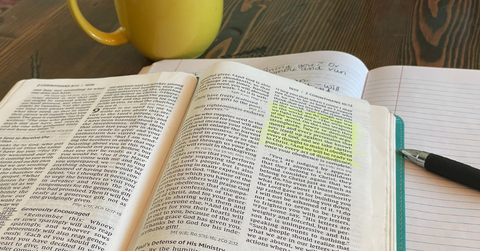
A good study Bible can be the catalyst that takes Bible reading and understanding to the next level. As a Bible teacher for over twenty years, I’ve heard one thing over and over – “I struggle to understand the Bible.” When I hear this, my first response is always the same. Get a study Bible.
There are so many resources out there to aid in Bible reading, but one of the best I have found is simply a study Bible. Once you have one, using it takes a little practice and focused attention. But it is a wellspring of information and helpful guidance that makes the Bible not seem so difficult to read and apply.
“All Scripture is breathed out by God and profitable for teaching, for reproof, for correction, and for training in righteousness, that the man of God may be complete, equipped for every good work” (2 Timothy 3:16-17).
The Bible gives us everything we need to live a life connected to and honoring to God. But sometimes we need a little help when we sit down to study it.
Together, we’ll walk through a few key components of most study Bibles and discuss how to make the most of them. Having a study Bible is good, but using it is where we tap into our relationship with the Lord.
“For the word of God is living and active, sharper than any two-edged sword, piercing to the division of soul and of spirit, of joints and of marrow, and discerning the thoughts and intentions of the heart” (Hebrews 4:12).
Photo credit: ©Getty Images/ Dennis Swanson - Studio 101 West Photography
1. Understand the How-To Section

In most study Bibles, there will be a section right up front after the table of contents that talks about how to use the Bible you hold in your hands. There will be information about how the Bible was compiled, what sections you will find throughout, and how to use them to your benefit.
Don’t skip this step. It will give you insight into little details you might not otherwise understand. If your goal is deeper understanding, this step is vital to using your study Bible to its full potential.
2. Introductions
At the beginning of each book of the Bible, you will find an introductory section. This is typically full of helpful information to help give you an overview of what you are about to read.
The introduction will tell you who wrote the book, when it was written, why it was written, who it was written to, and more. Take time before you dive into a book of the Bible to read this helpful introduction. It will help keep what you are reading in context and help you understand the big picture.
3. Background
Within the Introduction section there will often be background information covered. This will help ground the content by giving you the people, places, and a foundation of what is already taking place. Without the background, it will be difficult to move into the current narrative, so take the time to read this information as well.
Photo credit: ©Getty Images/FatCamera
4. Message and Purpose

Asking why this book was written is a valuable question to answer. When we think of the Bible as a whole, we can learn and understand that the Bible is one big story of a good Father who loves His children so much, He made a way for His children to be in full relationship with Him through Jesus Christ, His only son.
In one word we call it redemption.
Over and over in the Bible we find the message and purpose of Scripture to be redemption. In a study Bible, you will find this information in the introductory portion of the chapter summaries. Look for it and see if you can find the story of God’s redemption.
5. Structure and Outline
One of my favorite parts of a study Bible is the outline before each book of the Bible. Within the introductory pages, there is usually a section that gives a structured chapter outline that shows which chapters covers which stories or topics.
Depending on the Bible you choose, these outlines might be more historical-narrative or more topical in nature. Either way, you will gain a clearer understanding of the way the book you are studying is ordered and formed. This will help you know where the writer is headed and how to divide the book if you want to read portions at a time.
Photo credit: ©Getty Images/georgemuresan
6. Cross References
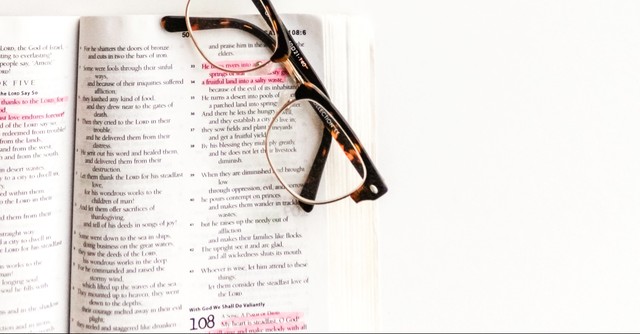
A cross reference is a Scripture reference that is related in some way to another Scripture reference. These are usually notated with a little number or letter beside them within the text and then they match up with the same number or letter at the bottom, side, or middle column in the Bible.
When you find the matching letter or number, you’ll find another Scripture reference. When you go to that verse in the Bible, you can read it and see how it connects and crosses over to the original verse you read.
7. Study Notes
Most Study Bibles have a section of study notes that go verse-by-verse or topic-by-topic at the bottom of the page or in a box or special column on the page. You can find the verse you are studying and look down in the study notes section and read a Bible scholar’s notes about that particular verse.
This is so beneficial for deeper and contextual understanding. Don’t skip through a study Bible without taking time to read these notes. I like to think of it like taking the Bible from black and white to color.
Photo credit: Unsplash/sincerelymedia
8. Photos and Illustrations

Some Study Bibles have historical photos of places or biblical architecture or items used in ancient history. These help enlighten our understanding and give visual learners fresh insight into what is being said.
Further, illustrations are unique to some study Bibles. There can be both illustrations to aid in teaching a lesson from the Bible and literal illustrations that you can view to help see a concept or idea.
9. Maps
In a world where GPS systems are the go-to source of direction, maps are underrated and a lost art. But not for Bible study. The maps in your Bible can help you see where events happened.
Often there will be maps that show the early journey of Abraham, the route of Exodus, the tribal allotments of Israel, Jesus’ earthly ministry, Paul’s missionary journeys, and more. Take time to look at these and understand the lay of the land.
10. Charts
One of my favorite features of some study Bibles is charts that help organize information. Some charts that I have found helpful are ones that show a list of people, teachings, or timing of events.
When we think of the Old Testament kings, judges, Levitical laws – well-made charts of these things can give us clearer understanding of who, what, when, where, and why they happened. If your study Bible has a chart, pay attention and see if you can learn something new.
Photo credit: ©Getty Images/artisteer
11. Timelines

Bible timelines are complex and full of helpful information. Some study Bibles have these throughout the Bible or truncated to the front or the back. If you can wrap your mind around a simple timeline from Creation to the return of Christ, it will help you see the Bible as one big story rather than a huge book that can’t be understood.
12. Essays or Devotions
Some study Bibles have authors who have contributed articles or devotional writings throughout the Bible to give personal application. These can aid the reader in taking a portion of Scripture to heart. For Women’s Study Bibles these are usually written by women, for Men’s Bibles they are typically male authors. For general study Bibles, the authors are a range of Bible scholars and authors. These are valuable tools to add to your regular reading to help apply the Bible truth.
13. Concordance
In the back of most study Bibles is a concordance. This is an alphabetized list of words. Each word has a list of Scripture references under it where you can find the specific word used. This is helpful when doing a word study or finding where that word might otherwise be used.
If you have ever wondered if you need a study Bible, the answer is yes! Choose one that has a lot of extra resources and take the time to explore all it has to offer. The Bible is powerful and alive. It gives truth and helps you discern God’s voice. Lean in close. Read the Bible. And get ready to hear from God.
Ready to get started? Click here to read the ESV Study Bible online!
Photo credit: ©Getty Images/justinkendra