Embracing the AI Revolution with Faith and Perspective
Share
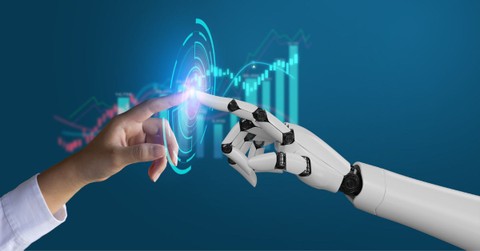
Every few generations, a technological change comes along that turns our world upside down. Think of the telephone, radio, television, and more recently, social media.
Today, we face a huge technological shift — Artificial Intelligence. AI is a revolution that is reshaping the way we do things. The Google CEO, Sundar Pichai, in a BBC interview, called AI "the most profound technology humankind has worked on.”
Many people find AI deeply unsettling. The New York Times recently asked, "Why do Americans Hate AI?", noting a uniquely American animosity toward this technology.
So how do we, as Christians, approach this revolution and embrace it with confidence?
The Bible can give us perspective and a mindset of peace. When we’re tempted to fear or catastrophize, we can instead face the future with conviction because our certainty rests on the truth that God is Sovereign, even over AI.
Alongside gaining biblical perspective, it is helpful to look back in history to a technical revolution in the fifteenth century that was also viewed with skepticism and deep concern. This helps us draw parallels with today’s revolution. Much like AI today, the technological advancement then changed people’s lives dramatically and yet, God’s hand can be seen in everything that took place.
An Historical Perspective
In Germany in the early 1400s, Johannes Gutenberg invented the printing press. This revolutionary invention came at a time when books were luxury items and literacy was rare.
Skilled scribes copied books by hand, a process that took six to twelve months for a single book. It is estimated that only ten percent of the population in Europe could read. It was a time when information and knowledge moved slowly and was restrained to only a few.
Gutenberg’s most famous and earliest printing was the Bible in Latin. At first, the Catholic Church thought the printing press could be an efficient tool for spreading its own resources and instruction. But the church didn’t control the printing press. As printed materials increased, information began to be shared apart from that of a single institution, and control began to decentralize.
The printing press shifted power and helped set the stage for the Reformation. Eventually, it gave ordinary people extraordinary access to God's Word like never before. Alongside these changes, education spread. As people began to read for themselves, some felt threatened, others felt empowered.
For scribes, their unique skill became nearly obsolete. A new tool made a respected profession feel suddenly fragile. And that’s one reason this story feels so familiar as we face the rise of AI today.
As we compare the printing press with AI, these major technological revolutions share the same core fears: loss of control, loss of truth, and loss of livelihood.
Yet, as we look back on the changes brought about by the printing press, we have a perspective on God’s Sovereignty that perhaps people of the fifteenth century could not see in the turmoil at that time.
Here are four truths to reassure us and hold onto in the middle of our current technological upheaval:
1. God’s Authority over All Things
Just as with the printing press, AI is disrupting who is in control of knowledge, creativity, and expertise. Journalists’ and authors’ credibility can be undermined. Content is being created with errors or untruths. Algorithms increasingly make decisions on job applications. And because this shift is happening so quickly, it can leave us concerned about who is accountable, as the structures we once had are being shaken.
In the enormity of what is happening, we are to remember that all things — from the embedding of AI in global networks to the smallest decision of a job application being prioritized by AI — are under God’s authority. That doesn’t mean every use of AI reflects God’s heart, but it does mean AI is not outside His rule.
Our concerns are legitimate, but we should also anchor ourselves in the truth of what Scripture says about God’s authority:
“I am God, and there is no other; I am God, and there is none like me. I make known the end from the beginning, from ancient times, what is still to come. I say, ‘My purpose will stand, and I will do all that I please’” (Isaiah 46:9-10).
“The Lord foils the plans of the nations; he thwarts the purposes of the peoples. But the plans of the Lord stand firm forever, the purposes of his heart through all generations” (Psalm 33:10-11).
“He does as he pleases with the powers of heaven and the peoples of the earth” (Daniel 4:35).
“Are not two sparrows sold for a penny? Yet not one of them will fall to the ground outside your Father’s care” (Matthew 10:29-30).
“Many are the plans in a person’s heart, but it is the Lord’s purpose that prevails” (Proverbs 19:21).
2. God’s Authority over Craftsmanship
In the 15th century, printing destroyed the livelihood of scribes. Today, we hear "AI will take our jobs.” And this is true. Companies are adjusting their workforces to the priorities of AI. For many of us this is personal. AI has affected the job opportunities for my family members.
Sundar Pichai says, “It [AI] will evolve and transition certain jobs. Those who adapt to AI will do better.” And that echoes what happened in Gutenberg’s day. Yet, as the work changed, the people who learned the new tools weren’t replaced, they were repositioned.
As the printing press birthed new industries such as booksellers and publishers, AI will also create new jobs such as AI prompt engineers, AI ethicists, and data curators. But even if new roles emerge, we are still deeply affected by these transitions.
We are to remember that Scripture doesn’t treat skill as a mere “secular” thing — it emphasizes craftsmanship as part of God’s plans and purposes. He fills people with His Spirit to create and do their work. Ability is a gift from God. God equips people to study, build, create, lead, and serve. It is part of our calling and is one of the ways He reveals His creativity and brings about His plans and purposes.
When we feel anxious about our work, our worth, or our future because of AI, Scripture encourages us to recenter ourselves to be vessels for Him — to see God working through us and empowering us for His purposes.
“[God] filled them with skill to do all kinds of work as engravers, designers, embroiderers in blue, purple and scarlet yarn and fine linen, and weavers — all of them skilled workers and designers” (Exodus 35:35).
“For we are God’s handiwork, created in Christ Jesus to do good works, which God prepared in advance for us to do” (Ephesians 2:10).
3. God’s Authority over Truth
The printing press brought concern about corruption and loss of truth as the church feared the spread of heresy. Bible translations in common languages were seen as dangerous. Today, we worry about deepfakes and misinformation.
In all these revolutions there is the same core fear: “how will we protect the truth?” And that is a valid concern. Truth matters to God, and truth matters to us.
God’s sovereignty and God’s truth are inseparable. God exercises His authority with wisdom, goodness, and truth. Even when truth in our world is being undermined and shaken, God’s truth still stands.
Scripture assures us of this confidence:
“For the word of the Lord is right and true; he is faithful in all he does” (Psalm 33:4).
“The Word became flesh and made his dwelling among us. We have seen his glory, the glory of the one and only Son, who came from the Father, full of grace and truth” (John 1:14).
Make Psalm 25:5 your prayer today: “Guide me in your truth and teach me, for you are God my Savior, and my hope is in you all day long.”
4. God’s Authority over Empowerment
The printing press enabled people to have direct access to Scripture and learning. In a similar way, AI gives people access to new information and knowledge. For many of us, AI tools empower us to do good. For instance, it can speed up Bible translation. However, we know that AI is also used for evil and perverted purposes.
The question isn’t “Is AI good or bad?” but “How will we steward it?”.
Scripture guides us to answer this question by understanding God is the source of wisdom and understanding. He invites us to ask for wisdom. Reverence for God shapes how knowledge is handled. “Fear of the Lord” is the foundation for true understanding; without it, knowledge easily becomes folly or pride (Proverbs 1:7). If AI can magnify what is in the human heart, we must let God direct our hearts by humbly searching for his wisdom.
Let’s use these Scriptures to instruct us:
“For the Lord gives wisdom; from his mouth come knowledge and understanding” (Proverbs 2:6).
“He changes times and seasons; he deposes kings and raises up others. He gives wisdom to the wise and knowledge to the discerning” (Daniel 2:21).
“If any of you lacks wisdom, you should ask God, who gives generously to all without finding fault, and it will be given to you” (James 1:5).
We should request like Solomon, “So give your servant a discerning heart … to distinguish between right and wrong” (1 Kings 3:9).
God Holds All Things, Always
The printing press was seen as so disruptive that it prompted censorship, yet it became the greatest vehicle for spreading the Bible. AI has been labeled “dangerous.” Yet, it too has potential to spread the Good News.
AI may be shaking the structures we once relied on, but it isn’t shaking the God who holds all things together. Just as the printing press was under God’s sovereign power, the AI revolution, too, sits under His sovereign hand. We don’t have to fear or catastrophize. We can trust in God’s authority over the greatest and smallest details, craftsmanship, truth, and the use of AI. Most important is how you and I will steward the tools of AI with discernment and trust in God Almighty.
Photo credit: ©Getty Images/David Gyung