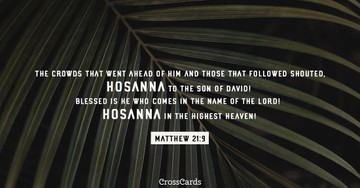
Matthew 21:9
As we prepare to celebrate Palm Sunday, we remember how Jesus rode into Jerusalem on a donkey while the crowds waved palm branches and shouted praise. But are you aware this event fulfills the Old Testament prophecy in Zechariah Chapter 9, verse 9 that the Messiah would come into Jerusalem on a donkey? As we progress through this holy week, Pastor Jack Morris reminds us of the significance of this most solemn week, where we commemorate the events leading up to Jesus' crucifixion and resurrection.
Some wonder, “Why study Bible prophecy?” Today on Sound Doctrine we’ll see what happens when we don’t study prophecy! In Matthew chapter 21 Jesus rides into Jerusalem on the back of a donkey, fulfilling prophecy. But many didn’t understand this is the day, because they weren’t students of bible prophecy. Still today, even Christians, are avoiding it but they’re missing out!

It’s been nearly two thousand years since Jesus came into Jerusalem riding on a donkey. This event is often referred to as the Triumphal Entry and we’ll take a look at it again today on Study The Word.
Who is this man? That’s the question many asked as Christ prophetically rode into Jerusalem on the back of a donkey as many proclaimed “Hosanna!” That is, without a doubt, a question worth asking. When we are forced to ask and answer that question, it changes our lives. Let’s talk about what was prophesied on that special day today on Light on the Hill.
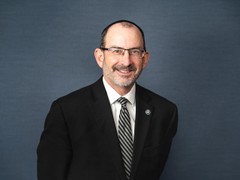
Bible teaching from the book of Matthew chapter 21 verses 1-11. About Baruch: R. Baruch is the senior lecturer at the Zera Avraham Institute based in Israel. He also appears on the Israeli Television program Pdut L'amo where he teaches each week from the Bible (This program is in Hebrew). A similar Bible Study program in English is broadcast on numerous television networks across the United States, Europe, and Africa. Many of his lectures are available in the forms of video, audio and written on Pdut.org (Hebrew) and LoveIsrael.org (English). Baruch holds a PhD in Jewish Studies. His dissertation was in the translation techniques of the Septuagint. Baruch has been married for over 30 years to his wife, Rivka, and they have three adult children. The Kormans live in Israel. Our Beliefs are available at: Statement of FaithTo donate please visit us at: Donate Checks may be sent to: LoveIsrael.org925 N. Courtenay Parkway Suite 19Merritt Island, FL 32953
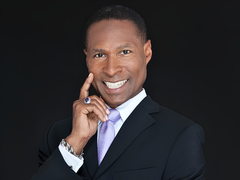
Enjoy this message from Rev. Dr. Henry P. Davis III.
This feature is for PLUS subscribers only. Join PLUS today to access these tools and more.
JOIN PLUSThis feature is for PLUS subscribers only. Join PLUS today to access these tools and more.
JOIN PLUSThis feature is for PLUS subscribers only. Join PLUS today to access these tools and more.
JOIN PLUSCreate a free account to start a reading plan, or join PLUS to unlock our full suite of premium study tools.