
Romans 10:10


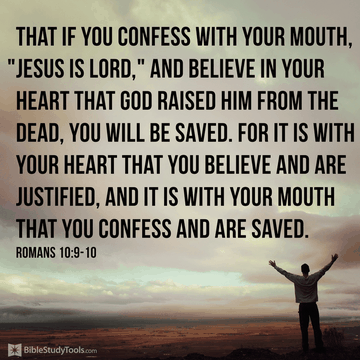
In this chapter are contained an account of the two righteousnesses of faith and works, a summary of the Gospel of Christ, a description of the grace of faith, in the nature, use, and means of it, and several testimonies concerning the calling of the Gentiles; and whereas the apostle knew that this, as well as what he had said in the latter part of the preceding chapter, that the Jews had not attained to the law of righteousness, but stumbled at the stumbling stone, would be offensive to his countrymen the Jews; wherefore that it might appear that he said this not out of disaffection and ill will to them, he declares his sincere regard unto them, and the great respect he had for them, by calling them "brethren", by expressing his good will to them, by praying for the salvation of them, Ro 10:1, by bearing testimony of their zeal for God, Ro 10:2, though he faithfully observes to them, that it was an ignorant zeal, of which ignorance he gives an instance, Ro 10:3, particularly in the attribute of God's righteousness; from which ignorance arose all their misconduct in religious things, especially in the article of justification; hence they sought to be justified by their own righteousness, and rejected the righteousness of Christ, and then points out to them the true end of the law, for righteousness which is Christ, Ro 10:4, which if they had known would have set them right, and which is another instance of their ignorant and misguided zeal: this leads him on to what he had in view, which was to give an account of the two righteousnesses he had suggested in the latter part of the former chapter, the righteousness of the law, which the Jews sought for and found not, and the righteousness of faith, which the Gentiles without seeking for enjoyed; and this account he gives in the words of Moses, for whom they had the greatest regard: the description of the former is given in his words, in Ro 10:5, which suggest the impossibility of keeping the law, and obtaining life by it, and therefore it is a vain thing to seek for righteousness by the works of it; the latter is described, Ro 10:6,7, by the certainty of it, being wrought out by Christ, who came down from heaven, fulfilled the law, and died, and rose again from the dead; and by the plainness and evidence of it, as revealed in the Gospel, Ro 10:8, the sum of which Gospel is, that whoever believes in Christ and confesses him shall be saved, Ro 10:9, which faith and confession, when genuine, are with the heart and mouth agreeing together; the consequences of which are righteousness and salvation, comfortably apprehended and enjoyed, Ro 10:10, and that the above is the sum of the Gospel, and that there is such a connection between faith and righteousness, and between confession and salvation, is confirmed, Ro 10:11, by a testimony from the prophet, Isa 28:16, which being expressed in such a general manner, as to extend to every believer, whether Jew or Gentile, reasons are given, Ro 10:12, in support of such an explanation of that passage, taken from the equal condition of all, there being no difference between them naturally, from the universal dominion of God over them, and from his liberal communication of grace and goodness to all that call upon him; which last reason is confirmed, Ro 10:13, by a passage of Scripture in Joe 2:32, on occasion of which, the apostle proceeds to treat of the calling of the Gentiles, and of the means of it, the preaching of the Gospel, which was necessary to it, which is made out by a train of reasoning after this manner; that seeing salvation is only of such that call upon the name of the Lord, and there could be no calling upon him without believing in him, and no believing without hearing, and no hearing without preaching, and no preaching without mission, which is proved by a citation out of Isa 52:7, and no success in preaching, when sent, without the exertions of efficacious grace, as appears from the case of the Jews, who had the ministration of the Gospel to them by Isaiah, and yet all did not believe it; as is evident from Isa 53:1, and seeing the conclusion of which is, that faith comes by preaching, and preaching by the order and command of God, Ro 10:14-17, it follows, that it was proper that ministers should be sent, and the Gospel preached to the Gentiles, and that attended with power, in order that they should believe in the Lord, and call upon his name and be saved; and which method God had taken, and which he had foretold he would take, in the prophecies of the Old Testament, and which were now fulfilling: that the Gospel was preached to them, and they heard it, were matters of fact, and were no other than what should be, or might be concluded, from Ps 19:4, cited, Ro 10:18, and that the Jews could not be ignorant of the calling of the Gentiles is clear, first from the words of Moses, De 32:21, which the apostle produces, Ro 10:19, and from a passage in the prophecy of Isa 65:1. So that this was no other than what Moses and the prophets said should be, Ro 10:20, and the chapter is closed, Ro 10:21, with another passage out of the same prophet in the next verse, showing the rejection of Christ and his Gospel by the Jews, and which justifies their being cast off by him, of which the apostle treats largely in the next chapter.

If someone’s words and actions don’t accurately reflect what they claim to believe, maybe they don’t really believe! Clearly, it takes more than mere mental assent to indicate a changed heart. On this edition of Focal Point, Mike Fabarez explains why we as believers should pay attention to what we say and do as we seek to be God’s faithful messengers.

Is it enough to say you believe God? In practice, our faith is authenticated by our words and actions! On Focal Point, Mike Fabarez contends that what we say and do are proof of what we truly believe. He brings clarity to our motives for sharing the gospel with others.
How upset would you be if you received a damaged package? Your response might depend on how much you value the contents inside. On this edition of Focal Point, Mike Fabarez asks if carefully delivering God’s message of life and hope is any less important than other things we’re called to do as believers!
As followers of Jesus, we're called to share the Good News with others. But how can we tell whether the Gospel message has actually been received? What are the tell tale signs of someone who truly believes? Today on Focal Point, Mike Fabarez continues a study in Romans 10 and 11. We'll talk about some of the indicators that the Gospel has taken root in our hearts, and in the hearts of others.
If you've been a follower of Christ for some time, it's likely you're well versed in the basics of the Gospel message. Maybe you've even had the privilege of leading a friend or family member to Jesus. While knowing the content of the Gospel is important, we also need to recognize the results as well! Today on Focal Point, Mike Fabarez describes the outcomes of authentic faith.
This feature is for PLUS subscribers only. Join PLUS today to access these tools and more.
JOIN PLUSThis feature is for PLUS subscribers only. Join PLUS today to access these tools and more.
JOIN PLUSThis feature is for PLUS subscribers only. Join PLUS today to access these tools and more.
JOIN PLUSCreate a free account to start a reading plan, or join PLUS to unlock our full suite of premium study tools.