
Change Translation
- Recent Translations
- All Translations
1
Y CONOCIO Adam á su mujer Eva, la cual concibió y parió á Caín, y dijo: Adquirido he varón por Jehová.
2
Y después parió á su hermano Abel. Y fué Abel pastor de ovejas, y Caín fué labrador de la tierra.
3
Y aconteció andando el tiempo, que Caín trajo del fruto de la tierra una ofrenda á Jehová.
4
Y Abel trajo también de los primogénitos de sus ovejas, y de su grosura. Y miró Jehová con agrado á Abel y á su ofrenda;
5
Mas no miró propicio á Caín y á la ofrenda suya. Y ensañóse Caín en gran manera, y decayó su semblante.
6
Entonces Jehová dijo á Caín: ¿Por qué te has ensañado, y por qué se ha inmutado tu rostro?
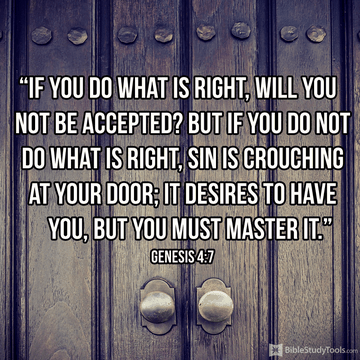
7
Si bien hicieres, ¿no serás ensalzado? y si no hicieres bien, el pecado está á la puerta: con todo esto, á ti será su deseo, y tú te enseñorearás de él.
8
Y habló Caín á su hermano Abel: y aconteció que estando ellos en el campo, Caín se levantó contra su hermano Abel, y le mató.
9
Y Jehová dijo á Caín: ¿Dónde está Abel tu hermano? Y él respondió: No sé; ¿soy yo guarda de mi hermano?
10
Y él le dijo: ¿Qué has hecho? La voz de la sangre de tu hermano clama á mí desde la tierra.
11
Ahora pues, maldito seas tú de la tierra que abrió su boca para recibir la sangre de tu hermano de tu mano:
12
Cuando labrares la tierra, no te volverá á dar su fuerza: errante y extranjero serás en la tierra.
13
Y dijo Caín á Jehová: Grande es mi iniquidad para ser perdonada.
14
He aquí me echas hoy de la faz de la tierra, y de tu presencia me esconderé; y seré errante y extranjero en la tierra; y sucederá que cualquiera que me hallare, me matará.
15
Y respondióle Jehová: Cierto que cualquiera que matare á Caín, siete veces será castigado. Entonces Jehová puso señal en Caín, para que no lo hiriese cualquiera que le hallara.
16
Y salió Caín de delante de Jehová, y habitó en tierra de Nod, al oriente de Edén.
17
Y conoció Caín á su mujer, la cual concibió y parió á Henoch: y edificó una ciudad, y llamó el nombre de la ciudad del nombre de su hijo, Henoch.
18
Y á Henoch nació Irad, é Irad engendró á Mehujael, y Mehujael engendró á Methusael, y Methusael engendró á Lamech.
19
Y tomó para sí Lamech dos mujeres; el nombre de la una fué Ada, y el nombre de la otra Zilla.
20
Y Ada parió á Jabal, el cual fué padre de los que habitan en tiendas, y crían ganados.
21
Y el nombre de su hermano fué Jubal, el cual fué padre de todos los que manejan arpa y órgano.
22
Y Zilla también parió á Tubal-Caín, acicalador de toda obra de metal y de hierro: y la hermana de Tubal-Caín fué Naama.
23
Y dijo Lamech á sus mujeres: Ada y Zilla, oid mi voz; Mujeres de Lamech, escuchad mi dicho: Que varón mataré por mi herida, Y mancebo por mi golpe:
24
Si siete veces será vengado Caín, Lamech en verdad setenta veces siete lo será.
25
Y conoció de nuevo Adam á su mujer, la cual parió un hijo, y llamó su nombre Seth: Porque Dios (dijo ella) me ha sustituído otra simiente en lugar de Abel, á quien mató Caín.
26
Y á Seth también le nació un hijo, y llamó su nombre Enós. Entonces los hombres comenzaron á llamarse del nombre de Jehová.
Génesis 4 Commentary
Chapter 4
The birth, employment, and religion of Cain and Abel. (1-7) Cain murders Abel, The curse of Cain. (8-15) The conduct of Cain, His family. (16-18) Lamech and his wives, The skill of Cain's descendants. (19-24) The birth of another son and grandson of Adam. (25,26)
Verses 1-7 When Cain was born, Eve said, I have gotten a man from the Lord. Perhaps she thought that this was the promised seed. If so, she was wofully disappointed. Abel signifies vanity: when she thought she had the promised seed in Cain, whose name signifies possession, she was so taken up with him that another son was as vanity to her. Observe, each son had a calling. It is the will of God for every one to have something to do in this world. Parents ought to bring up their children to work. Give them a Bible and a calling, said good Mr. Dod, and God be with them. We may believe that God commanded Adam, after the fall, to shed the blood of innocent animals, and after their death to burn part or the whole of their bodies by fire. Thus that punishment which sinners deserve, even the death of the body, and the wrath of God, of which fire is a well-known emblem, and also the sufferings of Christ, were prefigured. Observe that the religious worship of God is no new invention. It was from the beginning; it is the good old way, ( Jeremiah 6:16 ) . The offerings of Cain and Abel were different. Cain showed a proud, unbelieving heart. Therefore he and his offering were rejected. Abel came as a sinner, and according to God's appointment, by his sacrifice expressing humility, sincerity, and believing obedience. Thus, seeking the benefit of the new covenant of mercy, through the promised Seed, his sacrifice had a token that God accepted it. Abel offered in faith, and Cain did not, ( Hebrews 11:4 ) . In all ages there have been two sorts of worshippers, such as Cain and Abel; namely, proud, hardened despisers of the gospel method of salvation, who attempt to please God in ways of their own devising; and humble believers, who draw near to him in the way he has revealed. Cain indulged malignant anger against Abel. He harboured an evil spirit of discontent and rebellion against God. God notices all our sinful passions and discontents. There is not an angry, envious, or fretful look, that escapes his observing eye. The Lord reasoned with this rebellious man; if he came in the right way, he should be accepted. Some understand this as an intimation of mercy. "If thou doest not well, sin, that is, the sin-offering, lies at the door, and thou mayest take the benefit of it." The same word signifies sin, and a sacrifice for sin. "Though thou hast not done well, yet do not despair; the remedy is at hand." Christ, the great sin-offering, is said to stand at the door, ( Revelation 3:20 ) . And those well deserve to perish in their sins, that will not go to the door to ask for the benefit of this sin-offering. God's acceptance of Abel's offering did not change the birthright, and make it his; why then should Cain be so angry? Sinful heats and disquiets vanish before a strict and fair inquiry into the cause.
Verses 8-15 Malice in the heart ends in murder by the hands. Cain slew Abel, his own brother, his own mother's son, whom he ought to have loved; his younger brother, whom he ought to have protected; a good brother, who had never done him any wrong. What fatal effects were these of our first parents' sin, and how must their hearts have been filled with anguish! Observe the pride, unbelief, and impenitence of Cain. He denies the crime, as if he could conceal it from God. He tries to cover a deliberate murder with a deliberate lie. Murder is a crying sin. Blood calls for blood, the blood of the murdered for the blood of the murderer. Who knows the extent and weight of a Divine curse, how far it reaches, how deep it pierces? Only in Christ are believers saved from it, and inherit the blessing. Cain was cursed from the earth. He found his punishment there where he chose his portion, and set his heart. Every creature is to us what God makes it, a comfort or a cross, a blessing or a curse. The wickedness of the wicked brings a curse upon all they do, and all they have. Cain complains not of his sin, but of his punishment. It shows great hardness of heart to be more concerned about our sufferings than our sins. God has wise and holy ends in prolonging the lives even of very wicked men. It is in vain to inquire what was the mark set upon Cain. It was doubtless known, both as a brand of infamy on Cain, and a token from God that they should not kill him. Abel, being dead, yet speaketh. He tells the heinous guilt of murder, and warns us to stifle the first risings of wrath, and teaches us that persecution must be expected by the righteous. Also, that there is a future state, and an eternal recompence to be enjoyed, through faith in Christ and his atoning sacrifice. And he tells us the excellency of faith in the atoning sacrifice and blood of the Lamb of God. Cain slew his brother, because his own works ( 1 John. 3:12 ) consequence of the enmity put between the Seed of the woman and the seed of the serpent, the war broke out, which has been waged ever since. In this war we are all concerned, none are neuter; our Captain has declared, He that is not with me is against me. Let us decidedly, yet in meekness, support the cause of truth and righteousness against Satan.
Verses 16-18 Cain cast off all fear of God, and attended no more on God's ordinances. Hypocritical professors, who dissemble and trifle with God, are justly left to themselves to do something grossly scandalous. So they throw off that form of godliness to which they have been a reproach, and of which they deny the power. Cain went out from the presence of the Lord, and we never find that he came into it again, to his comfort. The land Cain dwelt in was called the land of Nod, which means, 'shaking,' or 'trembling,' and so shows the restlessness and uneasiness of his own spirit, or 'the land of a vagabond:' they that depart from God cannot find rest any where else. Those on earth who looked for the heavenly city, chose to dwell in tabernacles or tents; but Cain, as not minding that city, built one on earth. Thus all who are cursed of God seek their settlement and satisfaction here below.
Verses 19-24 One of Cain's wicked race is the first recorded, as having broken the law of marriage. Hitherto, one man had but one wife at a time; but Lamech took two. Wordly things, are the only things that carnal, wicked people set their hearts upon, and are most clever and industrious about. So it was with this race of Cain. Here was a father of shepherds, and a father of musicians, but not a father of the faithful. Here is one to teach about brass and iron, but none to teach the good knowledge of the Lord: here are devices how to be rich, and how to be mighty, and how to be merry; but nothing of God, of his fear and service. Present things fill the heads of most. Lamech had enemies, whom he had provoked. He draws a comparison betwixt himself and his ancestor Cain; and flatters himself that he is much less criminal. He seems to abuse the patience of God in sparing Cain, into an encouragement to expect that he may sin unpunished.
Verses 25-26 Our first parents were comforted in their affliction by the birth of a son, whom they called Seth, that is, 'set,' 'settled,' or 'placed;' in his seed mankind should continue to the end of time, and from him the Messiah should descend. While Cain, the head of the apostacy, is made a wanderer, Seth, from whom the true church was to come, is one fixed. In Christ and his church is the only true settlement. Seth walked in the steps of his martyred brother Abel; he was a partaker of like precious faith in the righteousness of our God and Saviour Jesus Christ, and so became a fresh witness of the grace and influence of God the Holy Spirit. God gave Adam and Eve to see the revival of religion in their family. The worshippers of God began to do more in religion; some, by an open profession of true religion, protested against the wickedness of the world around. The worse others are, the better we should be, and the more zealous. Then began the distinction between professors and profane, which has been kept up ever since, and will be, while the world stands.
Unlock Deeper Insights: Get Over 20 Commentaries with Plus! Subscribe Now
Génesis 4 Commentaries
Chapter Summary
INTRODUCTION TO GENESIS 4
In this chapter an account is given of the two eldest children of Adam and Eve, their names and calling, Ge 4:1,2 and of their different offerings to the Lord, and the different respect had unto them by him, which in Cain issued in wrath and envy, which appeared in his countenance, and were taken notice of by the Lord, and about which he reasoned with him, Ge 4:3-7 but it had no effect upon him, he murdered his brother, upon which he was examined about him, but denied he knew anything of him where he was, Ge 4:8,9 he is arraigned, convicted and condemned, sentence passed upon him, and that executed, which he complains of, and is mitigated, or however a protection is granted him, and a mark set on him for his security, Ge 4:10-15 after which we have an account of his posterity for several generations, their names, and the business of some of them, Ge 4:16-24 and the chapter is closed with the birth of another son, and of a grandson to Adam and Eve, in whose days was the beginning of social religion.
Taken from John Gill's Exposition of the Bible
Unlock Deeper Insights: Get Over 20 Commentaries with Plus! Subscribe Now




Images for Génesis 4
If You Do What is Right
Share
The Reina-Valera Antigua (1602) is in the public domain.
Study Tools
PLUSUnlock Notes
This feature is for PLUS subscribers only. Join PLUS today to access these tools and more.
JOIN PLUSUnlock Highlights
This feature is for PLUS subscribers only. Join PLUS today to access these tools and more.
JOIN PLUSUnlock Bookmarks
This feature is for PLUS subscribers only. Join PLUS today to access these tools and more.
JOIN PLUSTrack Your Reading
Create a free account to start a reading plan, or join PLUS to unlock our full suite of premium study tools.
Already have an account? Sign in