
Change Translation
- Recent Translations
- All Translations
1
Y JEHOVA habló á Moisés en el monte de Sinaí, diciendo:
2
Habla á los hijos de Israel, y diles: Cuando hubiereis entrado en la tierra que yo os doy, la tierra hará sábado á Jehová.
3
Seis años sembrarás tu tierra, y seis años podarás tu viña, y cogerás sus frutos;
4
Y el séptimo año la tierra tendrá sábado de holganza, sábado á Jehová: no sembrarás tu tierra, ni podarás tu viña.
5
Lo que de suyo se naciere en tu tierra segada, no lo segarás; y las uvas de tu viñedo no vendimiarás: año de holganza será á la tierra.
6
Mas el sábado de la tierra os será para comer á ti, y á tu siervo, y á tu sierva, y á tu criado, y á tu extranjero que morare contigo:
7
Y á tu animal, y á la bestia que hubiere en tu tierra, será todo el fruto de ella para comer.
8
Y te has de contar siete semanas de años, siete veces siete años; de modo que los días de las siete semanas de años vendrán á serte cuarenta y nueve años.
9
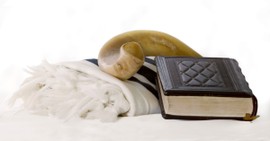
Entonces harás pasar la trompeta de jubilación en el mes séptimo á los diez del mes; el día de la expiación haréis pasar la trompeta por toda vuestra tierra.
10
Y santificaréis el año cincuenta, y pregonaréis libertad en la tierra á todos sus moradores: este os será jubileo; y volveréis cada uno á su posesión, y cada cual volverá á su familia.
11
El año de los cincuenta años os será jubileo: no sembraréis, ni segaréis lo que naciere de suyo en la tierra, ni vendimiaréis sus viñedos:
12
Porque es jubileo: santo será á vosotros; el producto de la tierra comeréis.
13
En este año de jubileo volveréis cada uno á su posesión.
14
Y cuando vendiereis algo á vuestro prójimo, ó comprareis de mano de vuestro prójimo, no engañe ninguno a su hermano:
15
Conforme al número de los años después del jubileo comprarás de tu prójimo; conforme al número de los años de los frutos te venderá él á ti.
16
Conforme á la multitud de los años aumentarás el precio, y conforme á la disminución de los años disminuirás el precio; porque según el número de los rendimientos te ha de vender él.
17
Y no engañe ninguno á su prójimo; mas tendrás temor de tu Dios: porque yo soy Jehová vuestro Dios.
18
Ejecutad, pues, mis estatutos, y guardad mis derechos, y ponedlos por obra, y habitaréis en la tierra seguros;
19
Y la tierra dará su fruto, y comeréis hasta hartura, y habitaréis en ella con seguridad.
20
Y si dijereis: ¿Qué comeremos el séptimo año? he aquí no hemos de sembrar, ni hemos de coger nuestros frutos:
21
Entonces yo os enviaré mi bendición el sexto año, y hará fruto por tres años.
22
Y sembraréis el año octavo, y comeréis del fruto añejo; hasta el año noveno, hasta que venga su fruto comeréis del añejo.
23
Y la tierra no se venderá rematadamente, porque la tierra mía es; que vosotros peregrinos y extranjeros sois para conmigo.
24
Por tanto, en toda la tierra de vuestra posesión, otorgaréis redención á la tierra.
25
Cuando tu hermano empobreciere, y vendiere algo de su posesión, vendrá el rescatador, su cercano, y rescatará lo que su hermano hubiere vendido.
26
Y cuando el hombre no tuviere rescatador, si alcanzare su mano, y hallare lo que basta para su rescate;
27
Entonces contará los años de su venta, y pagará lo que quedare al varón á quien vendió, y volverá á su posesión.
28
Mas si no alcanzare su mano lo que basta para que vuelva á él, lo que vendió estará en poder del que lo compró hasta el año del jubileo; y al jubileo saldrá, y él volverá á su posesión.
29
Y el varón que vendiere casa de morada en ciudad cercada, tendrá facultad de redimirla hasta acabarse el año de su venta: un año será el término de poderse redimir.
30
Y si no fuere redimida dentro de un año entero, la casa que estuviere en la ciudad murada quedará para siempre por de aquel que la compró, y para sus descendientes: no saldrá en el jubileo.
31
Mas las casas de las aldeas que no tienen muro alrededor, serán estimadas como una haza de tierra: tendrán redención, y saldrán en el jubileo.
32
Pero en cuanto á las ciudades de los Levitas, siempre podrán redimir los Levitas las casas de las ciudades que poseyeren.
33
Y el que comprare de los Levitas, saldrá de la casa vendida, ó de la ciudad de su posesión, en el jubileo: por cuanto las casas de las ciudades de los Levitas es la posesión de ellos entre los hijos de Israel.
34
Mas la tierra del ejido de sus ciudades no se venderá, porque es perpetua posesión de ellos.
35
Y cuando tu hermano empobreciere, y se acogiere á ti, tú lo ampararás: como peregrino y extranjero vivirá contigo.
36
No tomarás usura de él, ni aumento; mas tendrás temor de tu Dios, y tu hermano vivirá contigo.
37
No le darás tu dinero á usura, ni tu vitualla á ganancia:
38
Yo Jehová vuestro Dios, que os saqué de la tierra de Egipto, para daros la tierra de Canaán, para ser vuestro Dios.
39
Y cuando tu hermano empobreciere, estando contigo, y se vendiere á ti, no le harás servir como siervo:
40
Como criado, como extranjero estará contigo; hasta el año del jubileo te servirá.
41
Entonces saldrá de contigo, él y sus hijos consigo, y volverá á su familia, y á la posesión de sus padres se restituirá.
42
Porque son mis siervos, los cuales saqué yo de la tierra de Egipto: no serán vendidos á manera de siervos.
43
No te enseñorearás de él con dureza, mas tendrás temor de tu Dios.
44
Así tu siervo como tu sierva que tuvieres, serán de las gentes que están en vuestro alrededor: de ellos compraréis siervos y siervas.
45
También compraréis de los hijos de los forasteros que viven entre vosotros, y de los que del linaje de ellos son nacidos en vuestra tierra, que están con vosotros; los cuales tendréis por posesión:
46
Y los poseeréis por juro de heredad para vuestros hijos después de vosotros, como posesión hereditaria; para siempre os serviréis de ellos; empero en vuestros hermanos los hijos de Israel, no os enseñorearéis cada uno sobre su hermano con dureza.
47
Y si el peregrino ó extranjero que está contigo, adquiriese medios, y tu hermano que está con él empobreciere, y se vendiere al peregrino ó extranjero que está contigo, ó á la raza de la familia del extranjero;
48
Después que se hubiere vendido, podrá ser rescatado: uno de sus hermanos lo rescatará;
49
O su tío, ó el hijo de su tío lo rescatará, ó el cercano de su carne, de su linaje, lo rescatará; ó si sus medios alcanzaren, él mismo se redimirá.
50
Y contará con el que lo compró, desde el año que se vendió á él hasta el año del jubileo: y ha de apreciarse el dinero de su venta conforme al número de los años, y se hará con él conforme al tiempo de un criado asalariado.
51
Si aún fueren muchos años, conforme á ellos volverá para su rescate del dinero por el cual se vendió.
52
Y si quedare poco tiempo hasta el año del jubileo, entonces contará con él, y devolverá su rescate conforme á sus años.
53
Como con tomado á salario anualmente hará con él: no se enseñoreará en él con aspereza delante de tus ojos.
54
Mas si no se redimiere en esos años, en el año del jubileo saldrá, él, y sus hijos con él.
55
Porque mis siervos son los hijos de Israel; son siervos míos, á los cuales saqué de la tierra de Egipto: Yo Jehová vuestro Dios.
Levítico 25 Commentary
Chapter 25
The sabbath of rest for the land in the seventh year. (1-7) The jubilee of the fiftieth year, Oppression forbidden. (8-22) Redemption of the land and houses. (23-34) Compassion towards the poor. (35-38) Laws respecting bondmen, Oppression forbidden. (39-55)
Verses 1-7 All labour was to cease in the seventh year, as much as daily labour on the seventh day. These statues tell us to beware of covetousness, for a man's life consists not in the abundance of his possessions. We are to exercise willing dependence on God's providence for our support; to consider ourselves the Lord's tenants or stewards, and to use our possessions accordingly. This year of rest typified the spiritual rest which all believers enter into through Christ. Through Him we are eased of the burden of wordly care and labour, both being sanctified and sweetened to us; and we are enabled and encouraged to live by faith.
Verses 8-22 The word "jubilee" signifies a peculiarly animated sound of the silver trumpets. This sound was to be made on the evening of the great day of atonement; for the proclamation of gospel liberty and salvation results from the sacrifice of the Redeemer. It was provided that the lands should not be sold away from their families. They could only be disposed of, as it were, by leases till the year of jubilee, and then returned to the owner or his heir. This tended to preserve their tribes and families distinct, till the coming of the Messiah. The liberty every man was born to, if sold or forfeited, should return at the year of jubilee. This was typical of redemption by Christ from the slavery of sin and Satan, and of being brought again to the liberty of the children of God. All bargains ought to be made by this rule, "Ye shall not oppress one another," not take advantage of one another's ignorance or necessity, "but thou shalt fear thy God." The fear of God reigning in the heart, would restrain from doing wrong to our neighbour in word or deed. Assurance was given that they should be great gainers, by observing these years of rest. If we are careful to do our duty, we may trust God with our comfort. This was a miracle for an encouragement to all neither sowed or reaped. This was a miracle for an encouragement to all God's people, in all ages, to trust him in the way of duty. There is nothing lost by faith and self-denial in obedience. Some asked, What shall we eat the seventh year? Thus many Christians anticipate evils, questioning what they shall do, and fearing to proceed in the way of duty. But we have no right to anticipate evils, so as to distress ourselves about them. To carnal minds we may appear to act absurdly, but the path of duty is ever the path of safety.
Verses 23-34 If the land were not redeemed before the year of jubilee, it then returned to him that sold or mortgaged it. This was a figure of the free grace of God in Christ; by which, and not by any price or merit of our own, we are restored to the favour of God. Houses in walled cities were more the fruits of their own industry than land in the country, which was the direct gift of God's bounty; therefore if a man sold a house in a city, he might redeem it only within a year after the sale. This encouraged strangers and proselytes to come and settle among them.
Verses 35-38 Poverty and decay are great grievances, and very common; the poor ye have always with you. Thou shalt relieve him; by sympathy, pitying the poor; by service, doing for them; and by supply, giving to them according to their necessity, and thine ability. Poor debtors must not be oppressed. Observe the arguments here used against extortion: "Fear thy God." Relieve the poor, "that they may live with thee;" for they may be serviceable to thee. The rich can as ill spare the poor, as the poor can the rich. It becomes those that have received mercy to show mercy.
Verses 39-55 A native Israelite, if sold for debt, or for a crime, was to serve but six years, and to go out the seventh. If he sold himself, through poverty, both his work and his usage must be such as were fitting for a son of Abraham. Masters are required to give to their servants that which is just and equal, Col. 4:1 . At the year of jubilee the servant should go out free, he and his children, and should return to his own family. This typified redemption from the service of sin and Satan, by the grace of God in Christ, whose truth makes us free, ( John 8:32 ) . We cannot ransom our fellow-sinners, but we may point out Christ to them; while by his grace our lives may adorn his gospel, express our love, show our gratitude, and glorify his holy name.
Unlock Deeper Insights: Get Over 20 Commentaries with Plus! Subscribe Now
Levítico 25 Commentaries
Chapter Summary
INTRODUCTION TO LEVITICUS 25
In this chapter the Israelites are directed, when come into the land of Canaan, to observe every seventh year as a sabbatical year, in which there was to be no tillage of the land, and yet there would be a sufficiency for man and beast, Le 25:1-7; and every fiftieth year as a year of jubilee, in which also there was to be no tillage of the land, and every man was to return to his possession or estate, which had been sold to another any time before this, Le 25:8-17; and a promise of safety and plenty in the seventh year is made to encourage the observance of it, Le 25:18-22; and several laws and rules are delivered out concerning the sale of lands, the redemption of them, and their return to their original owner in the year of jubilee, Le 25:23-28; and the sale of houses, and the redemption of them, and the difference between those in walled cities and those in villages, with respect thereunto, Le 25:29-31; and also concerning the houses of the cities of the Levites, and the fields of the suburbs of them, Le 25:32-34; to which are added some instructions about relieving decayed, persons, and lending and giving to them, without taking usury of them, Le 25:34-38; and other laws concerning the release of such Israelites as had sold themselves for servants to the Israelites, in the year of jubilee, since none but Heathens were to be bondmen and bondmaids for ever, Le 25:39-46; and of such who were sold to proselytes, Le 25:47-55.
Taken from John Gill's Exposition of the Bible
Unlock Deeper Insights: Get Over 20 Commentaries with Plus! Subscribe Now




The Reina-Valera Antigua (1602) is in the public domain.
Study Tools
PLUSUnlock Notes
This feature is for PLUS subscribers only. Join PLUS today to access these tools and more.
JOIN PLUSUnlock Highlights
This feature is for PLUS subscribers only. Join PLUS today to access these tools and more.
JOIN PLUSUnlock Bookmarks
This feature is for PLUS subscribers only. Join PLUS today to access these tools and more.
JOIN PLUSTrack Your Reading
Create a free account to start a reading plan, or join PLUS to unlock our full suite of premium study tools.
Already have an account? Sign in