
Love is Patient, Love is Kind
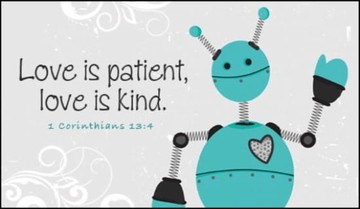
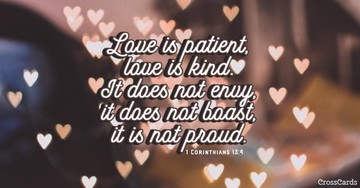
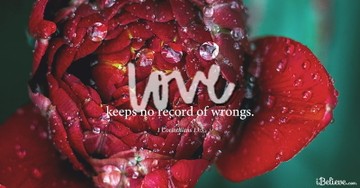
This chapter is taken up in the commendation of the grace of charity, or love, which is preferred to all gifts whatsoever; is described by its properties and effects, and particularly its duration; on which account it is represented as more excellent than other principal graces. The apostle prefers it to gifts, by which it appears to be the more excellent way, he speaks of in the latter part of the preceding chapter: he begins with the gift of tongues, which without charity makes a man noisy, but not spiritual, 1Co 13:1 he next mentions the gifts of knowledge of the mysteries of the Gospel, and of preaching them; and also the gift of working miracles, on the account of which a man thinks himself something, and yet with all these, not having the grace of love, he is nothing, 1Co 13:2 to which he adds alms deeds and martyrdom, and observes, that a man may do the one in the most extensive manner, and suffer the other in the most dreadful shape; and yet if love be wanting, from whence, as a principle, all actions and sufferings should flow, these will be of no avail, 1Co 13:3 and then the apostle proceeds to describe and commend this grace, by its effects and properties, and that in sixteen particulars; by which it appears to be exceeding useful, and what adorns and recommends the person possessed of it, 1Co 13:4-8 and enlarges upon the last, namely, the duration and perpetuity of it; showing that the gifts of knowledge, speaking with tongues, and preaching, shall fail, but this will not, 1Co 13:8 the failure of these gifts he proves from the imperfection of them, which therefore must be removed in a perfect state of things, 1Co 13:9,10 this he illustrates, by comparing the present imperfect state to childhood, and the future one to manhood, which he exemplifies in himself, 1Co 13:11 the imperfect knowledge of the one he compares to looking at objects through a glass, and to an enigma, riddle, or dark saying; and the perfect knowledge of the other, to seeing face to face, without any artificial help, 1Co 13:12 and he concludes this excellent commendation of charity by observing, that it is not only preferable to gifts, but even to graces, and these the more eminent, and which are abiding graces too, as faith and hope; and yet charity exceeds these, both as to its duration and use, 1Co 13:13.
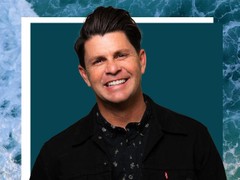
We are making our way through First Corinthians, and we get back to chapter thirteen today, which is all about the love of God. What would you say you’re known for? Maybe it’s your accomplishments at the workplace, or your wealth? Some are known as being a gossip, or an angry, bitter person. Wouldn’t it be nice to be known as a loving person? That’s actually what the Christian should be known for, and today we’ll be encouraged in that direction.

Part of the life given to us in the redemptive ministry of Christ is the ability to live a higher life, one that is Spirit controlled and not flesh controlled. ANd the greatest manifestation of Gods presence is always Gods Love.

Been to a wedding ceremony this year? If so, it’s quite likely you heard someone recite or give reference to First Corinthians thirteen. It’s often referred to as the love chapter. Today on Light on the Hill pastor James Kaddis sets out to answer the questions, what is love and what does it look like in our lives?
It’s one of the most loved chapters in the bible. It’s been recited at countless weddings and on many of the greeting cards we purchase. It’s First Corinthians chapter thirteen and where we’ll camp out today on a Daily Walk. Pastor John Randall will point out what love does and doesn’t do through his message titled, “The Greatest Gift.”
We are making our way through First Corinthians, and we’ve reached chapter thirteen. Before we get into what it has to say about love, pastor James Kaddis will set the stage by making the connection to our calling in life.
This feature is for PLUS subscribers only. Join PLUS today to access these tools and more.
JOIN PLUSThis feature is for PLUS subscribers only. Join PLUS today to access these tools and more.
JOIN PLUSThis feature is for PLUS subscribers only. Join PLUS today to access these tools and more.
JOIN PLUSCreate a free account to start a reading plan, or join PLUS to unlock our full suite of premium study tools.