5 Ways We See the Gospel in Feel-Good Christmas Movies
Share

Let’s face it, we all can get caught up in “feel-good” Christmas movies. They’re called “feel good” for a reason — they make us feel happy as and after we watch (often with tears). But Christians have a different way of viewing movies than unbelievers and people of other faiths. We look for ways Christ is magnified and exalted within characters, plotlines, and themes. We sometimes have to look hard, however, to see even nuggets of faith in movies we watch during the Christmas season, with many production companies opting for “holiday” instead of “Christmas” in titles, storylines, scripts, and dialogue.
But feel-good movies abound, especially between Thanksgiving and Christmas. It’s hard to get away from Christmas being linked to Christ’s birth, yet as we carefully watch, we can discover and point out ways the gospel is hidden or given mention within a movie. Especially fruitful are our gospel explanations (the why of Christmas) to those we are sharing the movie with.
We’ll look at five different feel-good movies and discover how we see the gospel in them. Three are from the Hallmark Channel, and two are from other sources.
Photo credit: ©Getty Images/FTiare

1. A Christmas Wish
Directed by Craig Clyde, Stone Five Pictures/Hallmark Channel, 2011
The opening scene shows Martha Evans packing three children into their old car. We discover Mel (the oldest) is Martha’s daughter from a previous marriage. Miles is her current husband’s son, and Lilee, the three-year-old, is Martha’s daughter with Cal, her husband who emptied the bank account and ran off with a young woman.
Martha seeks a new life. When she despairs because no jobs can be found, Mel tells her everything will be okay because she said a prayer. Miles says, “A lot of good that’ll do.” Mel, the storyteller, is the consistent optimist in the movie. She tells a bedtime story as much to herself as to her siblings and talks of Joe and Mary and the Baby they have who will save everyone.
Temporary “salvation” comes to Martha as she finds work in the small town of Mapleton, whose people show her kindness, love, and wisdom. Mapleton’s pastor visits Martha and works to help her. He invites Martha to church and she replies, “I don’t know. I don’t know if your church would still be standing if I stepped in.” The pastor says, “A real sinner, huh?” Martha replies she’s a slow learner. The pastor says, “Well listen. We’re all a little slow around here.”
Despite all their troubles, Mel continues to say it’s going to be the best Christmas ever. She says they need a tree and proceeds to draw one on the wall of their hotel room. Miles adds the manger scene. When Mel asks her mom if she prayed, and Martha tells her she never has. But Martha is driven to tears and prayer when her bad-boy husband comes with divorce papers and leaves with Miles. As she prays, she asks God if He’s there, and she prays not for herself but for Miles.
(Spoiler alert), after Martha prays, she finds Miles back at the hotel. The locals gather together and bring her to a rental house, and she is given greater responsibilities at the café where she’s employed. The movie ends with Martha and the children walking to church with a dozen or so people who’ve helped her (including the pastor).
Does A Christmas Wish give us a clear gospel picture? It doesn’t, but the story and some of the background vocal music (including Hark! The Herald, Angels, Sing, Silent Night, I Heard the Bells on Christmas Day, and original songs, Mary's Child by Craig Clyde and Silent Night/A New Life by Russ Whitelock) open the door to explaining the whole gospel.
Photo credit: ©Getty Images/Ritthichai
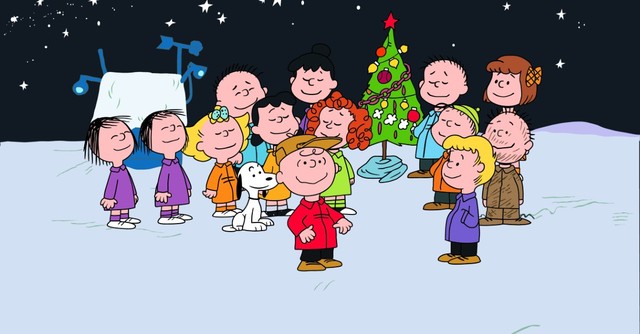
2. A Charlie Brown Christmas
Produced and directed by Bill Melendez and Bud Luckey, Lee Mendelson-Bill Melendez Production, in co-operation with United Feature Syndicate, Inc., 1965
Who hasn’t watched this annual classic? Charlie Brown, designed for many failures (Lucy once called him “Failure face”) is once again on a mission to do a good job. He’s picked to direct the Christmas play, but he can’t do anything right. He can’t even pick a Christmas tree for the stage, and is laughed off by everyone – even his beagle, Snoopy. Charlie Brown tells Linus, “I guess I really don’t know what Christmas is all about.” And he cries, “Isn’t there anyone who knows what Christmas is all about?”
Linus, with wisdom that belies his age says, “Sure, Charlie Brown. I can tell you what Christmas is all about.”
As Linus goes center stage and the spotlight shines on him, he quotes Luke 2:8-14. As he picks up his blanket and walks to Charlie Brown, he says, “That’s what Christmas is all about, Charlie Brown.” Charlie Brown smiles and walks off stage with his tree. This would have been a good place to end the animated movie, but Charlie endures one more disappointment before all the kids come together, fix the tree, and wish him a Merry Christmas.
A Charlie Brown Christmas is a great segue into a meaningful gospel conversation. An interesting fact about the screenplay is how Charles Schultz had to fight to keep that section of Linus quoting Scripture in the movie. He obviously won his argument.
Photo courtesy of AppleTV

3. The Christmas Card
Directed by Stephen Bridgewater, Hallmark, 2006
Another Hallmark Christmas movie makes this list because of its portrayal of Christian elements and characters. The family around which this drama centers are churchgoers; they pray at meals and hold to strong moral integrity.
Cody, a soldier serving in Afghanistan, is touched by a Christmas card he receives in the field. While on leave, he visits the town the card came from and connects with the Spelman family, especially Faith, who wrote and sent the card.
(Spoiler alert), Faith and Cody fall in love and she ends her engagement to a not-so-likable fiancée who wants to take here away from her beloved family.
The gospel isn’t clear in this film, but the roads leading to it are open as the family displays a healthy faith and regular attendance with the church (Hebrews 10:25).
Photo credit: ©Getty Images/Elena Golotsvan

4. A Christmas Carol – aka Scrooge
Directed by Brian Desmond Hurst, Renown Film Productions Ltd., 1951
This beloved film classic falls outside the Hallmark, Lifetime, and Netflix neighborhoods, but it might be one of the first twentieth-century “feel-good” Christmas movies.
Taken from Charles Dickens’ famous tale, A Christmas Carol, this iteration closely follows the book. Scrooge is miserly, and he depends upon his wealth to save him. We all remember the premise and how Scrooge does a 180 after being visited by the three spirits.
It was the ghost of Christmas present who made mention of the Savior. “We Spirits of Christmas do not live only one day of our year. We live the whole three-hundred and sixty-five. So is it true of the Child born in Bethlehem. He does not live in men's hearts one day of the year, but in all days of the year. You have chosen not to seek Him in your heart. Therefore, you will come with me and seek Him in the hearts of men of good will.”
The ghost of Christmas yet to come takes Scrooge to the Cratchit house after Tiny Tim’s death. As Scrooge watches, Peter (the oldest son) reads a portion of Psalm 91, “A thousand may fall at your side, ten thousand at your right hand, but it will not come near you.”
At the end, when Ebeneezer Scrooge is “saved” from death, we can share the good news of Jesus Christ with those who need spiritual life (and all of us need that).
If anyone were to check the psalm Peter quoted, they’d see Jesus in it, for He everywhere in the Bible.
Photo credit: ©Getty Images/Hulton Archive / Stringer

5. Signed, Sealed, Delivered for Christmas
Directed by Kevin Fair, Hallmark, 2014
If you’re familiar with this series of specials and movies, you know the main character, Oliver O’Toole, is a man of faith (as they call him). He speaks of his faith to others, sings in his church choir, and is a faithful gentleman, holding on to hope as he stays true to his marriage vows even though his wife left him two years previous. Oliver heads the dead letter office (DLO) of the USPS in Denver. He and his crew of three solve mysteries surrounding pieces of mail that come to them in many shapes and conditions.
In the Christmas episode, the team seeks the youth who sent a letter to God asking for her mom to be healed. In a hurry to solve the riddle before his team departs for their Christmas holiday, we learn Oliver will be alone for Christmas.
The team learns their mystery writer is a young girl whose pregnant mom has been admitted to a Denver hospital. The mom’s and the baby’s lives are at risk. To help distract the little girl, Oliver’s team produces a manger scene play which reenacts the same Luke 2 narrative that Linus recites from A Charlie Brown Christmas.
As Oliver prays in the hospital chapel, the overseer reveals himself to Oliver as an angel – the same angel who helped Oliver when he was a young boy. The movie ends with Oliver walking back to the DLO and finding a stunning number of candles lit and a Christmas tree by his desk. He is decorating the tree as his co-workers come back because they didn’t want to celebrate without him.
This movie has a three-tearjerker star (for how many times tears will fall as you watch). It is another example of how God works in our lives, and while the gospel is not overt, the theme is unmistakable. As usual, in Signed, Sealed, Delivered, the songs are a part of the story. “There’s Still My Joy” by the Indigo Girls speaks of amazing grace and what one tiny Child can do.
Don't Stop Looking
When we read the Bible, we search to discover the gospel throughout the Old and New Testaments. The gospel is evident from Genesis 3:15 — when the seed of the promised Savior is given first mention as the protoevangelium — to the consummation of the kingdom come in Revelation 21-22.
When we watch feel-good Christmas films, we often see a snippet of the gospel. And we need to remember that going to church or holding to good morals doesn’t make one a Christian, just like going into a fast-food joint doesn’t make you a hamburger.
Rarely is the full narrative of God’s redemptive plan given its worthy revelation in mainstream feel-good movies. It’s a Christian’s joy and privilege, however, to share the rest of the story with those who see the movies and yield to the Holy Spirit’s work in their lives. My prayer is that you are given at least five opportunities this season to share the good news of the gospel of Jesus Christ.
Related article: 8 Popular Christmas Movies with Gospel Messages
Photo credit: Unplash/Mockaroon