Why Christians Shouldn’t Fear the Judgement Seat of Christ
Share
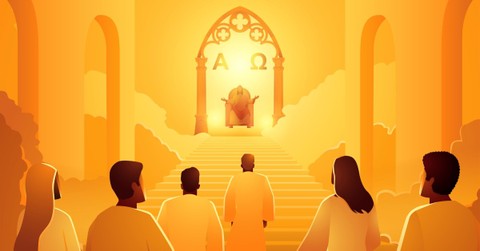
At the end of time as determined by the Lord God, two judgments will take place. The Great White Throne Judgment (Romans 2:5; Revelation 20:11-12) is for unbelievers, and it’s a fearful place. The other, the Judgment (or Bema) Seat of Christ, is for Christians. Yet Christians shouldn’t fear the Judgment Seat of Christ. Why? (Spoiler alert: it’s because of the gospel).
The Bible is divided into Testaments (or covenants): the Old and the New. The Old Testament concentrates on the Law (which always condemns), and the New Testament centers on the gospel (which always saves). Everyone except Christ has broken God’s law (Psalm 51:5; Romans 3:23), and that means condemnation.
As stated above, those who reject Christ (unbelievers) will one day stand before the Lord and will be sentenced to an eternity apart from His grace and mercy (Revelation 20:11-15). But Christians — those who believe in and love the Lord Jesus Christ — will enter eternity in His presence in a glorified state and will never again suffer any effects of sin.
What Is the Judgment Seat of Christ?
The Judgment Seat of Christ is often referred to by scholars as the “Bema Seat.” This seat of adjudication is described in 2 Corinthians 5:10, “For we must all appear before the judgment seat of Christ, so that each one may receive what is due for what He has done in the body, whether good or evil.” Paul was speaking to the church in Corinth; therefore, the people who appear before Christ are believers.
This Judgment Seat is present during the time when the Lord brings about the “end of the age” (Matthew 28:20). The Bible doesn’t give us a lot of details about the event, but we can rest assured it will occur, and it will be glorious.
What Does a Christian Have to Look Forward to at the Judgment Seat of Christ?
According to the American Bar Association, “to ‘expunge’ is to ‘erase or remove completely.’ In law, expungement is the process by which a record of criminal conviction is destroyed or sealed from state or federal record. An expungement order directs the court to treat the criminal conviction as if it had never occurred, essentially removing it from a defendant’s criminal record as well as, ideally, the public record.”
A former prisoner may request a judge to expunge his record. That’s what we experience as believers, except we don’t need to ask. Christ has done it all, and we will stand before our Savior who has expunged our record — removed our sins and made us clean.
The Westminster Shorter Catechism - question 37 says when a Christian dies, their soul is made “perfect in holiness, and do immediately pass into glory; and their bodies being still united to Christ, do rest in their graves till the resurrection” (Hebrews 12:23, 2 Corinthians 5:1).
After the resurrection (Revelation 20:5-6), the Westminster Shorter Catechism continues with question 41, “What benefits do believers receive from Christ at the resurrection?” The answer: “At the resurrection believers, being raised up in glory, shall be openly acknowledged, and acquitted in the day of judgment, and made perfectly blessed, both in soul and body, in the full enjoyment of God to all eternity” (1 Corinthians 15:43, Matthew 25:23).
Should Christians Fear God’s Final Judgement?
We need to clarify that Jesus is the Judge of both judgment seats (The Great White Throne and the Bema Seat). He will separate the goats (wicked/unbelievers) from the sheep (righteous believers). The goats will be cast out at the Great White Throne and the believers will receive their reward at the Judgment Seat of Christ (Matthew 25:31-34).
Some well-intentioned pastors have preached a message that leads us to fear if we’ve done enough to please the Lord. They use verses such as Matthew 12:36-37, 1 Corinthians 4:5, 2 Timothy 4:1, and especially the verse referred to above (2 Corinthians 5:10).
Before you start performing a checklist in your head of all your perceived good and bad deeds, think about what the Bible says, “For we are His workmanship, created in Christ Jesus for good works, which God prepared beforehand, that we should walk in them” (Ephesians 2:10).
This four-part verse breaks down God’s work in and through us. We cannot do anything good (including deeds) without His Spirit within us. Anything done apart from the Spirit is not good. Therefore, God planned all our good works in eternity past. The Holy Spirit caused us to believe. All Christians do good works, which is the fruit of their salvation in Christ, and not the root. This looks different for everyone, but we are completely secured in Christ’s perfect work on our behalf through faith, which is independent of anything we do.
We have but to believe in Jesus Christ and love Him. Period. Look at the Gospel of John. The word believe is written ninety-eight times throughout that book. The key passage is John 20:30-31, “Now Jesus did many other signs in the presence of the disciples, which are not written in this book; but these are written so that you may believe that Jesus is the Christ, the Son of God, and that by believing you may have life in His name.”
Jesus did all the work necessary for us to believe, and the greatest was His work on the cross which secured our salvation and set our works in motion. Look at what 1 John 4:18 says, “There is no fear in love, but perfect love casts out fear. For fear has to do with punishment, and whoever fears has not been perfected in love.” It’s God’s perfect love that casts out any fear we may have. It’s His love that inspires, enables, and energizes our love for God.
The editors of Christianity.com further encourage us with this, “Christ’s judgment is not a punishment; it is a reminder that we are pardoned. At last, we will fully realize the depth and breadth of His grace.
Believers need not cower or hang their heads during the judgment. Nor are we to repent — the time for that is past. We will stand before the Lord, clothed in Christ’s righteousness and forgiven of every single sin. And we will, at last, comprehend how great is the love of our God for us.”
What Is a Christian’s Reward?
When we Christians stand before the Lord Christ at His judgment seat, He will see His finished work in us. As Pastor Jeremiah Hurt says, “We are not going to hear Him say, ‘Remember that thing you did, or those thoughts you did?... You thought you were going to get a bunch of rewards? Guess what. There’s a shack for you over there.’” No. He continues, “There isn’t going to be, ‘I got a mansion and you got a gazebo.’ In the Bible, ‘reward’ is Christ. Christ is our reward."
A Christian’s reward is Christ. What would I look forward to in a rewards system if I already have Christ? What more can I gain? The Apostle Paul wrote, “More than that, I count all things to be loss because of the surpassing value of knowing Christ Jesus my Lord, for whom I have suffered the loss of all things, and count them but rubbish so that I may gain Christ.” He is all, and in all (Colossians 3:11b), and “In him we live and move and have our being” (Acts 17:28a).
The Bible tells us, “For God shows no partiality” (Romans 2:11). We also have these words from Scripture, “But the wisdom from above is first pure, then peaceable, gentle, open to reason, full of mercy and good fruits, impartial and sincere” (James 3:17). If we are given impartial wisdom from the Lord, He the Giver of wisdom is impartial. Peter said, “Truly I understand that God shows no partiality,” (Acts 10:34). I’ve included these verses to maintain our reward is Christ, and not something that would detract from His glory or give us cause to boast.
Knowing all of this should not give us license to laziness. We are no longer condemned (Romans 8:1), therefore, we are forever grateful to the Lord Jesus, and we love Him (1 John 4:19). It is because of the joy of this truth of salvation that we seek to honor Him with our lives. We have Christ! That’s the best news ever. Our thankfulness for what Jesus has done for us compels us to go forth in obedience, sharing the same gospel we’ve been given.
Photo credit: ©Getty Images/rudall30