Change Translation
- Recent Translations
- All Translations
A Conspiração
1 Estava se aproximando a festa dos pães sem fermento, chamada Páscoa,
2
e os chefes dos sacerdotes e os mestres da lei estavam procurando um meio de matar Jesus, mas tinham medo do povo.
3
Então Satanás entrou em Judas, chamado Iscariotes, um dos Doze.
4
Judas dirigiu-se aos chefes dos sacerdotes e aos oficiais da guarda do templo e tratou com eles como lhes poderia entregar Jesus.
5
A proposta muito os alegrou, e lhe prometeram dinheiro.
6
Ele consentiu e ficou esperando uma oportunidade para lhes entregar Jesus quando a multidão não estivesse presente.
A Ceia do Senhor
7 Finalmente, chegou o dia dos pães sem fermento, no qual devia ser sacrificado o cordeiro pascal.
8
Jesus enviou Pedro e João, dizendo: “Vão preparar a refeição da Páscoa”.
9
“Onde queres que a preparemos?”, perguntaram eles.
10
Ele respondeu: “Ao entrarem na cidade, vocês encontrarão um homem carregando um pote de água. Sigam-no até a casa em que ele entrar
11
e digam ao dono da casa: O Mestre pergunta: Onde é o salão de hóspedes no qual poderei comer a Páscoa com os meus discípulos?
12
Ele lhes mostrará uma ampla sala no andar superior, toda mobiliada. Façam ali os preparativos”.
13
Eles saíram e encontraram tudo como Jesus lhes tinha dito. Então, prepararam a Páscoa.
14
Quando chegou a hora, Jesus e os seus apóstolos reclinaram-se à mesa.
15
E disse-lhes: “Desejei ansiosamente comer esta Páscoa com vocês antes de sofrer.
16
Pois eu digo: Não comerei dela novamente até que se cumpra no Reino de Deus”.
17
Recebendo um cálice, ele deu graças e disse: “Tomem isto e partilhem uns com os outros.
18
Pois eu digo que não beberei outra vez do fruto da videira até que venha o Reino de Deus”.
19
Tomando o pão, deu graças, partiu-o e o deu aos discípulos, dizendo: “Isto é o meu corpo dado em favor de vocês; façam isto em memória de mim”.
20
Da mesma forma, depois da ceia, tomou o cálice, dizendo: “Este cálice é a nova aliança no meu sangue, derramado em favor de vocês.
21
“Mas eis que a mão daquele que vai me trair está com a minha sobre a mesa.
22
O Filho do homem vai, como foi determinado; mas ai daquele que o trair!”
23
Eles começaram a perguntar uns aos outros qual deles iria fazer aquilo.
24
Surgiu também uma discussão entre eles, acerca de qual deles era considerado o maior.
25
Jesus lhes disse: “Os reis das nações dominam sobre elas; e os que exercem autoridade sobre elas são chamados benfeitores.
26
Mas vocês não serão assim. Ao contrário, o maior entre vocês deverá ser como o mais jovem, e aquele que governa, como o que serve.
27
Pois quem é maior: o que está à mesa, ou o que serve? Não é o que está à mesa? Mas eu estou entre vocês como quem serve.
28
Vocês são os que têm permanecido ao meu lado durante as minhas provações.
29
E eu designo a vocês um Reino, assim como meu Pai o designou a mim,
30
para que vocês possam comer e beber à minha mesa no meu Reino e sentar-se em tronos, julgando as doze tribos de Israel.
31
“Simão, Simão, Satanás pediu vocês para peneirá-los como trigo.
32
Mas eu orei por você, para que a sua fé não desfaleça. E, quando você se converter, fortaleça os seus irmãos”.
33
Mas ele respondeu: “Estou pronto para ir contigo para a prisão e para a morte”.
34
Respondeu Jesus: “Eu digo, Pedro, que antes que o galo cante hoje, três vezes você negará que me conhece”.
35
Então Jesus lhes perguntou: “Quando eu os enviei sem bolsa, saco de viagem ou sandálias, faltou alguma coisa?”“Nada”, responderam eles.
36
Ele lhes disse: “Mas agora, se vocês têm bolsa, levem-na, e também o saco de viagem; e, se não têm espada, vendam a sua capa e comprem uma.
37
Está escrito: ‘E ele foi contado com os transgressores’;[a] e eu digo que isso precisa cumprir-se em mim. Sim, o que está escrito a meu respeito está para se cumprir”.
38
Os discípulos disseram: “Vê, Senhor, aqui estão duas espadas”. “É o suficiente!”, respondeu ele.
Jesus Ora no Monte das Oliveiras
39 Como de costume, Jesus foi para o monte das Oliveiras, e os seus discípulos o seguiram.
40
Chegando ao lugar, ele lhes disse: “Orem para que vocês não caiam em tentação”.
42
“Pai, se queres, afasta de mim este cálice; contudo, não seja feita a minha vontade, mas a tua”.
43
Apareceu-lhe então um anjo do céu que o fortalecia.
44
Estando angustiado, ele orou ainda mais intensamente; e o seu suor era como gotas de sangue que caíam no chão.[c]
45
Quando se levantou da oração e voltou aos discípulos, encontrou-os dormindo, dominados pela tristeza.
46
“Por que estão dormindo?”, perguntou-lhes. “Levantem-se e orem para que vocês não caiam em tentação!”
Jesus é Preso
47 Enquanto ele ainda falava, apareceu uma multidão conduzida por Judas, um dos Doze. Este se aproximou de Jesus para saudá-lo com um beijo.
48
Mas Jesus lhe perguntou: “Judas, com um beijo você está traindo o Filho do homem?”
49
Ao verem o que ia acontecer, os que estavam com Jesus lhe disseram: “Senhor, atacaremos com espadas?”
50
E um deles feriu o servo do sumo sacerdote, decepando-lhe a orelha direita.
51
Jesus, porém, respondeu: “Basta!” E tocando na orelha do homem, ele o curou.
52
Então Jesus disse aos chefes dos sacerdotes, aos oficiais da guarda do templo e aos líderes religiosos que tinham vindo procurá-lo: “Estou eu chefiando alguma rebelião, para que vocês tenham vindo com espadas e varas?
53
Todos os dias eu estive com vocês no templo e vocês não levantaram a mão contra mim. Mas esta é a hora de vocês—quando as trevas reinam”.
Pedro Nega Jesus
54 Então, prendendo-o, levaram-no para a casa do sumo sacerdote. Pedro os seguia a distância.
55
Mas, quando acenderam um fogo no meio do pátio e se sentaram ao redor dele, Pedro sentou-se com eles.
56
Uma criada o viu sentado ali à luz do fogo. Olhou fixamente para ele e disse: “Este homem estava com ele”.
57
Mas ele negou: “Mulher, não o conheço”.
58
Pouco depois, um homem o viu e disse: “Você também é um deles”.“Homem, não sou!”, respondeu Pedro.
59
Cerca de uma hora mais tarde, outro afirmou: “Certamente este homem estava com ele, pois é galileu”.
60
Pedro respondeu: “Homem, não sei do que você está falando!” Falava ele ainda, quando o galo cantou.
61
O Senhor voltou-se e olhou diretamente para Pedro. Então Pedro se lembrou da palavra que o Senhor lhe tinha dito: “Antes que o galo cante hoje, você me negará três vezes”.
62
Saindo dali, chorou amargamente.
Os Soldados Zombam de Jesus
63 Os homens que estavam detendo Jesus começaram a zombar dele e a bater nele.
64
Cobriam seus olhos e perguntavam: “Profetize! Quem foi que bateu em você?”
65
E lhe dirigiam muitas outras palavras de insulto.
Jesus perante Pilatos e Herodes
66 Ao amanhecer, reuniu-se o Sinédrio,[d] tanto os chefes dos sacerdotes quanto os mestres da lei, e Jesus foi levado perante eles.
67
“Se você é o Cristo, diga-nos”, disseram eles.Jesus respondeu: “Se eu vos disser, não crereis em mim
68
e, se eu vos perguntar, não me respondereis.
69
Mas de agora em diante o Filho do homem estará assentado à direita do Deus todo-poderoso”.
70
Perguntaram-lhe todos: “Então, você é o Filho de Deus?”“Vós estais dizendo que eu sou”, respondeu ele.
71
Eles disseram: “Por que precisamos de mais testemunhas? Acabamos de ouvir dos próprios lábios dele”.
Lucas 22 Commentary
Chapter 22
The treachery of Judas. (1-6) The passover. (7-18) The Lord's supper instituted. (19,20) Christ admonishes the disciples. (21-38) Christ's agony in the garden. (39-46) Christ betrayed. (47-53) The fall of Peter. (54-62) Christ confesses himself to be the Son of God. (63-71)
Verses 1-6 Christ knew all men, and had wise and holy ends in taking Judas to be a disciple. How he who knew Christ so well, came to betray him, we are here told; Satan entered into Judas. It is hard to say whether more mischief is done to Christ's kingdom, by the power of its open enemies, or by the treachery of its pretended friends; but without the latter, its enemies could not do so much evil as they do.
Verses 7-18 Christ kept the ordinances of the law, particularly that of the passover, to teach us to observe his gospel institutions, and most of all that of the Lord's supper. Those who go upon Christ's word, need not fear disappointment. According to the orders given them, the disciples got all ready for the passover. Jesus bids this passover welcome. He desired it, though he knew his sufferings would follow, because it was in order to his Father's glory and man's redemption. He takes his leave of all passovers, signifying thereby his doing away all the ordinances of the ceremonial law, of which the passover was one of the earliest and chief. That type was laid aside, because now in the kingdom of God the substance was come.
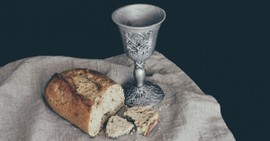
Verses 19-20 The Lord's supper is a sign or memorial of Christ already come, who by dying delivered us; his death is in special manner set before us in that ordinance, by which we are reminded of it. The breaking of Christ's body as a sacrifice for us, is therein brought to our remembrance by the breaking of bread. Nothing can be more nourishing and satisfying to the soul, than the doctrine of Christ's making atonement for sin, and the assurance of an interest in that atonement. Therefore we do this in rememberance of what He did for us, when he died for us; and for a memorial of what we do, in joining ourselves to him in an everlasting covenant. The shedding of Christ's blood, by which the atonement was made, is represented by the wine in the cup.
Verses 21-38 How unbecoming is the worldly ambition of being the greatest, to the character of a follower of Jesus, who took upon him the form of a servant, and humbled himself to the death of the cross! In the way to eternal happiness, we must expect to be assaulted and sifted by Satan. If he cannot destroy, he will try to disgrace or distress us. Nothing more certainly forebodes a fall, in a professed follower of Christ, than self-confidence, with disregard to warnings, and contempt of danger. Unless we watch and pray always, we may be drawn in the course of the day into those sins which we were in the morning most resolved against. If believers were left to themselves, they would fall; but they are kept by the power of God, and the prayer of Christ. Our Lord gave notice of a very great change of circumstances now approaching. The disciples must not expect that their friends would be kind to them as they had been. Therefore, he that has a purse, let him take it, for he may need it. They must now expect that their enemies would be more fierce than they had been, and they would need weapons. At the time the apostles understood Christ to mean real weapons, but he spake only of the weapons of the spiritual warfare. The sword of the Spirit is the sword with which the disciples of Christ must furnish themselves.
Verses 39-46 Every description which the evangelists give of the state of mind in which our Lord entered upon this conflict, proves the tremendous nature of the assault, and the perfect foreknowledge of its terrors possessed by the meek and lowly Jesus. Here are three things not in the other evangelists. 1. When Christ was in his agony, there appeared to him an angel from heaven, strengthening him. It was a part of his humiliation that he was thus strengthened by a ministering spirit. 2. Being in agony, he prayed more earnestly. Prayer, though never out of season, is in a special manner seasonable when we are in an agony. 3. In this agony his sweat was as it were great drops of blood falling down. This showed the travail of his soul. We should pray also to be enabled to resist unto the shedding of our blood, striving against sin, if ever called to it. When next you dwell in imagination upon the delights of some favourite sin, think of its effects as you behold them here! See its fearful effects in the garden of Gethsemane, and desire, by the help of God, deeply to hate and to forsake that enemy, to ransom sinners from whom the Redeemer prayed, agonized, and bled.
Verses 47-53 Nothing can be a greater affront or grief to the Lord Jesus, than to be betrayed by those who profess to be his followers, and say that they love him. Many instances there are, of Christ's being betrayed by those who, under the form of godliness, fight against the power of it. Jesus here gave an illustrious example of his own rule of doing good to those that hate us, as afterwards he did of praying for those that despitefully use us. Corrupt nature warps our conduct to extremes; we should seek for the Lord's direction before we act in difficult circumstances. Christ was willing to wait for his triumphs till his warfare was accomplished, and we must be so too. But the hour and the power of darkness were short, and such the triumphs of the wicked always will be.
Verses 54-62 Peter's fall was his denying that he knew Christ, and was his disciple; disowning him because of distress and danger. He that has once told a lie, is strongly tempted to persist: the beginning of that sin, like strife, is as the letting forth of water. The Lord turned and looked upon Peter. 1. It was a convincing look. Jesus turned and looked upon him, as if he should say, Dost thou not know me, Peter? 2. It was a chiding look. Let us think with what a rebuking countenance Christ may justly look upon us when we have sinned. 3. It was an expostulating look. Thou who wast the most forward to confess me to be the Son of God, and didst solemnly promise thou wouldest never disown me! 4. It was a compassionate look. Peter, how art thou fallen and undone if I do not help thee! 5. It was a directing look, to go and bethink himself. 6. It was a significant look; it signified the conveying of grace to Peter's heart, to enable him to repent. The grace of God works in and by the word of God, brings that to mind, and sets that home upon the conscience, and so gives the soul the happy turn. Christ looked upon the chief priests, and made no impression upon them as he did on Peter. It was not the mere look from Christ, but the Divine grace with it, that restored Peter.
Verses 63-71 Those that condemned Jesus for a blasphemer, were the vilest blasphemers. He referred them to his second coming, for the full proof of his being the Christ, to their confusion, since they would not admit the proof of it to their conviction. He owns himself to be the Son of God, though he knew he should suffer for it. Upon this they ground his condemnation. Their eyes being blinded, they rush on. Let us meditate on this amazing transaction, and consider Him who endured such contradiction of sinners against himself.
Unlock Deeper Insights: Get Over 20 Commentaries with Plus! Subscribe Now
Lucas 22 Commentaries




Images for Lucas 22

Luke 22:42
Share
Biblia Sagrada, Nova Versão Internacional®, NVI® Copyright © 1993, 2000 by Biblica, Inc.™ Used by permission. All rights reserved worldwide.
Study Tools
PLUSUnlock Notes
This feature is for PLUS subscribers only. Join PLUS today to access these tools and more.
JOIN PLUSUnlock Highlights
This feature is for PLUS subscribers only. Join PLUS today to access these tools and more.
JOIN PLUSUnlock Bookmarks
This feature is for PLUS subscribers only. Join PLUS today to access these tools and more.
JOIN PLUSTrack Your Reading
Create a free account to start a reading plan, or join PLUS to unlock our full suite of premium study tools.
Already have an account? Sign in