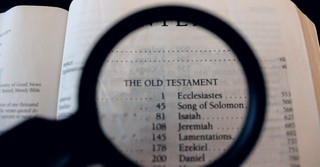
I remember growing up in Sunday School and we had to learn the books of the Bible. Surprisingly all these years later I can still recite all sixty-six of these books in order. As important as it is to know how many books are in the Bible, why just those books were chosen is equally important.
I donât know if you have ever asked the question how did we get to those books? This process of selection was not a decision that was devised in the minds of men. What is true is that this process was really birthed in the mind of God. Having a little better understanding of this will help you understand why we have these books in the Bible and why just those 66 were the ones selected.

How Many Books Are in the Bible?
The Bible is often thought of as one book. However, it is actually a compilation of 66 different books written by 40 different authors. These authors were not all connected to each other, most did not even know each other because these books were written over a period of approximately 1500 years.
In relation to the Bible, you will often hear the term canon which comes from the Greek word kanon, meaning "rule" or "measuring stick." Canon refers to the collection of books that are recognized as divinely inspired and authoritative for faith and practice. Essentially, the biblical canon is the "official list" of books that belong in Scripture.
The Old Testament, comprising 39 books, was primarily written in Hebrew (with some portions in Aramaic) and forms the foundation of the Jewish Scriptures. It is deeply connected to the Torah, the first five booksâGenesis, Exodus, Leviticus, Numbers, and Deuteronomyâoften referred to as the Law or the Pentateuch. These books outline Godâs covenant with Israel, His laws, and His instructions for holy living. The Old Testament also includes historical books, poetry and wisdom literature, and prophetic writings that foretell the coming of the Messiah. Its canon was largely recognized within the Jewish community by the time of Jesus, preserved with meticulous care by scribes.
The New Testament, containing 27 books, was written in Greek after the life, death, and resurrection of Jesus Christ. It focuses on His ministry, the establishment of the early church, and the promise of His return. The GospelsâMatthew, Mark, Luke, and Johnâdetail the life and teachings of Jesus, fulfilling the prophecies of the Old Testament. The book of Acts records the growth of the early church, while the epistles offer guidance and encouragement to believers. Finally, Revelation provides a prophetic glimpse into the end times and Christâs ultimate victory. The New Testament canon was recognized by the early church, formalized by the 4th century, and rooted in the authority of apostles and their close associates.
What makes the Bible so unique and special is that even with this large time gap between the first book written and the last book written, there is a consistency of thought and messaging. There is no other book that can match that. Though there continues to be skeptics today, this type of accuracy and consistency could only be accomplished by the hand of God.
Some versions of the Bible, such as the Catholic Bible and Eastern Orthodox Bible, include additional books that are not found in the Protestant Bible. These extra books are known as the Deuterocanonical books, coming from the Greek words deutero (second) and kanon (rule or standard). It refers to the fact that these books were recognized as part of the biblical canon at a later time compared to the books of the Proto-canon (the "first canon" or universally accepted books).They are considered Scripture by Catholics and Orthodox Christians but are viewed as apocryphal (non-canonical) by most Protestant traditions.
Examples of these books include:
- Tobit
- Judith
- 1 and 2 Maccabees
- Wisdom of Solomon
- Sirach (Ecclesiasticus)
- Baruch
- Additions to Daniel (e.g., "The Prayer of Azariah" and "Bel and the Dragon") and Esther.
The Deuterocanonical books were included in the Greek translation of the Hebrew Scriptures known as the Septuagint (LXX), which was widely used by Jews in the centuries before Jesus and by the early Christian Church. The Catholic Church formally recognized the Deuterocanonical books as part of Scripture at the Council of Trent (1545â1563) in response to the Protestant Reformation, which excluded these books from the canon. Protestants refer to these books as Apocrypha, meaning "hidden" or non-canonical.
During the Reformation, Martin Luther and other Reformers excluded the Deuterocanonical books from the Protestant canon. They argued that these books were not part of the Hebrew Bible (used by Jewish communities) and lacked clear evidence of divine inspiration.The question is how were the 66 books in the Bible chosen and why just those? Letâs answer this by looking at each testament separately.
Photo credit: ©SparrowStock