Jacob and Rachel - Bible Story
Share
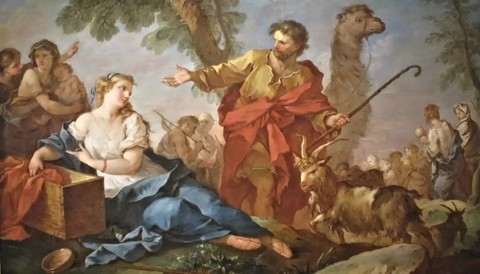
Jacob, the grandson of Abraham and son of Isaac, first appears prominently in the story of Jacob and Esau. After fleeing from his brother, Jacob traveled to Haran, where he met his uncle Laban's younger daughter, Rachel. Jacob immediately fell in love with her and agreed to work seven years in exchange for her hand in marriage (Genesis 29:18–30).
Jacob Agrees to Work Seven Years for Rachel
After arriving at Laban's household, Jacob offered to serve his uncle for seven years so he could marry Rachel. Scripture says those years "seemed like only a few days" because of his love for her, a powerful picture of devoted commitment.
When the seven years ended, Jacob expected to marry Rachel. Instead, Laban deceived him by giving him his older daughter, Leah, in marriage under the cover of night.
Why Did Jacob Marry Leah First?
The next morning, Jacob discovered he had married Leah instead of Rachel. When he confronted Laban, his uncle claimed it was their custom for the older daughter to marry before the younger.
Laban then offered Rachel as Jacob's wife after Leah's bridal week but only if Jacob agreed to work another seven years. Jacob accepted, ultimately serving fourteen years for the woman he loved.
Lessons from Jacob, Leah, and Rachel
Genesis 29 is a story of both love and heartbreak. Jacob's willingness to labor for Rachel demonstrates remarkable perseverance, while Laban's deception mirrors Jacob's own earlier deception of his father, Isaac. Throughout the account, God continues to work despite human failures, accomplishing His covenant purposes through imperfect people.
The story also highlights Leah's pain as the less-loved wife and God's compassion for those who feel overlooked. Though Rachel was deeply loved, Leah became the mother of Judah, the tribe through whom Jesus Christ, the promised Messiah, would eventually come.
Bible Commentary on Jacob and Rachel
The following is biblical commentary from Matthew Henry:
Genesis 29:9-14 - See Rachel's humility and industry. Nobody needs to be ashamed of honest, useful labor, nor ought it to hinder any one's preferment. When Jacob understood that this was his kinswoman, he was very ready to serve her. Laban, though not the best humored, bade him welcome and was satisfied with the account Jacob gave of himself. While we avoid being foolishly ready to believe everything which is told us, we must take heed of being uncharitably suspicious.
Genesis 29:15-30 - During the month that Jacob spent as a guest, he was not idle. Wherever we are, it is good to employ ourselves in some useful business. Laban was desirous that Jacob should continue with him. Inferior relations must not be imposed upon; it is our duty to reward them. Jacob made known to Laban the affection he had for his daughter Rachel. And having no worldly goods with which to endow her, he promises seven years' service Love makes long and hard services short and easy; hence we read of the labor of love, (Hebrews 6:10). If we know how to value the happiness of heaven, the sufferings of this present time will be as nothing to us. An age of work will be but as a few days to those that love God, and long for Christ's appearing. Jacob, who had imposed upon his father, is imposed upon by Laban, his father-in-law, by a like deception. Herein, how unrighteous soever Laban was, the Lord was righteous: see (Judges 1:7). Even the righteous, if they take a false step, are sometimes thus recompensed in the earth. And many who are not, like Jacob, in their marriage, disappointed in person, soon find themselves, as much to their grief, disappointed in the character. The choice of that relation ought to be made with good advice and thought on both sides. There is reason to believe that Laban's excuse was not true. His way of settling the matter made bad worse. Jacob was drawn into the disquiet of multiplying wives. He could not refuse Rachel, for he had espoused her; still less could he refuse Leah. As yet there was no express command against marrying more than one wife. It was in the patriarchs a sin of ignorance; but it will not justify the like practice now when God's will is plainly made known by the Divine law, (Leviticus 18:18), and more fully since, by our Saviour, that one man and woman (1 Corinthians 7:2).
Read the full scripture of this Bible story below and find related articles, videos, and audio sermons for more Bible study resources.
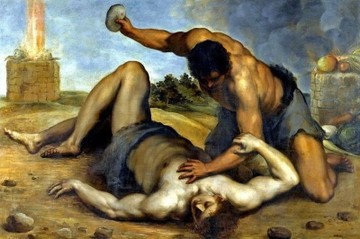
Photo Credit: Jacob and Rachel Leaving the House of Laban by Charles-Joseph Natoire (Public Domain)













.800w.tn.jpg)