Bible Verses About Tattoos
Share

As the popularity of tattoos continues to increase, many Christians wonder what the Bible has to say about tattoos. The Bible makes no specific reference to tattoos as we understand them in modern times. Some Christians condemn all tattooing as a sin because of interpretations that God forbids them in Leviticus 19:28. Let's take a look at this passage in greater context to understand how it applies to us today.
What does the Bible say about Tattoos?
Most Bible translations do not explicitly address the topic of tattoos, and opinions on the matter may vary among different Christian denominations and interpretations. The closest reference that some people associate with tattoos comes from Leviticus 19:28 in the Old Testament, which states, "You shall not make any cuts on your body for the dead or tattoo yourselves: I am the Lord."
Interpreting this verse involves considering the historical and cultural context in which it was written. Some argue that the prohibition was related to pagan mourning practices or idolatrous rituals and does not necessarily condemn modern, culturally neutral tattoos. Others view it as a guideline emphasizing the sanctity of the human body as a temple. The context of this verse is part of the holiness code given to Israel, which includes a series of laws designed to set the Israelites apart from the pagan cultures surrounding them. The practices described—cutting the body and marking it—were associated with mourning rituals and idol worship, common among Canaanite and other ancient cultures (1 Kings 18:28). These actions were often tied to rituals honoring the dead or invoking pagan gods, and the Israelites were commanded to avoid these practices to remain spiritually pure and distinct as God's people.
In the same chapter, Leviticus 19:27 says, “You shall not round off the hair on your temples or mar the edges of your beard.” This law likely refers to avoiding hairstyles connected to pagan rituals or priestly customs in other cultures, such as the Egyptians, where specific hair cutting or shaving practices held religious significance. Just as with the prohibition on tattoos and body markings, the goal of these laws was to ensure that Israelite worship and identity were distinct from surrounding nations that engaged in idolatry or superstitious practices.
Many Christians today recognize that laws like those in Leviticus 19:27-28 were specific to Israel’s covenant relationship with God at that time. These laws were part of the holiness code, designed to distinguish Israel from surrounding nations that engaged in pagan worship practices and rituals. Just as Leviticus 19:27 prohibits specific haircuts that held religious or cultural significance in ancient pagan societies, Leviticus 19:28 forbids cutting or marking the body in ways that were tied to mourning rituals and idol worship. Most scholars agree that these commands do not apply to modern believers, as the cultural meaning behind them no longer holds the same significance.
When it comes to tattoos, many Christians view them in the same light as the prohibited hairstyles—a practice that no longer carries the spiritual risks or pagan associations it once did. The ancient Canaanite and Egyptian cultures, for instance, used tattoos and body markings for ritualistic purposes, often connected to fertility, mourning, or idol worship (1 Kings 18:28). However, modern tattoos are generally not associated with these practices. Instead, they have become a form of personal expression, and for some believers, even a way to express their faith, such as by tattooing Bible verses or Christian symbols.
In the New Testament, the focus shifts to the heart and our faith more than outward appearances. 1 Corinthians 6:19-20 reminds us that our bodies are temples of the Holy Spirit, and that’s a verse I try to keep in mind. For some of us, that means avoiding tattoos as a way to honor our bodies. For others, a tattoo might feel like a personal expression of faith, like inking a meaningful verse or symbol that reminds us of God’s presence and truth.
At the end of the day, our decisions, including if we should get a tattoo, reflect our personal walk with God. I believe prayer and seeking God’s wisdom are key when making choices like getting a tattoo. What feels right for one person may not be what God wants for someone else, and that’s okay. Romans 14:23 reminds me to follow my conscience and to respect others who may choose differently.
It’s important for us to ask questions like: Will this decision honor God? Will it affect my witness to others? I’ve learned that it’s less about the tattoo itself and more about our relationship with God—whether the choices we make help us grow closer to Him and reflect His love and grace to those around us.
Top Bible Verses about Tattoos
Leviticus 19:28 - You shall not make any cuts on your body for the dead or tattoo yourselves: I am the Lord.
1 Corinthians 6:19-20 - Or do you not know that your body is a temple of the Holy Spirit within you, whom you have from God? You are not your own, for you were bought with a price. So glorify God in your body.
1 Corinthians 10:31 - So, whether you eat or drink, or whatever you do, do all to the glory of God.
Deuteronomy 14:1 - “You are the sons of the Lord your God. You shall not cut yourselves or make any baldness on your foreheads for the dead.
Ephesians 5:10 - And try to discern what is pleasing to the Lord.
1 Corinthians 10:23 - “All things are lawful,” but not all things are helpful. “All things are lawful,” but not all things build up.
Romans 1:24 - Therefore God gave them up in the lusts of their hearts to impurity, to the dishonoring of their bodies among themselves,
Meaning of Leviticus Law on Tattoos
Leviticus 19:28 literally translates, “And a cutting for the dead you will not make in your flesh, and writing marks you will not make on you; I am the Lord.” The word writing refers to inscribed or engraved symbols/words and is used only here. The word for marks, also used here alone, has an uncertain root, so we’re not really sure what the word means. Further, the word tattoo did not enter English until the late 1700s. This is probably why the KJV, written in the early 1600s, is closer to the literal translation saying, “ye shall not...print marks upon you.”
The background of this law was that Israel, after being rescued from slavery, was between Egypt and Canaan. Recent archeology indicates that, while Egypt did tattoos, it was limited to women. Evidence suggests that tattooing the body parts of women associated with fertility (breasts, thighs, and abdomen) was believed to be a good luck charm to protect the birthing process. In Canaan, evidence indicates that instead of marking the body with ink, more extreme scarification measures, like branding, slashing, or gashing the skin, were used. Archeology, backed by biblical texts, indicates the Canaanites would customarily slash their bodies for ritualistic purposes (1 Kings 18:28), especially to mourn their dead and honor their gods. Leviticus 19:28 seems to imply this when it says, “You will not make cuttings in your flesh, for the dead, nor print marks on you.” In light of this information from Egypt and Canaan, it would seem God forbade scarification, not tattooing as we know it.
With this said, while there may be no clear passage in the Bible addressing tattoos, this is hardly a license for unrestrained tattooing. You still need to think before you ink, especially if you’re a Christian. The following Bible verses that can apply to tattoos are guiding questions to help you think through your decision. Study the Bible, pray and ask God for wisdom, and seek the guidance of the Holy Spirit.
(excerpt from "7 Questions to Answer When Considering a Tattoo", Crosswalk.com.)
From the tiniest word on an ankle to a colorful full-body display, tattoos are becoming increasingly prevalent, even among Christians. The Old Testament tells us not to get tattoos, so is it a sin for a Christian to get a tattoo now? Is it as simple as a matter of right or wrong? Listen as Pastor Mike dives into the issue on today's with Mike Fabarez from Focal Point Ministries. Listen now to "Are Tattoos Biblical?"
Related Resource: Here's What the Bible Actually Says About Tattoos
Before you run out and get that new tattoo or commit to that full sleeve, have you considered what scripture has to say on the matter? In this week's discussion, Zack and Randy delve into the Hebrew origins of various scriptures that are often cited both in support of and against the idea of getting a tattoo. If this episode helped you think more clearly about your faith, be sure to subscribe to Salty Saints on Apple or Spotify so you never miss an episode!
Photo Credit: ©Unsplash/Busing
Table of Contents
Bible Verses about Tattoos
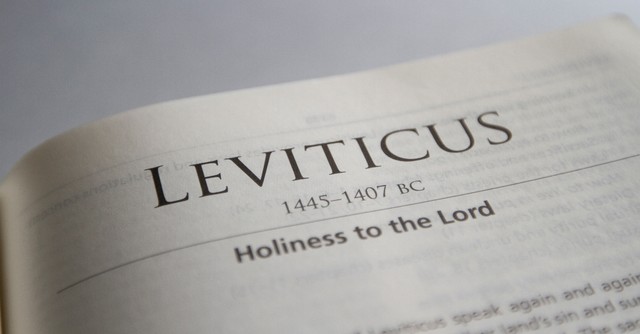
You shall not make any cuts on your body for the dead or tattoo yourselves: I am the Lord. ~ Leviticus 19:28
Or do you not know that your body is a temple of the Holy Spirit within you, whom you have from God? You are not your own, for you were bought with a price. So glorify God in your body. ~ 1 Corinthians 6:19-20
On his robe and on his thigh he has a name written, King of kings and Lord of lords. ~ Revelation 19:16
So, whether you eat or drink, or whatever you do, do all to the glory of God. ~ 1 Corinthians 10:31
And try to discern what is pleasing to the Lord. ~ Ephesians 5:10
“You are the sons of the Lord your God. You shall not cut yourselves or make any baldness on your foreheads for the dead. ~ Deuteronomy 14:1
“All things are lawful,” but not all things are helpful. “All things are lawful,” but not all things build up. ~ 1 Corinthians 10:23
Therefore God gave them up in the lusts of their hearts to impurity, to the dishonoring of their bodies among themselves ~ Romans 1:24
Bible Verses about Our Bodies
Do you not know that you are God's temple and that God's Spirit dwells in you? If anyone destroys God's temple, God will destroy him. For God's temple is holy, and you are that temple. ~ 1 Corinthians 3:16-17
But I discipline my body and keep it under control, lest after preaching to others I myself should be disqualified. ~ 1 Corinthians 9:27
I appeal to you therefore, brothers, by the mercies of God, to present your bodies as a living sacrifice, holy and acceptable to God, which is your spiritual worship. ~ Romans 12:1
Flee from sexual immorality. Every other sin a person commits is outside the body, but the sexually immoral person sins against his own body. ~ 1 Corinthians 6:18
It is sown a natural body; it is raised a spiritual body. If there is a natural body, there is also a spiritual body. ~ 1 Corinthians 15:44
Or do you not know that your body is a temple of the Holy Spirit within you, whom you have from God? You are not your own ~ 1 Corinthians 6:19
For we must all appear before the judgment seat of Christ, so that each one may receive what is due for what he has done in the body, whether good or evil. ~ 2 Corinthians 5:10
Do not present your members to sin as instruments for unrighteousness, but present yourselves to God as those who have been brought from death to life, and your members to God as instruments for righteousness. ~ Romans 6:13
Do not let your adorning be external—the braiding of hair and the putting on of gold jewelry, or the clothing you wear— but let your adorning be the hidden person of the heart with the imperishable beauty of a gentle and quiet spirit, which in God's sight is very precious. ~ 1 Peter 3:3-4
Inspiring Bible Verse Tattoos - Top Scriptures for Tattoos
Jesus Christ is the same yesterday and today and forever. ~ Hebrews 13:8
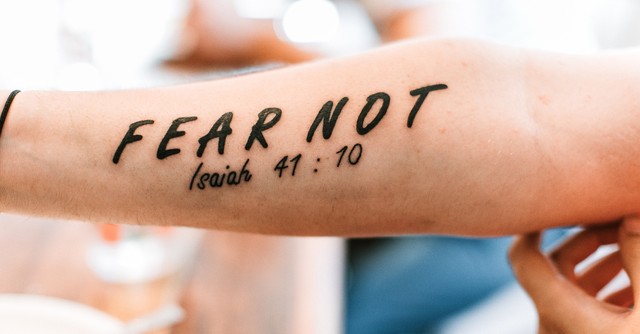
Fear not, for I am with you; be not dismayed, for I am your God; I will strengthen you, I will help you, I will uphold you with my righteous right hand. ~ Isaiah 41:10
Have I not commanded you? Be strong and courageous. Do not be frightened, and do not be dismayed, for the Lord your God is with you wherever you go. ~ Joshua 1:9
For God gave us a spirit not of fear but of power and love and self-control. ~ 2 Timothy 1:7
I sought the Lord, and he answered me and delivered me from all my fears. ~ Psalm 34:4
There is no fear in love, but perfect love casts out fear. For fear has to do with punishment, and whoever fears has not been perfected in love. ~ 1 John 4:18
Of David. The Lord is my light and my salvation; whom shall I fear? The Lord is the stronghold of my life; of whom shall I be afraid? ~ Psalm 27:1
Even though I walk through the valley of the shadow of death, I will fear no evil, for you are with me; your rod and your staff, they comfort me. ~ Psalm 23:4
Let all that you do be done in love. ~ 1 Corinthians 16:14
“For God so loved the world, that he gave his only Son, that whoever believes in him should not perish but have eternal life. ~ John 3:16
Anyone who does not love does not know God, because God is love. ~ 1 John 4:8
Above all, keep loving one another earnestly, since love covers a multitude of sins. ~ 1 Peter 4:8
And above all these put on love, which binds everything together in perfect harmony. ~ Colossians 3:14
Photo Credit: Unsplash