6 Miracles Surrounding the Birth of Jesus
Share
The Word made flesh to live among us is miraculous enough. How amazing that the Lord of all humbled Himself to be born as an infant in lowly Bethlehem? This event changed history and continues to impact the present.
His birth, before and after, created ripple effects. For surrounding the events of Jesus’ coming into the world were multiple other miracles. Instead of detracting from the focus of Christmas, they add to the main event of God entering the fallen world to live among us (John 1:14). These miracles, in all their individual wonder, remind us to pause and consider – look what the Lord did! We should follow Mary’s example and treasure these events in our hearts (Luke 2:19).
Not only have these events changed all of history around the world, they can also greatly impact our lives today. So, let us survey these six miracles surrounding the birth of Jesus and spend time meditating on them this Christmas.
Photo credit: ©Getty Images/Allanswart
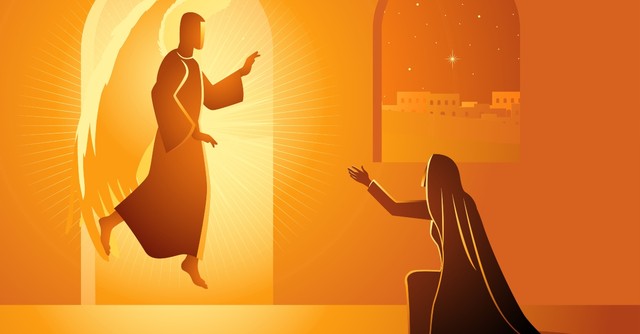
1. The Miraculous Conception and Virgin Birth of Christ
There is a natural way that babies are born. Despite what many children assume, infants are not delivered by storks, nor do they merely appear as if from thin air. A man and woman are both needed in the creation of a child. Yet, there is one exception to the natural order of things: the virgin birth of Christ.
Young Mary, who was engaged to Joseph, was told by the angel Gabriel that she would conceive and give birth to the Messiah. Not only was she afraid of this miraculous appearance of an angel, but she was confused. As she asked Gabriel: “How will this be … since I am a virgin?” (Luke 1:34).
Critics throughout history have tried to argue against the biblical teaching that Mary was a virgin and had never been with a man. Some support their ideas that the word translated as “virgin” in the Greek refers only to a young woman of marrying age (Luke 1:27). In this line of reasoning, critics assert that Jesus could have been the result of an affair with an unknown man. The thought that an unmarried virgin could miraculously conceive and give birth is unthinkable to many people, especially today. But Scripture is clear about the validity of this miracle.
The prophet Isaiah had already foretold the virgin birth of Christ. As he wrote, “Therefore the Lord himself will give you a sign: The virgin will conceive and give birth to a son, and will call him Immanuel” (Isaiah 7:14). Jesus was the fulfillment of this prophecy, as well as the earlier promise in Genesis of the seed of woman being born to crush the head of the serpent (Genesis 3:15). Notice that in these prophecies, the emphasis is only on a woman giving birth (i.e., the seed of woman), with no mention of a natural father.
Christ was born of Mary as a work of the Holy Spirit (Matthew 1:18; Luke 1:35). She was not impregnated in the natural way of things since the direct translation of Luke 1:34 tells us that she had never been intimate with a man (see NET Bible translation). Rather, God miraculously caused her to conceive and give birth to Jesus. This is important since the Son of God made flesh could not be born as a normal son of Adam, an inheritor of sin. He is the sinless Son of God and thus had to be born of a virgin (see 2 Corinthians 5:21; Hebrews 4:15; 1 Peter 2:22).
From the earliest days of the church, Christians have affirmed alongside the testimony of the Apostles that “God sent his son, born of a woman” to redeem us (Galatians 4:4-5).
Photo credit: ©Getty Images/rudall30
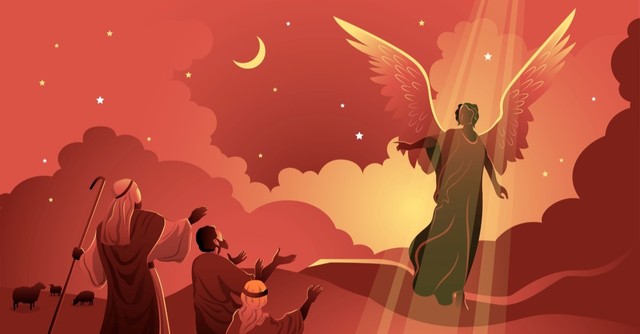
2. A Glorious Appearing of Angels to Shepherds
Imagery of angels in the Bible are commonly associated with the presence of God. In the Old Testament, the Ark of the Covenant symbolized the Lord’s presence among the Israelites. Two golden cherubs sat on top of the covering of the Ark, with their wings outstretched to overshadow the cover (Exodus 25:17-22). Similarly, when Ezekiel saw a vision of the majesty of God, he also witnessed the angels who encircled the throne of the Lord (Ezekiel 1:5-28; see also Isaiah 6:2-3). Other verses likewise depict angels near the throne of God (Revelation 4:8-11; 7:11).
So, it should come as no surprise that the ushering in of the Word made flesh was announced by a heavenly host. While shepherds were watching their flocks at night, an angel appeared with the brilliance of the glory of God. The sight of the angelic messenger terrified the shepherds, and they listened with awe to the news. They were told: “Don’t be afraid, for look, I proclaim to you good news of great joy that will be for all the people: Today in the city of David a Savior was born for you, who is the Messiah, the Lord. This will be the sign for you: You will find a baby wrapped tightly in cloth and lying in a manger” (Luke 2:10-12).
More angels appeared declaring praises of God in the presence of the shepherds (Luke 2:13-14). The sight of the heavenly host and the message the shepherds received led them to see the infant Christ and spread the news about Him.
Heavenly messengers were present at the giving of the Law, but here something more precious was given. Jesus, the Son of God who perfectly reveals the Father, had come and the angels announced His coming with worship (see Hebrews 1:1-4).
Photo credit: ©Getty Images/Andry Djumantara
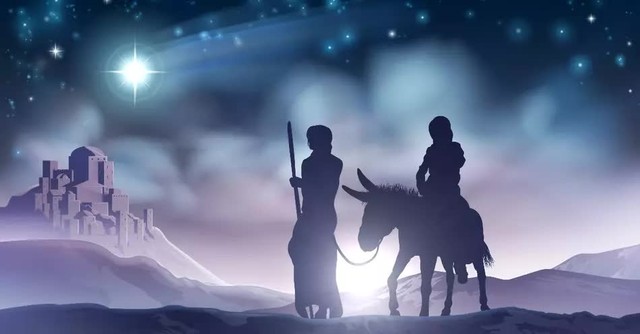
3. Joseph’s Visions and Dreams
Angels appeared to numerous people surrounding the birth of Jesus. We know about Mary and her discussion with Gabriel, and the great announcement to the shepherds. Someone who is sometimes overlooked, though, is Joseph.
As a devout follower of God who upheld the law, he had decided to divorce Mary quietly. She was discovered to be pregnant, and he assumed she had broken trust in their binding agreement of engagement. But he did not want to scandalize or hurt her, and so that is why he decided to end the engagement away from the public eye (Matthew 1:19).
But the Lord had other plans. He sent an angel to Joseph in a dream to explain how Mary was pregnant: “Joseph son of David, do not be afraid to take Mary home as your wife, because what is conceived in her is from the Holy Spirit. She will give birth to a son, and you are to give him the name Jesus, because he will save his people from their sins” (Matthew 1:20-21).
Joseph had been chosen for the special task of supporting Mary and her miraculously born son, Jesus. And so, in faith, Joseph accepted the task and lived in obedience to what God had revealed to him.
Later, he would be required to again act in faith when an angel warned him in a dream to flee Bethlehem and shelter in Egypt to protect Christ from the murderous intentions of King Herod (Matthew 2:13-15). The angel also directed Joseph when they could return safely, which is when they settled in Nazareth (Matthew 2:19-23). This seemingly simple Israelite from the tribe of Judah was used mightily to protect and support the newborn King.
Photo credit: ©Getty Images/ChrisGorgio
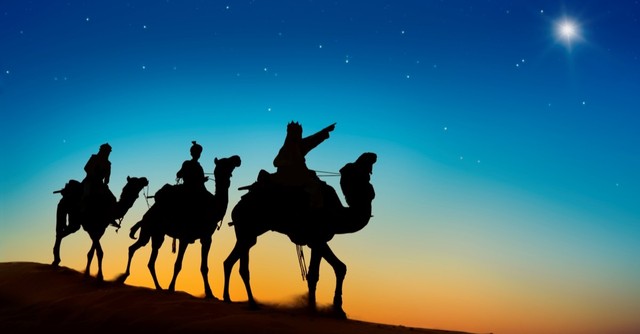
4. The Star That Led the Magi
The wise men had used their arts and studies to discern the coming of Christ. Many scholars believe that the Magi originated from Persia, and that the influence of Daniel had led other wise men to study portions of Scripture.
A careful survey of knowledge, though, was not the only activity the Magi did in preparation for their travels to the land of Israel. They did not seem to have access to the writings of the prophet Micah, who prophesied about the Messiah’s birth in Bethlehem (Micah 5:2). But as astrologers, they noted the significance of the stars. One specific star led them to Jerusalem and then to Bethlehem. Hence, they told Herod at the palace that “We saw his star when it rose and have come to worship him” (Matthew 2:2).
Efforts have been made to discern which star the wise men followed. People often refer to it as the Star of Bethlehem, with some claiming that it was the celestial event of two planets overlapping (called a conjunction). Other scholars doubt that it was a purely natural phenomenon. Instead, they argue that the presence of the star was a representation of the Shekinah glory, resembling the fiery presence of God in the Old Testament. During major events, like the dedication of the temple, the glory of the Lord would descend or ascend (see 2 Chronicles 7:1-6).
Regardless of what exactly this star was, its appearance was miraculous and unrepeated. The Magi dutifully followed the star’s guidance and visited the Christ child. While others overlooked lowly Bethlehem and ignored the signs of nature around them, the wise men took notice and traveled far to worship Jesus, the Savior of the world (Matthew 2:10-11).
Photo credit: ©Getty Images/Rawpixel

5. An Elderly, Barren Couple Welcomed a Child of Their Own
The echoes of the Old Testament, and the miracles thereof, are evident in the Gospels of Matthew and Luke. In the account written by Luke the doctor, we meet an elderly couple who resemble Abraham and Sarah. Like the ancient patriarch and matriarch of the faith, Zechariah and Elizabeth were unable to have children and were very old (Luke 1:7). Being childless was not only a mark of cultural shame at that time, it also meant no one would be there to take care of them in their old age.
But God had a plan for this couple, just as He did for Abraham and Sarah – but this time it was the husband who doubted, not the wife (compare to Genesis 18:11-15). While Zechariah was serving in the temple, offering incense, the angel Gabriel appeared to him with the news that he would have a son. This child, born into the Aaronic lineage and priesthood, would serve as an Elijah-like prophet and prepare the way for the Lord (Luke 1:5, 11-17).
But, like Sarah laughing at the ridiculousness of an old woman having a child, Zechariah requested a sign because of unbelief.
Gabriel gave him one as punishment. Zechariah would be unable to speak until his son, John, was born (Luke 1:19-20).
Unlike her husband, Elizabeth responded with faith and praise. When she realized she was pregnant, she declared, “The Lord has done this for me. In these days He has shown me favor and taken away my disgrace among the people” (Luke 1:25). She was also the one who insisted that the baby be named John once she gave birth despite the name being uncommon among their relatives (Luke 1:59-61). Zechariah affirmed what his wife said and then was finally able to speak again.
Just as the Holy Spirit had moved in Elizabeth and Mary, so now He moved in Zechariah in a prophetic song known traditionally as the Benedictus (Luke 1:67-79). The man who had spoken in unbelief at the angel’s words now declared with confidence the future work of his son and the part he would play in preparing the way for the Savior. Doubt had given way to praise: “Blessed be the Lord God of Israel, for he has visited and redeemed his people” (Luke 1:68).
Photo credit: ©Getty Images/Kuzmichstudio
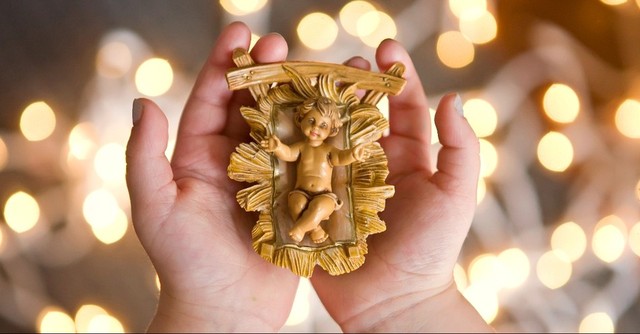
6. Prophets Spoke about the Fulfillment of Promises
Zechariah was not the only one who spoke prophetically about the birth of Christ. When Mary and Joseph presented Jesus to the temple, according to the law, they were met by two individuals who spoke prophetically about the Christ child (Luke 2:22-24). God had been at work, and the Bible specifically ties this marvelous event with the movement of the Holy Spirit.
The first person they encountered was Simeon. The Holy Spirit had revealed to him that he would not die until he had seen the Messiah (Luke 2:26). He had been led by the Spirit that day to enter the temple courts, and that is when he held the infant Jesus and praised the Lord. He spoke about Jesus’ role as the Savior of Israel and of the Gentiles (Luke 2:28-32).
Though the baby he held in his arms was small, he foretold of the profound impact and division that Christ would bring: “This child is destined to cause many in Israel to fall, and many others to rise. He has been sent as a sign from God, but many will oppose him. As a result, the deepest thoughts of many hearts will be revealed. And a sword will pierce your very soul” (Luke 2:34-35). As Jesus would later state, the allegiance to Him that was required by His followers would cause division (Matthew 10:34-36). Their love for Jesus would make other relationships look like hatred in comparison (Matthew 10:37).
Another individual also met the Christ child that day at the temple. Luke describes Anna as a prophet (or prophetess) who continually stayed in the temple worshiping the Lord (Luke 2:36-37). It was no coincidence that she happened to encounter Joseph and Mary with Jesus at that moment. Upon seeing the infant, “she gave thanks to God and spoke about the child to all who were looking forward to the redemption of Jerusalem” (Luke 2:38). She spiritually discerned that this child was no ordinary child – He was the fulfilment of the promises of Scripture. And she could not remain silent about Him.
Today, we are still talking about these miraculous events that centered around the coming of our Savior. May we rejoice and give thanks, as Simeon and Anna did, and tell others about the hope that is found in the Lord Jesus.
Photo credit: ©Getty Images/kmevegas