
Change Translation
- Recent Translations
- All Translations
1
UN varón de la familia de Leví fué, y tomó por mujer una hija de Leví:
2
La cual concibió, y parió un hijo: y viéndolo que era hermoso, túvole escondido tres meses.
3
Pero no pudiendo ocultarle más tiempo, tomó una arquilla de juncos, y calafateóla con pez y betún, y colocó en ella al niño, y púsolo en un carrizal á la orilla del río:
4
Y paróse una hermana suya á lo lejos, para ver lo que le acontecería.
5
Y la hija de Faraón descendió á lavarse al río, y paseándose sus doncellas por la ribera del río, vió ella la arquilla en el carrizal, y envió una criada suya á que la tomase.
6
Y como la abrió, vió al niño; y he aquí que el niño lloraba. Y teniendo compasión de él, dijo: De los niños de los Hebreos es éste.
7
Entonces su hermana dijo á la hija de Faraón: ¿Iré á llamarte un ama de las Hebreas, para que te críe este niño?
8
Y la hija de Faraón respondió: Ve. Entonces fué la doncella, y llamó á la madre del niño;
9
A la cual dijo la hija de Faraón: Lleva este niño, y críamelo, y yo te lo pagaré. Y la mujer tomó al niño, y criólo.
10
Y como creció el niño, ella lo trajo á la hija de Faraón, la cual lo prohijó, y púsole por nombre Moisés, diciendo: Porque de las aguas lo saqué.
11
Y en aquellos días acaeció que, crecido ya Moisés, salió á sus hermanos, y vió sus cargas: y observó á un Egipcio que hería á uno de los Hebreos, sus hermanos.
12
Y miró á todas partes, y viendo que no parecía nadie, mató al Egipcio, y escondiólo en la arena.
13
Y salió al día siguiente, y viendo á dos Hebreos que reñían, dijo al que hacía la injuria: ¿Por qué hieres á tu prójimo?
14
Y él respondió: ¿Quién te ha puesto á ti por príncipe y juez sobre nosotros? ¿piensas matarme como mataste al Egipcio? Entonces Moisés tuvo miedo, y dijo: Ciertamente esta cosa es descubierta.
15
Y oyendo Faraón este negocio, procuró matar á Moisés: mas Moisés huyó de delante de Faraón, y habitó en la tierra de Madián; y sentóse junto á un pozo.
16
Tenía el sacerdote de Madián siete hijas, las cuales vinieron á sacar agua, para llenar las pilas y dar de beber á las ovejas de su padre.
17
Mas los pastores vinieron, y echáronlas: Entonces Moisés se levantó y defendiólas, y abrevó sus ovejas.
18
Y volviendo ellas á Ragüel su padre, díjoles él: ¿Por qué habéis hoy venido tan presto?
19
Y ellas respondieron: Un varón Egipcio nos defendió de mano de los pastores, y también nos sacó el agua, y abrevó las ovejas.
20
Y dijo á sus hijas: ¿Y dónde está? ¿por qué habéis dejado ese hombre? llamadle para que coma pan.
21
Y Moisés acordó en morar con aquel varón; y él dió á Moisés á su hija Séphora:
22
La cual le parió un hijo, y él le puso por nombre Gersom: porque dijo: Peregrino soy en tierra ajena.
23
Y aconteció que después de muchos días murió el rey de Egipto, y los hijos de Israel suspiraron á causa de la servidumbre, y clamaron: y subió á Dios el clamor de ellos con motivo de su servidumbre.
24
Y oyó Dios el gemido de ellos, y acordóse de su pacto con Abraham, Isaac y Jacob.
25
Y miró Dios á los hijos de Israel, y reconociólos Dios.
Éxodo 2 Commentary
Chapter 2
Moses is born, and exposed on the river. (1-4) He is found, and brought up by Pharaoh's daughter. (5-10) Moses slays an Egyptian, and flees to Midian. (11-15) Moses marries the daughter of Jethro. (16-22) God hears the Israelites. (23-25)
Verses 1-4 Observe the order of Providence: just at the time when Pharaoh's cruelty rose to its height by ordering the Hebrew children to be drowned, the deliverer was born. When men are contriving the ruin of the church, God is preparing for its salvation. The parents of Moses saw he was a goodly child. A lively faith can take encouragement from the least hint of the Divine favour. It is said, ( Hebrews 11:23 ) , that the parents of Moses hid him by faith; they had the promise that Israel should be preserved, which they relied upon. Faith in God's promise quickens to the use of lawful means for obtaining mercy. Duty is ours, events are God's. Faith in God will set us above the fear of man. At three months' end, when they could not hide the infant any longer, they put him in an ark of bulrushes by the river's brink, and set his sister to watch. And if the weak affection of a mother were thus careful, what shall we think of Him, whose love, whose compassion is, as himself, boundless. Moses never had a stronger protection about him, no, not when all the Israelites were round his tent in the wilderness, than now, when he lay alone, a helpless babe upon the waves. No water, no Egyptian can hurt him. When we seem most neglected and forlorn, God is most present with us.
Verses 5-10 Come, see the place where that great man, Moses, lay, when he was a little child; it was in a bulrush basket by the river's side. Had he been left there long, he must have perished. But Providence brings Pharaoh's daughter to the place where this poor forlorn infant lay, and inclines her heart to pity it, which she dares do, when none else durst. God's care of us in our infancy ought to be often mentioned by us to his praise. Pharaoh cruelly sought to destroy Israel, but his own daughter had pity on a Hebrew child, and not only so, but, without knowing it, preserved Israel's deliverer, and provided Moses with a good nurse, even his own mother. That he should have a Hebrew nurse, the sister of Moses brought the mother into the place of a nurse. Moses was treated as the son of Pharoah's daughter. Many who, by their birth, are obscure and poor, by surprising events of Providence, are raised high in the world, to make men know that God rules.
Verses 11-15 Moses boldly owned the cause of God's people. It is plain from ( Hebrews 11 ) . that this was done in faith, with the full purpose of leaving the honours, wealth, and pleasures of his rank among the Egyptians. By the grace of God he was a partaker of faith in Christ, which overcomes the world. He was willing, not only to risk all, but to suffer for his sake; being assured that Israel were the people of God. By special warrant from Heaven, which makes no rule for other cases, Moses slew an Egyptian, and rescued an oppressed Israelites. Also, he tried to end a dispute between two Hebrews. The reproof Moses gave, may still be of use. May we not apply it to disputants, who, by their fierce debates, divide and weaken the Christian church? They forget that they are brethren. He that did wrong quarreled with Moses. It is a sign of guilt to be angry at reproof. Men know not what they do, nor what enemies they are to themselves, when they resist and despise faithful reproofs and reprovers. Moses might have said, if this be the spirit of the Hebrews, I will go to court again, and be the son of Pharaoh's daughter. But we must take heed of being set against the ways and people of God, by the follies and peevishness of some persons that profess religion. Moses was obliged to flee into the land of Midian. God ordered this for wise and holy ends.
Verses 16-22 Moses found shelter in Midian. He was ready to help Reuel's daughters to water their flocks, although bred in learning and at court. Moses loved to be doing justice, and to act in defence of such as he saw injured, which every man ought to do, as far as it is in his power. He loved to be doing good; wherever the providence of God casts us, we should desire and try to be useful; and when we cannot do the good we would, we must be ready to do the good we can. Moses commended himself to the prince of Midian; who married one of his daughters to Moses, by whom he had a son, called Gershom, "a stranger there," that he might keep in remembrance the land in which he had been a stranger.
Verses 23-25 The Israelites' bondage in Egypt continued, though the murdering of their infants did not continue. Sometimes the Lord suffers the rod of the wicked to lie very long and very heavy on the lot of the righteous. At last they began to think of God under their troubles. It is a sign that the Lord is coming towards us with deliverance, when he inclines and enables us to cry to him for it. God heard their groaning; he made it to appear that he took notice of their complaints. He remembered his covenant, of which he is ever mindful. He considered this, and not any merit of theirs. He looked upon the children of Israel. Moses looked upon them, and pitied them; but now God looked upon them, and helped them. He had respect unto them. His eyes are now fixed upon Israel, to show himself in their behalf. God is ever thus, a very present help in trouble. Take courage then, ye who, conscious of guilt and thraldom, are looking to Him for deliverance. God in Christ Jesus is also looking upon you. A call of love is joined with a promise of the Redeemer. Come unto me, all ye that labour and are heavy laden, and I will give you rest, ( Matthew 11:28 ) .
Unlock Deeper Insights: Get Over 20 Commentaries with Plus! Subscribe Now
Éxodo 2 Commentaries
Chapter Summary
INTRODUCTION TO EXODUS 2
This chapter relates the birth of Moses, and his preservation in an ark of bulrushes, Ex 2:1-3. His being found by Pharaoh's daughter, took up, and put out to nurse by her, and adopted for her son, Ex 2:4-10, some exploits of his when grown up, taking the part of an Hebrew against an Egyptian whom he slew, and endeavouring to reconcile two Hebrews at variance, when one of them reproached him with slaying the Egyptian, Ex 2:11-14, which thing being known to Pharaoh, he sought to slay Moses, and this obliged him to flee to Midian, Ex 2:15 where he met with the daughters of Reuel, and defended them against the shepherds, and watered their flocks for them, Ex 2:16,17, which Reuel being informed of, sent for him, and he lived with him, and married his daughter Zipporah, by whom he had a son, Ex 2:18-22 and the chapter is concluded with the death of the king of Egypt, and the sore bondage of the Israelites, and their cries and groans, which God had a respect unto, Ex 2:23-25.
was Amram, the son of Kohath, and grandson of Levi, as appears from Ex 6:18,20
\\and took to wife a daughter of Levi\\; one of the same house, family, or tribe; which was proper, that the tribes might be kept distinct: this was Jochebed, said to be his father's sister, \\see Gill on "Ex 6:20"\\: her name in Josephus {s} is Joachebel, which seems to be no other than a corruption of Jochebed, but in the Targum in 1Ch 4:18 she is called Jehuditha.
{s} Antiqu. l. 2. c. 9. sect. 4. 09514-950103-1343-Ex2.2
Taken from John Gill's Exposition of the Bible
Unlock Deeper Insights: Get Over 20 Commentaries with Plus! Subscribe Now
Related Articles

20 Powerful Lessons from 20 Powerful Women in the Bible

What is the Significance of Names in the Bible? Top People Names and Their Meaning
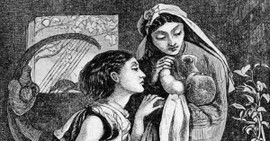
What Does the Bible Say about Jochebed (Moses' Mother)?
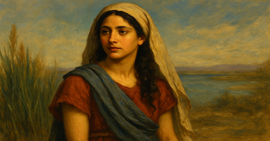
What Does the Bible Tell Us about Miriam, the Sister of Moses?

How Can We Tell if Our Pursuit of a Dream Comes from God?
The Reina-Valera Antigua (1602) is in the public domain.
Study Tools
PLUSUnlock Notes
This feature is for PLUS subscribers only. Join PLUS today to access these tools and more.
JOIN PLUSUnlock Highlights
This feature is for PLUS subscribers only. Join PLUS today to access these tools and more.
JOIN PLUSUnlock Bookmarks
This feature is for PLUS subscribers only. Join PLUS today to access these tools and more.
JOIN PLUSTrack Your Reading
Create a free account to start a reading plan, or join PLUS to unlock our full suite of premium study tools.
Already have an account? Sign in