What Does the Bible Say about Shechem? Story of the Person and Place
Share
Shechem is a biblical city just 40 miles north of Jerusalem. Throughout Scripture, its land shapes Israel’s history and serves as a focal point of God’s faithfulness. As we will see, Shechem is also the name of the prince of Shechem who harms Jacob's daughter, Dinah, which enrages Dinah's brothers.
The First Mention of Shechem in the Bible
In Genesis 12, we see God’s promise that He would make Abraham (then Abram) the father of the Jews, His people:
“The Lord had said to Abram, ‘Go from your country, your people and your father’s household to the land I will show you.
‘I will make you into a great nation,
and I will bless you;
I will make your name great,
and you will be a blessing.
I will bless those who bless you,
and whoever curses you I will curse;
and all peoples on earth
will be blessed through you.’” Genesis 12:1-3 (NIV)
Only three verses after God makes this covenant, we see Shechem revealed in Scripture. Genesis 12:6-2 says, “Abram traveled through the land as far as the site of the great tree of Moreh at Shechem. At that time, the Canaanites were in the land. The Lord appeared to Abram and said, ‘To your offspring I will give this land.’ So he built an altar there to the Lord, who had appeared to him.”
Shechem was part of the land that God had just promised Abraham and all of God’s people. It was the foundation, the starting point, of an earthly testament to God’s heavenly favor. Here, we see more than an inheritance of land. We see the character of God, His faithfulness, open itself to Israel.
Shechem would continue to highlight God’s faithfulness as it served as a pivotal location for leaders of the faith like Jacob, Moses, Joseph, Joshua, and even the Samaritan woman at the well, whom we meet in the New Testament.
Jacob Buys the Land of Shechem
In Genesis 33, we see Abraham’s grandson, Jacob, purchase Shechem:
“After Jacob came from Paddan Aram, he arrived safely at the city of Shechem in Canaan and camped within sight of the city. For a hundred pieces of silver, he bought from the sons of Hamor, the father of Shechem, the plot of ground where he pitched his tent. There he set up an altar and called it El Elohe Israel.”
The direct translation of El Elohe is “God, the God,” which further emphasizes not only Jacob’s dedication to God, but God’s dedication to Abraham and Jacob’s descendants, the children of Israel. God’s commitment is further proven through one of Jacob’s youngest sons, Joseph. Joseph had a special relationship with Jacob, and Joseph's brothers, out of jealousy, sold him as a slave to the Egyptians. Shechem is where the brothers were watching their flocks when they sold him (Genesis 37:12-14).
While Joseph being sold into slavery doesn’t sound like God’s faithfulness, Joseph finds favor with Pharaoh and eventually earns such a high position within Egypt that he is able to save the Israelites from famine and further preserve the Israeli line.
Shechem the Canaanite Harms Jacob’s Daughter
Meanwhile, in Genesis 34, we read an unsettling story of a man named Shechem, a Canaanite prince, who kidnaps and rapes Jacob’s only daughter, Dinah.
After he assaults her, Shechem decides that he is in love with her and seeks her hand in marriage. Two of Dinah’s brothers, Simeon and Levi, pretend to go along with the betrothal (while Jacob remains silent concerning the entire situation).
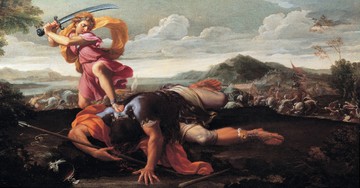
The brothers tell Shechem that he and his men must circumcise themselves, as is the custom to marry into Jacob’s family. Once they are circumcised, Simeon and Levi murder Shechem and all his men.
This dark episode shows that Shechem was not only a place of promise but also a place marked by human sin, suffering, and revenge. Yet the injustice and violence recorded there did not overturn God’s covenant purposes. As Shechem reappears throughout Scripture, we see that God remains faithful even when people act faithlessly.
Moses and Joshua Bring the Children of Israel to Shechem
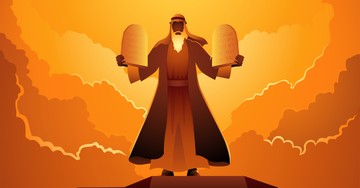
We next see Shechem in Deuteronomy 11, where God gives Moses strict instructions for the children of Israel upon entering the Promised Land, with certain tribes to proclaim blessings atop Mount Gerizim and other tribes to declare curses atop Mount Ebal (with Shechem as the land directly between these mountains):
“See, I am setting before you today a blessing and a curse— the blessing if you obey the commands of the Lord your God that I am giving you today; the curse if you disobey the commands of the Lord your God and turn from the way that I command you today by following other gods, which you have not known. When the Lord your God has brought you into the land you are entering to possess, you are to proclaim on Mount Gerizim the blessings, and on Mount Ebal the curses.
As you know, these mountains are across the Jordan, westward, toward the setting sun, near the great trees of Moreh, in the territory of those Canaanites living in the Arabah in the vicinity of Gilgal. You are about to cross the Jordan to enter and take possession of the land the Lord your God is giving you. When you have taken it over and are living there, be sure that you obey all the decrees and laws I am setting before you today” (vv. 26-32, NIV).
Later, Joshua, Moses’ prodigy, brings the children of Israel to the land of Shechem to renew their covenant with God:
“Then Joshua assembled all the tribes of Israel at Shechem. He summoned the elders, leaders, judges and officials of Israel, and they presented themselves before God… Now fear the Lord and serve him with all faithfulness. Throw away the gods your ancestors worshiped beyond the Euphrates River and in Egypt, and serve the Lord.
But if serving the Lord seems undesirable to you, then choose for yourselves this day whom you will serve, whether the gods your ancestors served beyond the Euphrates, or the gods of the Amorites, in whose land you are living. But as for me and my household, we will serve the Lord.” (Joshua 24:1, 14-15, NIV)
Jesus Begins His Earthly Ministry at Shechem
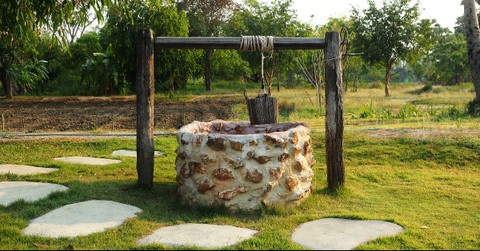
In John 4, Jesus takes an unconventional route through a land where Samaritans lived and stops at a town called Sychar, which was located near the ruins of the ancient city of Shechem. At this time, Jews and Samaritans did not mingle at all. On his journey, Jesus stops at a well for a drink of water, where he meets an outcast Samaritan woman (living with a man who wasn’t her husband).
It is with this social outcast, this woman, that Jesus first formally revealed Himself to the world as the Messiah, and her wholehearted acceptance of Him launched His earthly ministry (vv. 25-29, NIV):
“The woman said, ‘I know that Messiah’ (called Christ) ‘is coming. When he comes, he will explain everything to us.’
Then Jesus declared, ‘I, the one speaking to you—I am he.’
Just then his disciples returned and were surprised to find him talking with a woman. But no one asked, ‘What do you want?’ or ‘Why are you talking with her?’
Then, leaving her water jar, the woman went back to the town and said to the people, ‘Come, see a man who told me everything I ever did. Could this be the Messiah?’ They came out of the town and made their way toward him.”
The Translation of Shechem
The word “Shechem” means “shoulder” or “neck,” and while I’m not a biblical scholar, the literary piece of my brain that looks for beauty and meaning in words sees Shechem as the neck muscle that holds up the believer’s head. This splendidly coincides with Psalm 3:3 (KJV): “But thou, O Lord, art a shield for me; my glory, and the lifter up of mine head.”
We serve an intentional, faithful God, and the land of Shechem is the perfect example of these qualities. Throughout Scripture, regardless of Israel’s faithfulness or faithlessness, Christ came to save them. Throughout Scripture, no matter man or woman, Jew or Greek, Christ came to save them.
Shechem is a beautiful image of salvation, of a God who sustains the sinner not because of the sinner’s merit (or lack thereof), but because of His goodness and mercy.
“Surely goodness and mercy shall follow me all the days of my life: and I will dwell in the house of the Lord for ever.” Psalm 23:6 (KJV)
Photo Credit: ©iStock/Getty Images Plus/ukjent



.800w.tn.jpg)